Oct 19, 2026•Tutorial•7 min
How to draw a loose fist, step by step
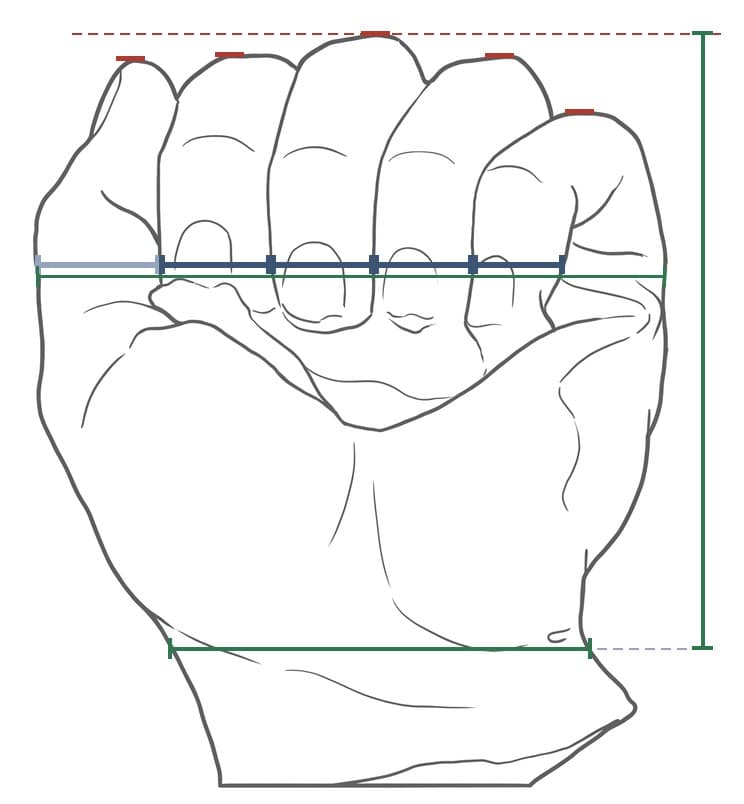
One loose fist measured from the palm side and the back: how the finger tops arc, how the nails step down, where the thumb stands and how wide the wrist is.
Notes on reference workflows and archive structure
One loose fist measured from the palm side and the back: how the finger tops arc, how the nails step down, where the thumb stands and how wide the wrist is.
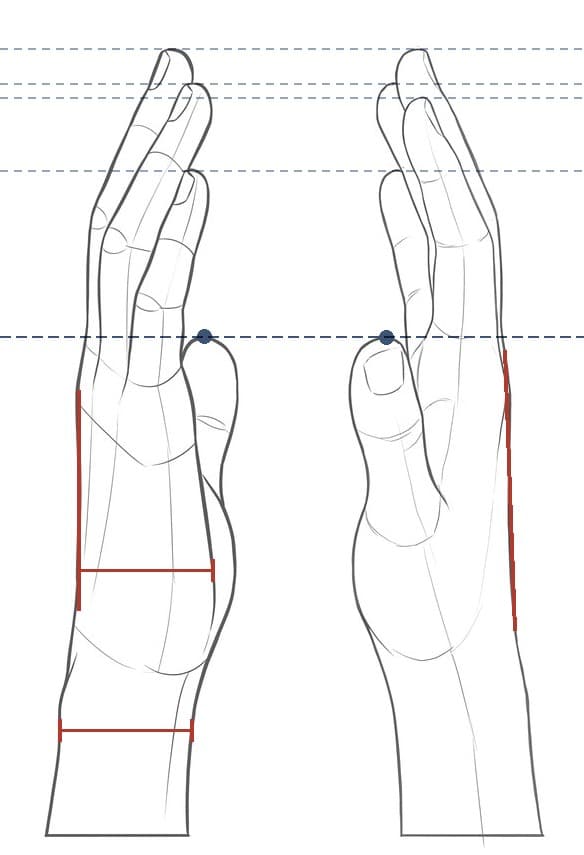
One open hand measured from the little-finger side and the thumb side: how thick it is, where the thumb tip lands and where the fingertips sit.
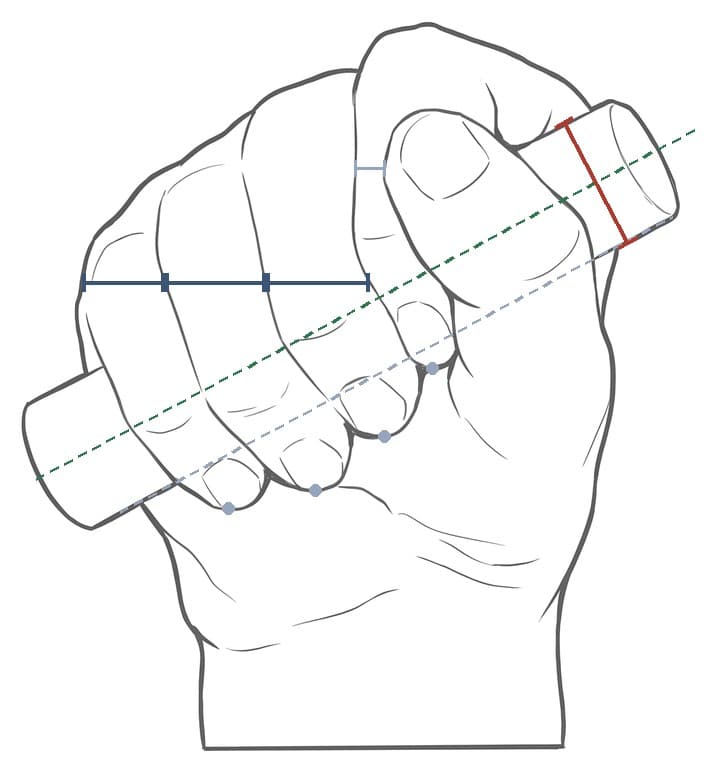
One hand measured around a round handle: how thick the handle is against the fingers, how the grip slants, where the fingertips end and where the thumb lies.
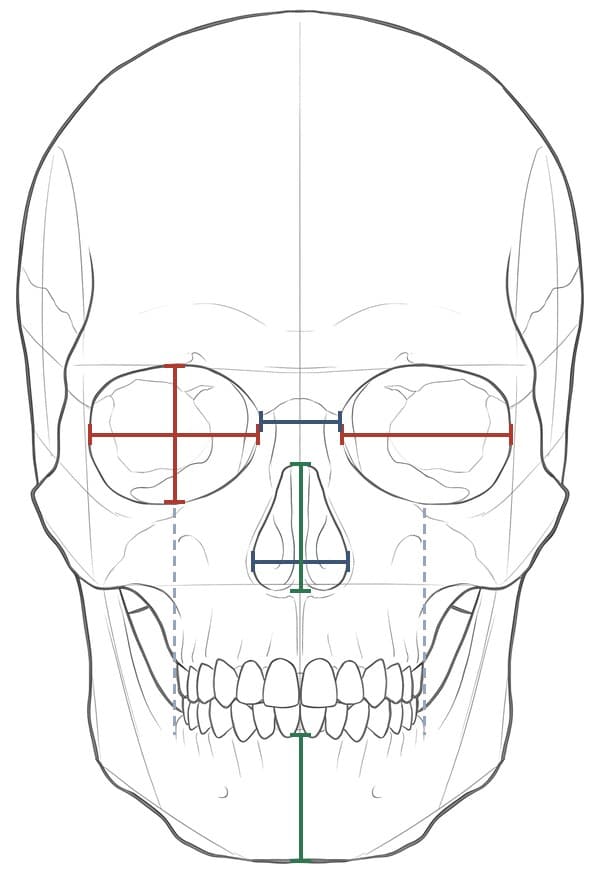
One skull measured from the front: how big the eye sockets are, the bone between them, where the nose opening and the teeth sit, and how much jaw is left.
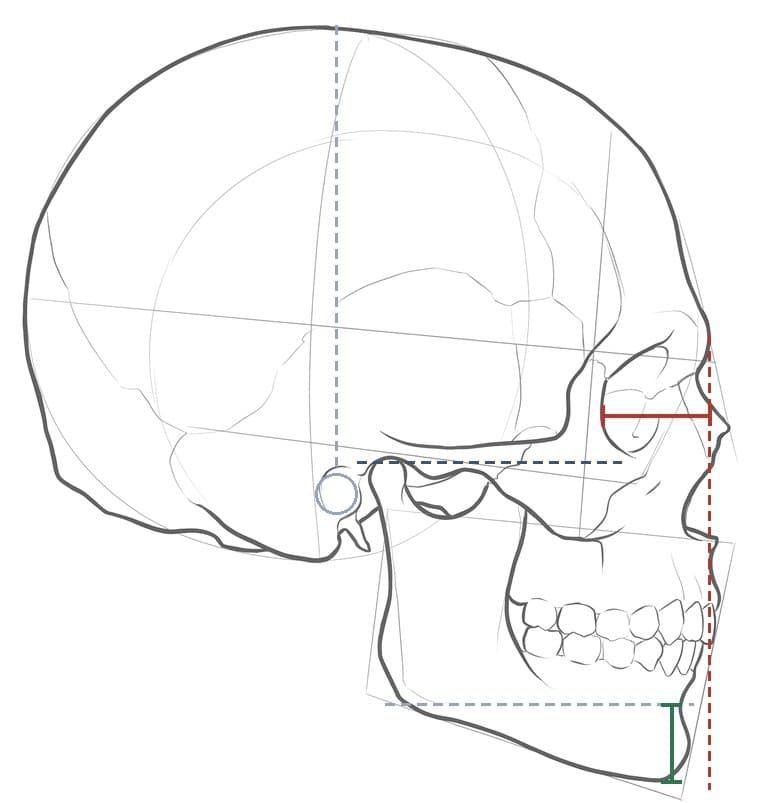
One skull measured in profile: the eye socket behind the brow, the cheekbone bar, the ear hole under the top of the skull, the teeth and the drop to the chin.
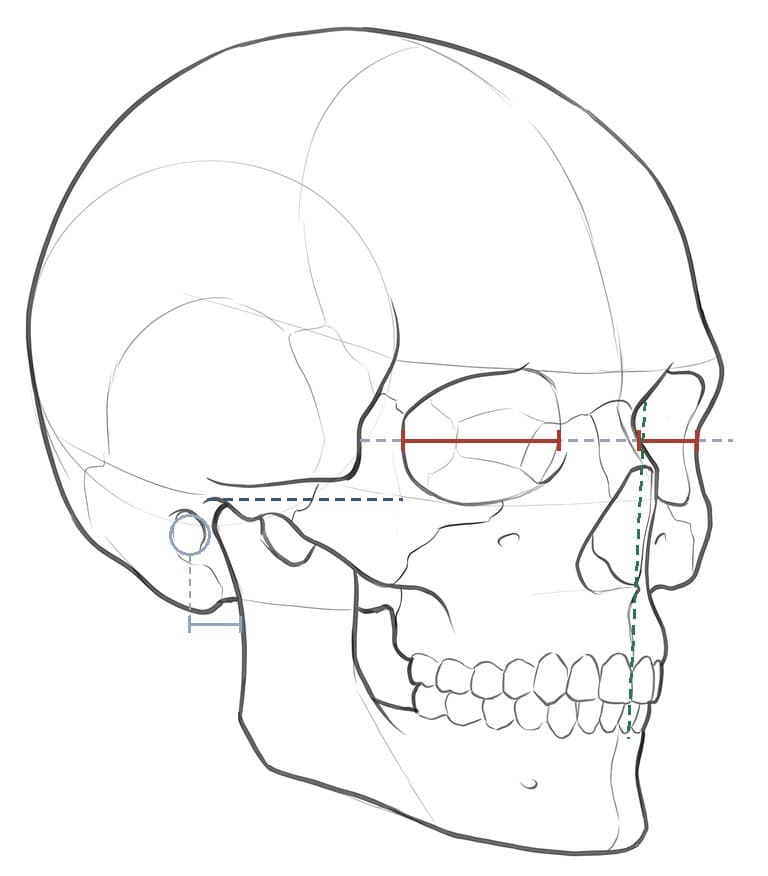
One skull measured at 45 degrees: the near eye socket keeps its width, the far one shrinks, the middle line of the face, the cheekbone bar and the ear hole.
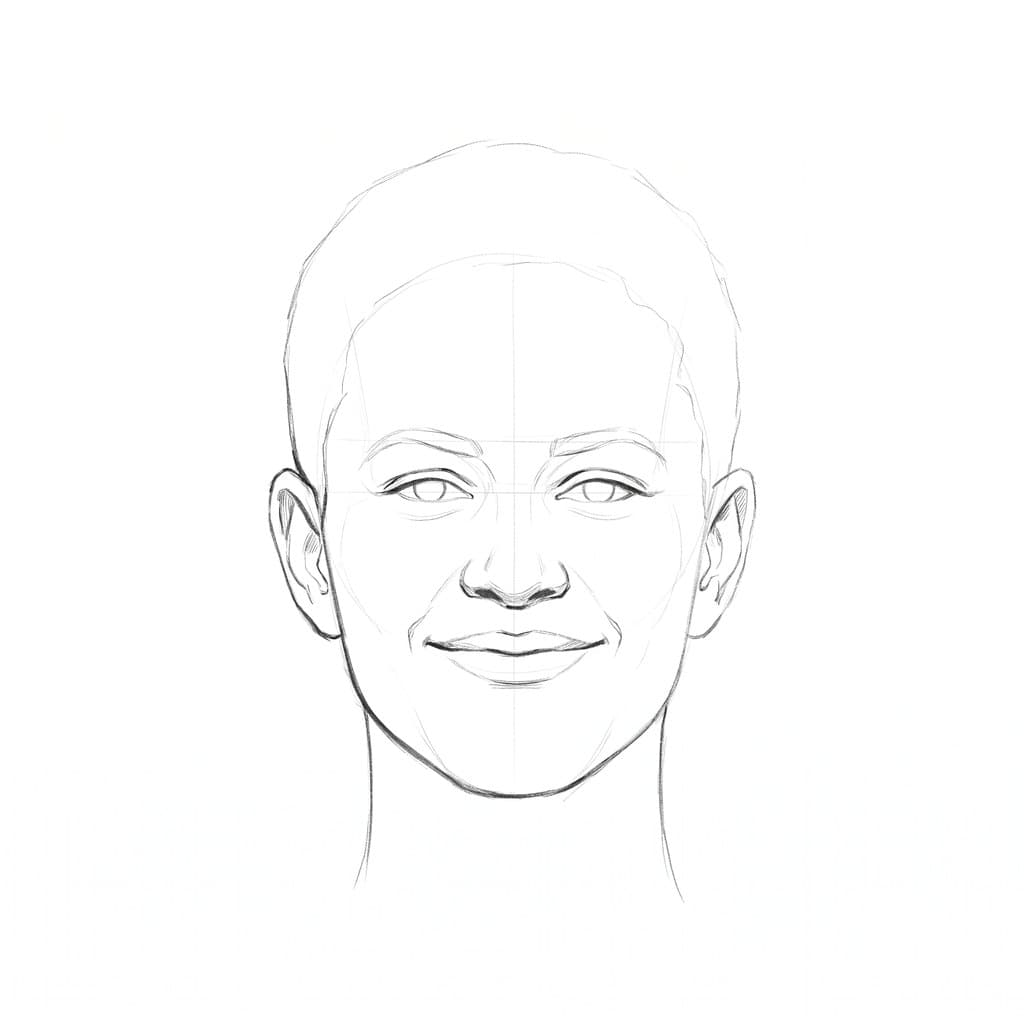
One head at rest and smiling, lips closed: the mouth grows about a quarter wider, the corners move out past the pupils and up, and the eyes narrow.
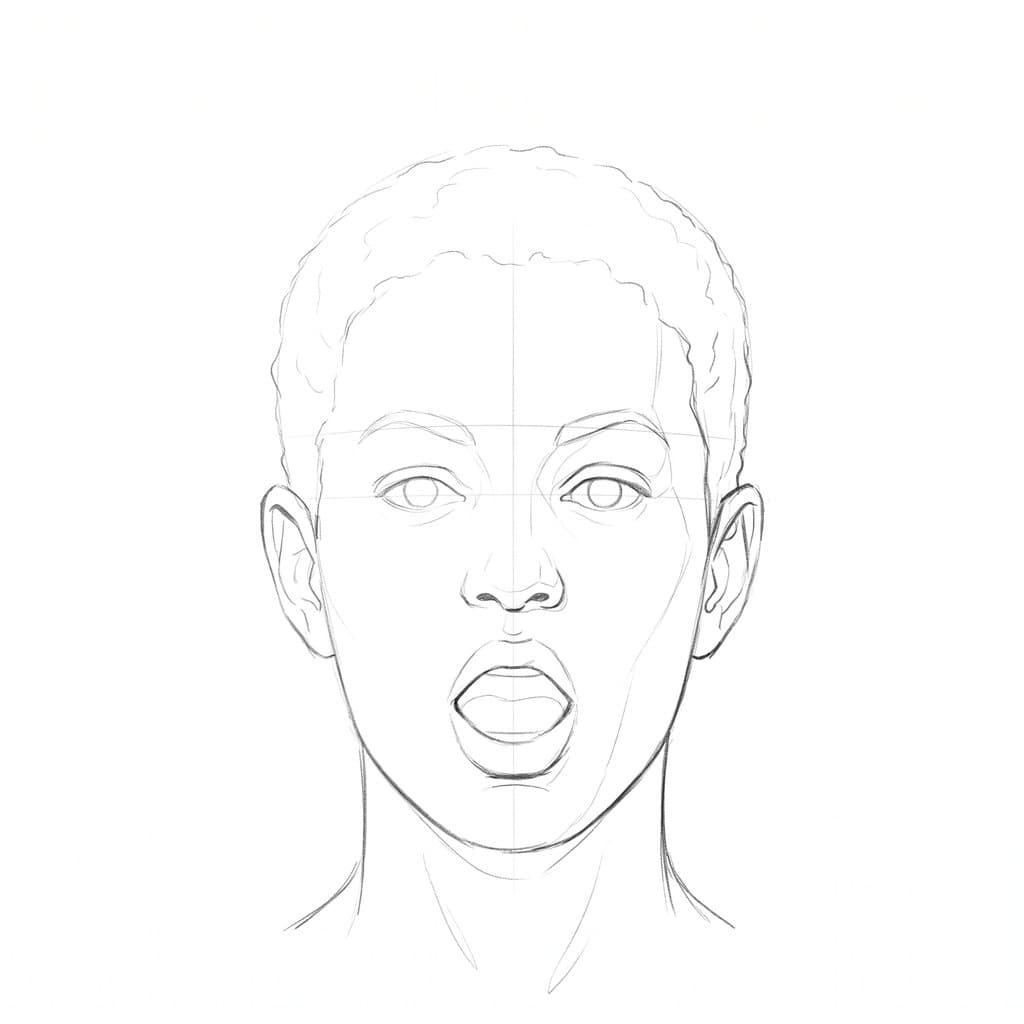
One head at rest and surprised: the brows rise and arch, the mouth drops into an open oval, and the eyes open about as wide as at rest.
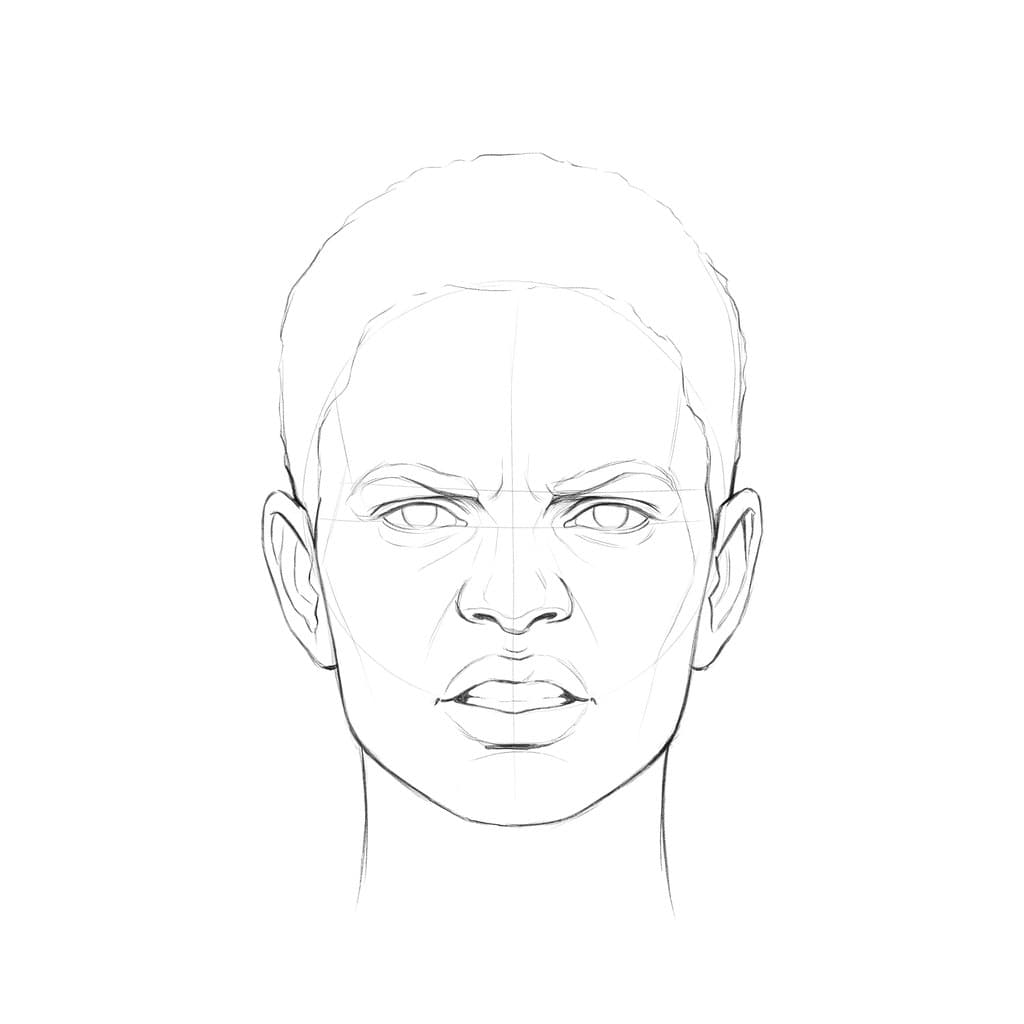
One head at rest and angry: the brows drop and pinch onto the lids, the eyes lose about a fifth of their height and the lips part over the teeth.
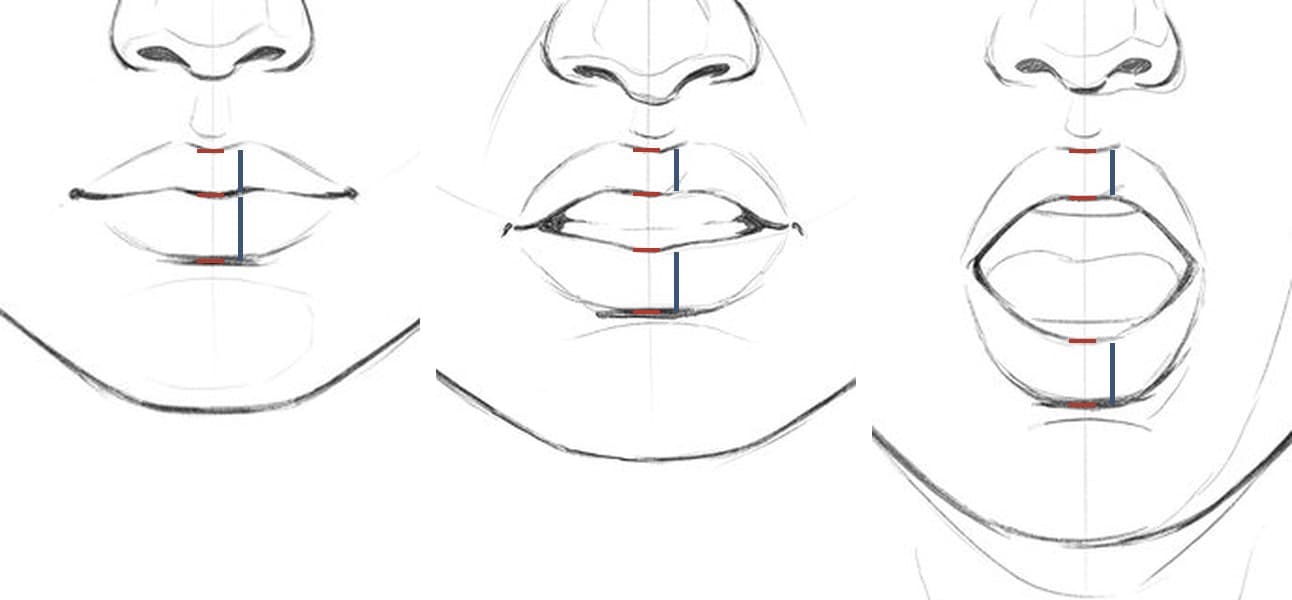
One head drawn at rest and with two open mouths: the lips don't get thinner, and the opening comes from the upper lip lifting or from the jaw coming down.
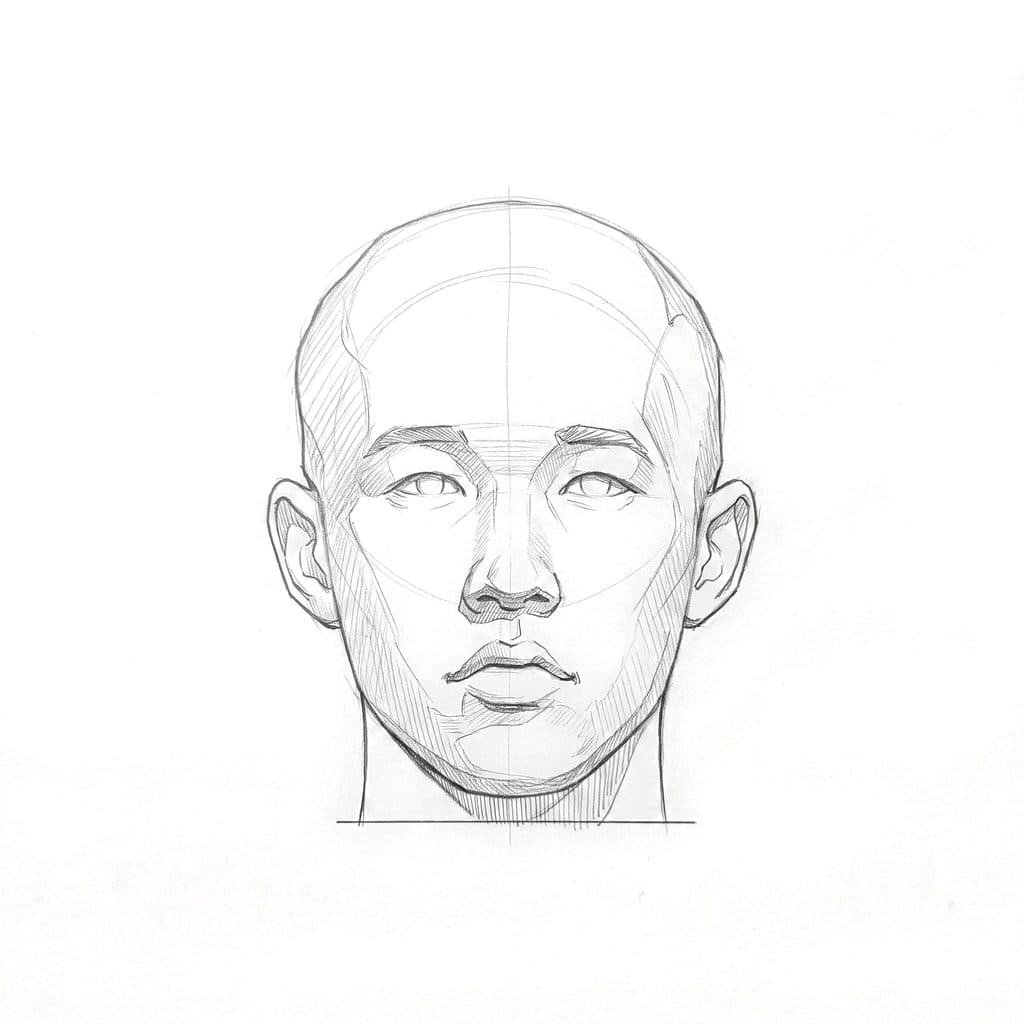
An oval face and a round one measured from the front: the jaw curves match, but the oval chin drops about half the face's width below the ears.
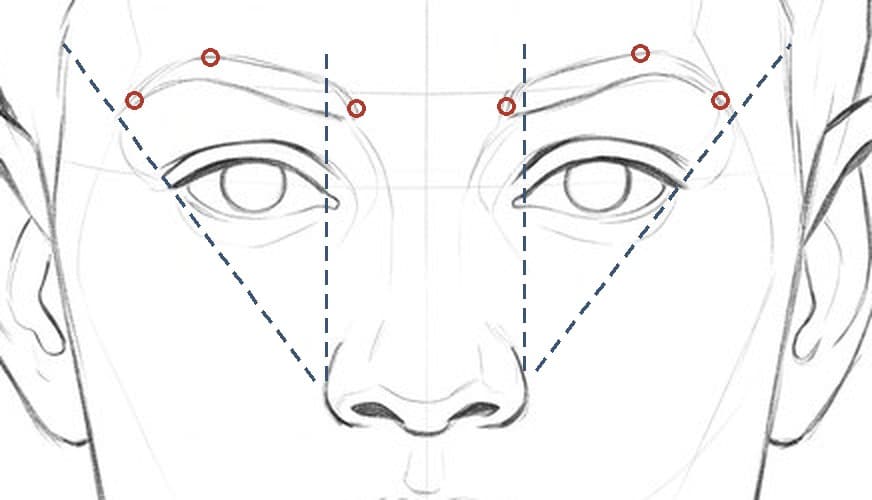
One realistic head from the front, measured in iris widths: where each brow starts, how high it peaks, where the tail stops and how thick it is along the way.
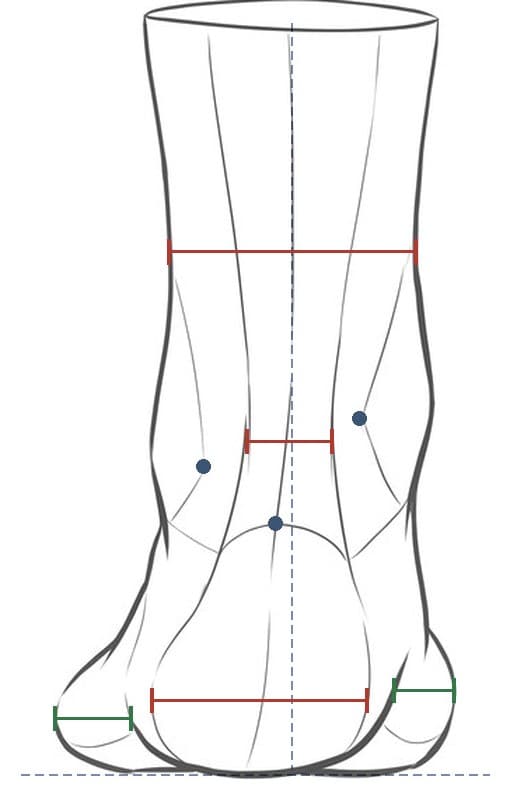
One standing foot measured from behind: where the tendon narrows, how high and wide the heel is, the ankle lines and how far the foot shows past the heel.
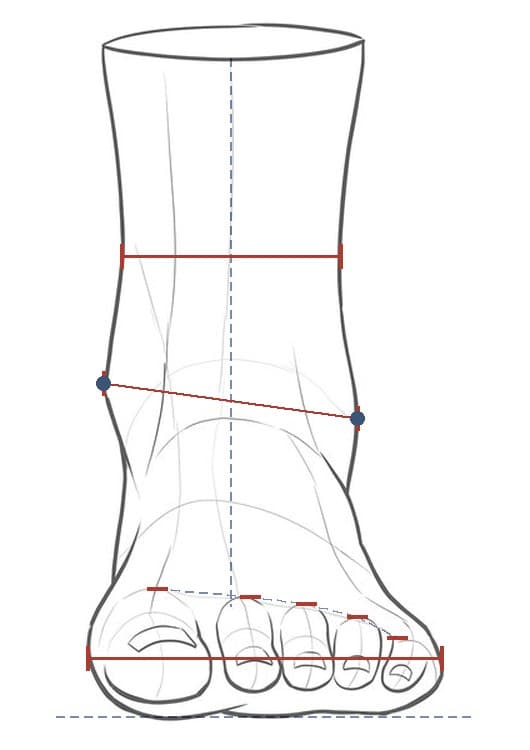
One standing foot measured from the front: how wide it spreads, where the ankle bumps sit, how big each toe is and how the toes step down.
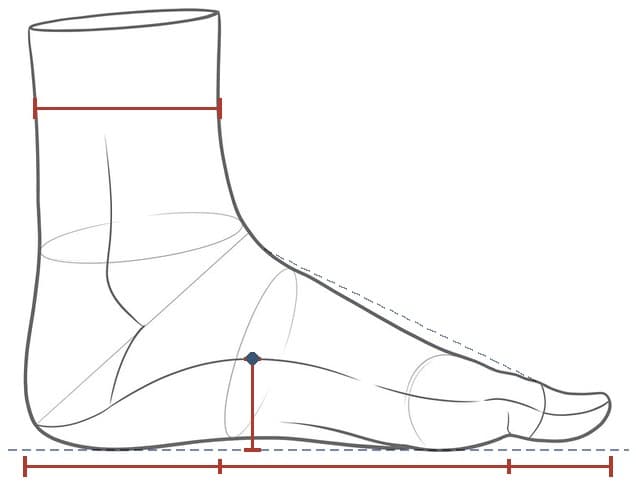
One standing foot measured from the inside and the outside: how long it is, where the leg stands, how high the arch rises and how the toes step back.
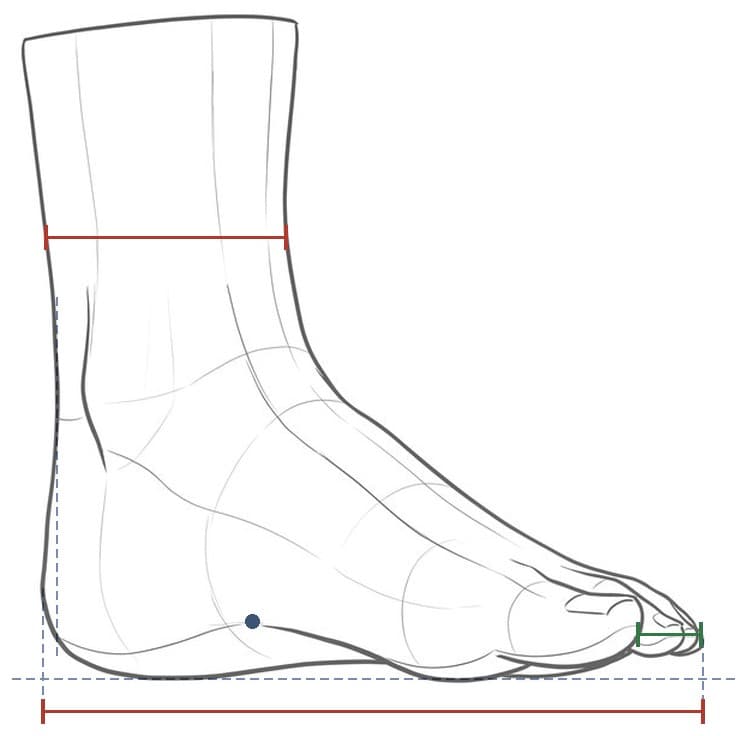
One standing foot measured halfway between front and side: how much shorter it gets, how the small toes show past the big toe, the heel and the underside.
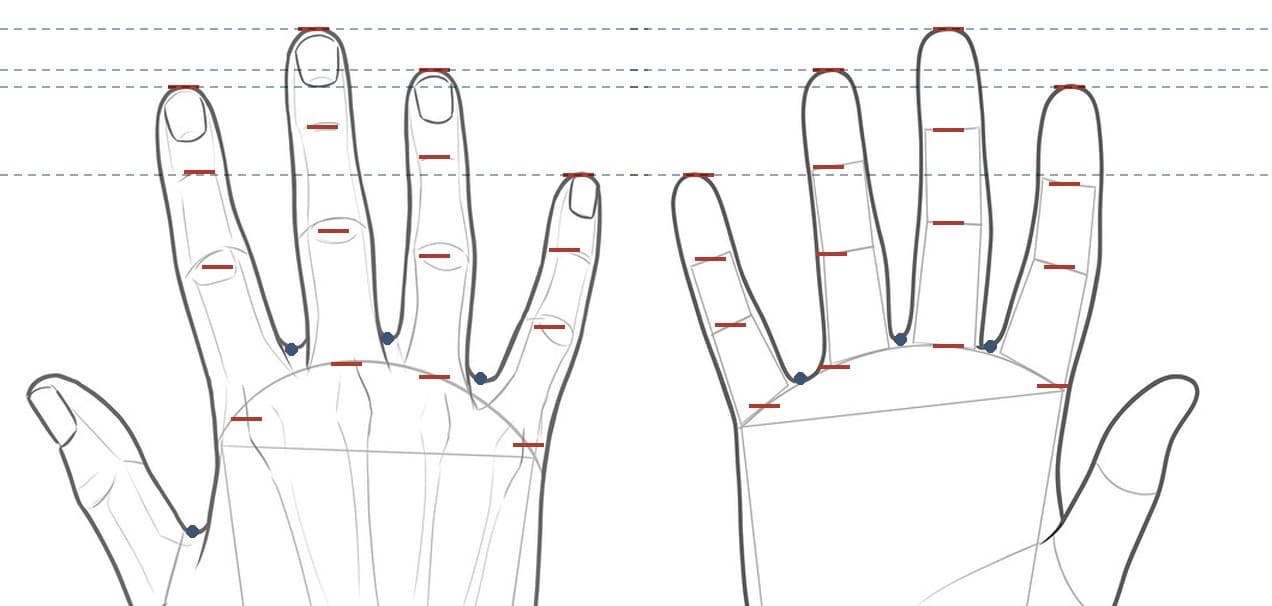
One open hand measured from the back and the palm: where each fingertip lands, how each finger splits and where the knuckles sit.
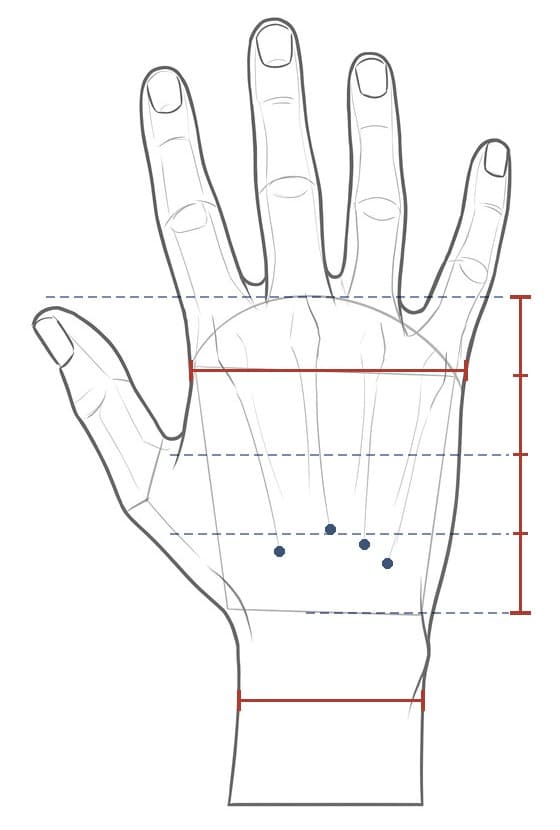
One open hand measured from the back: its length against its width, the knuckle arc, where the thumb splits off and the tendons down to the wrist.
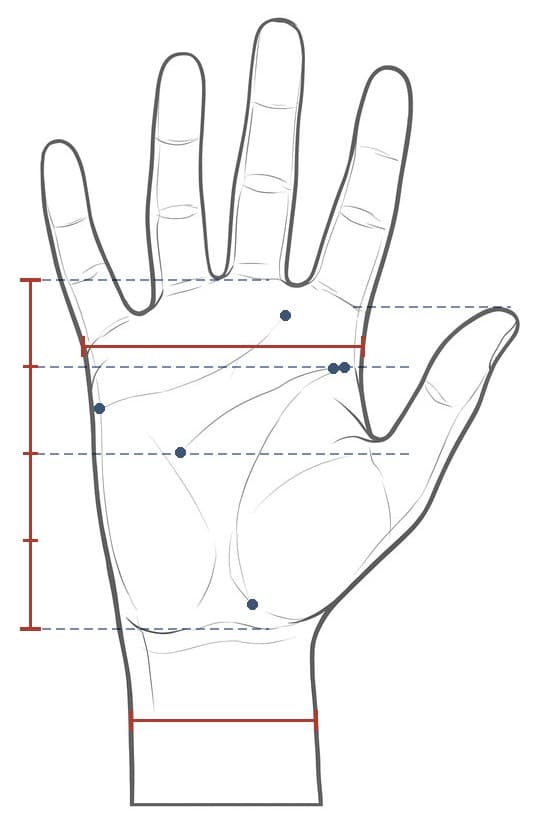
One open hand measured straight on from the palm side: the palm against its width and the fingers, where the thumb splits off, where the three lines run.
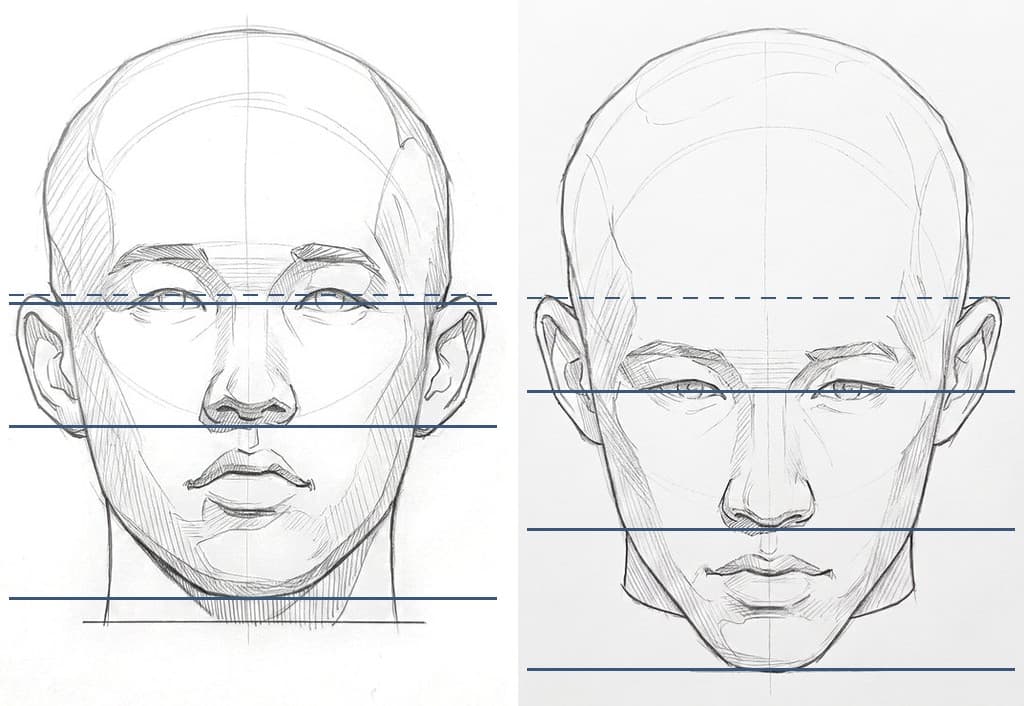
A face looking down, measured on paired drawings: the ears stay under the top of the skull while the eyes, nose and chin slide down and the lower face shortens.
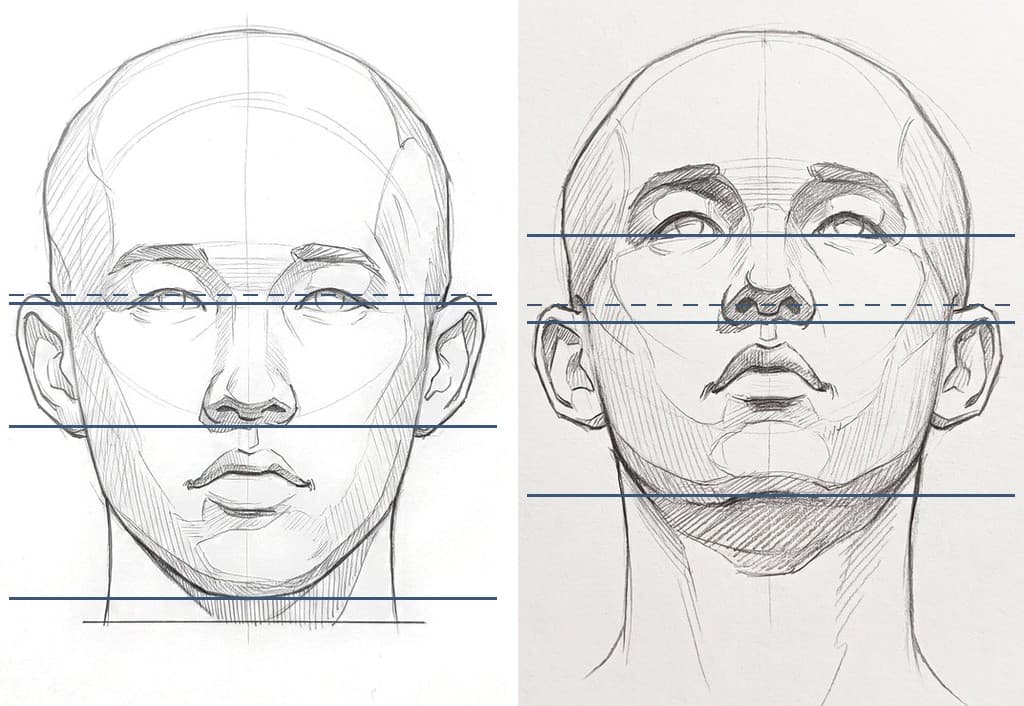
A face looking up, measured on one head: the ears stay where they were while the eyes, nose and chin slide up and the nose gets shorter.
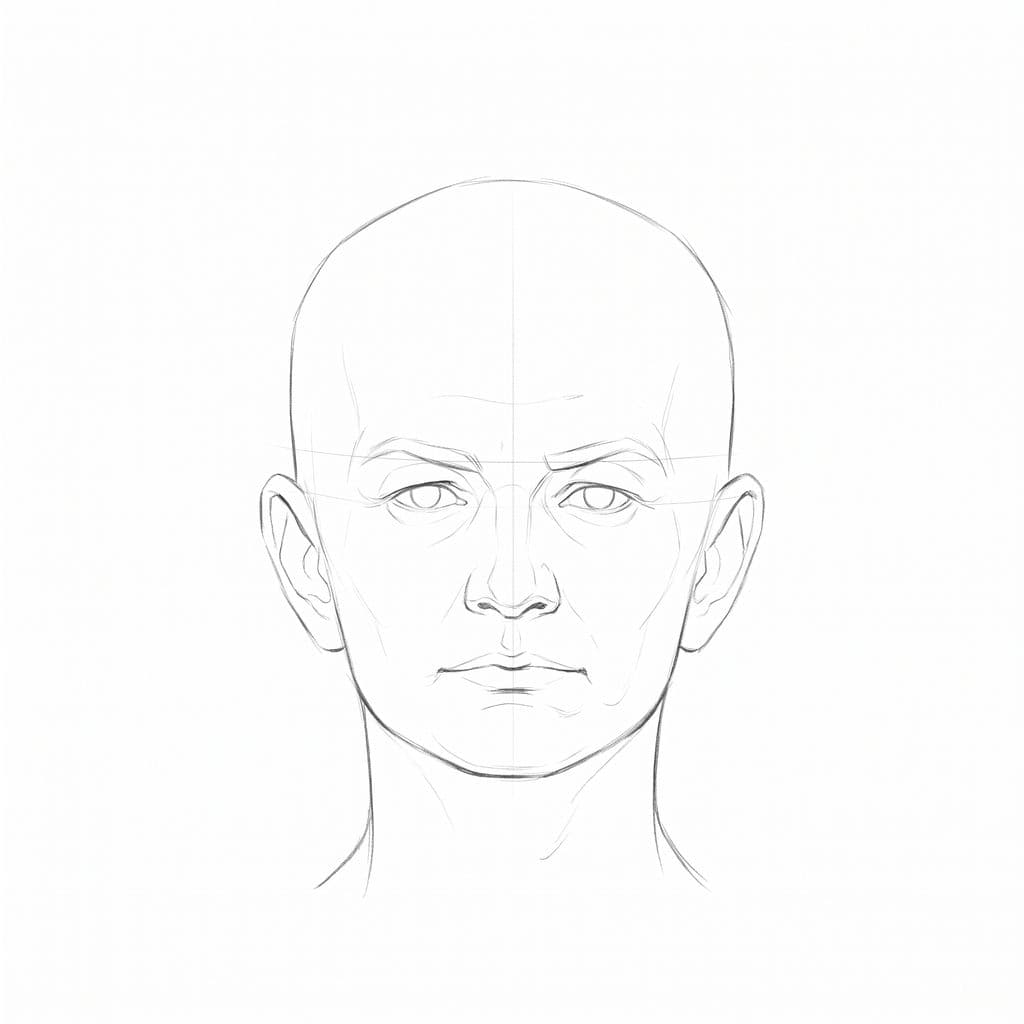
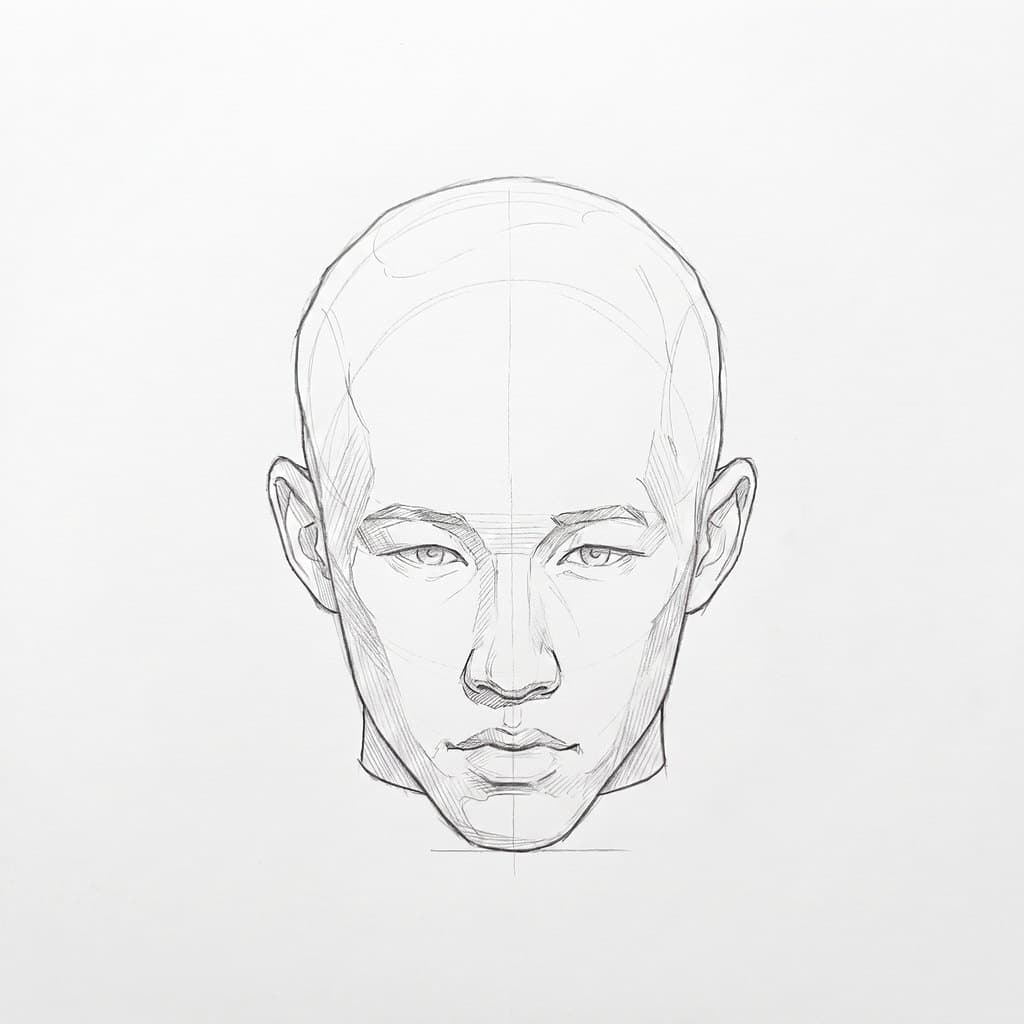
A face from the front in seven steps, from the outline to the tone, with the sizes measured on ten drawn heads and a link to the guide behind each one.
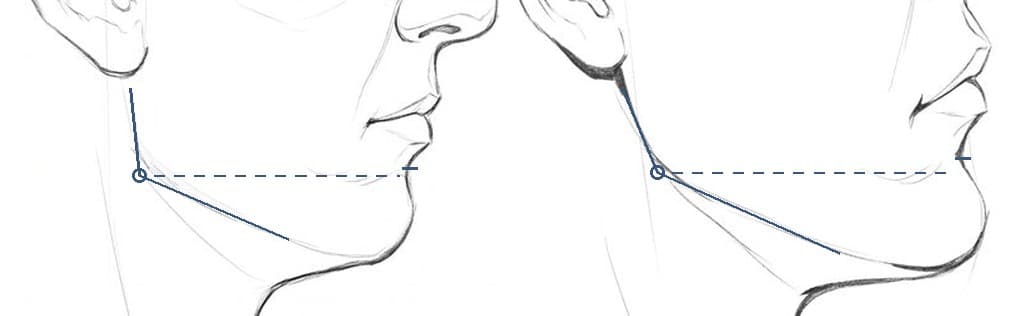
The jaw corner measured on ten drawn heads in profile: level with the hollow under the lower lip, just in front of the earlobe, and what sets its angle.
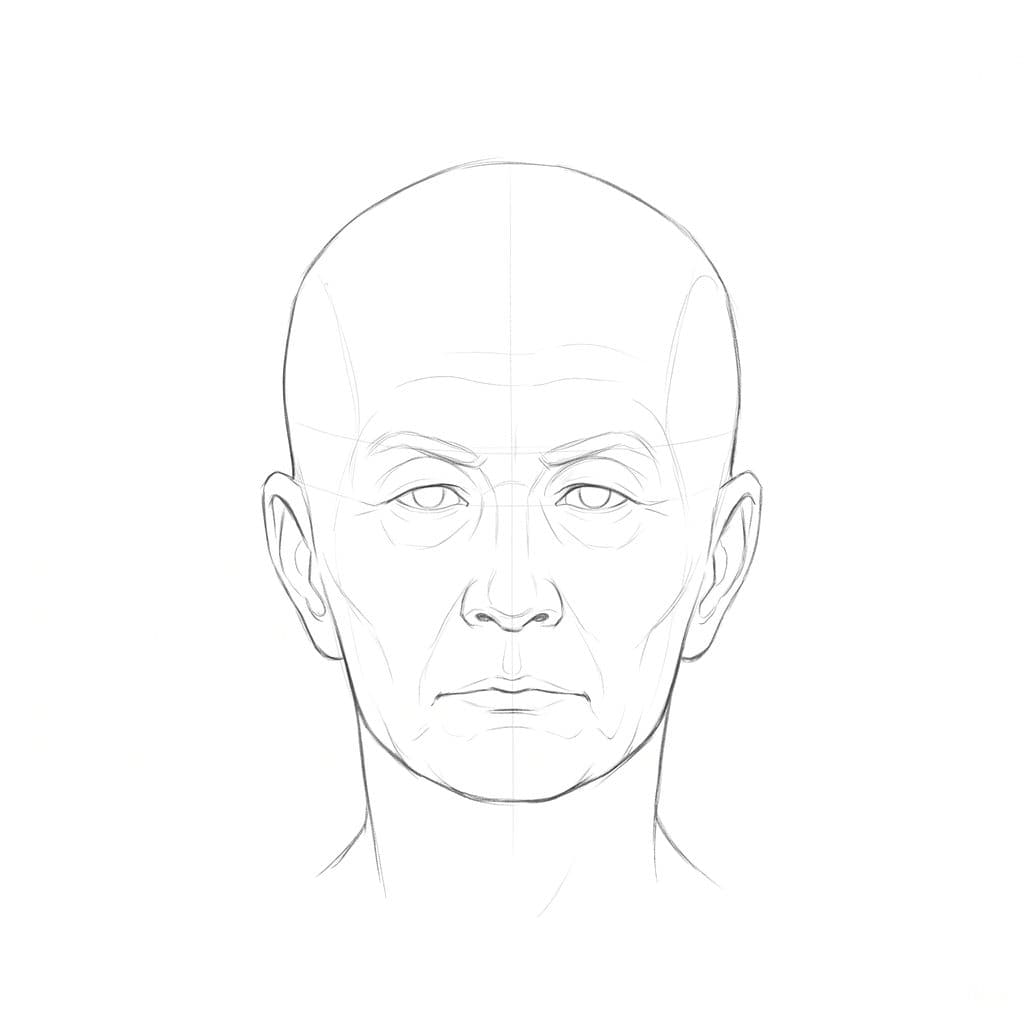
A nose from the front measured on ten drawn heads: how long it is against its width, how high the wings reach and how far apart the bridge lines run.
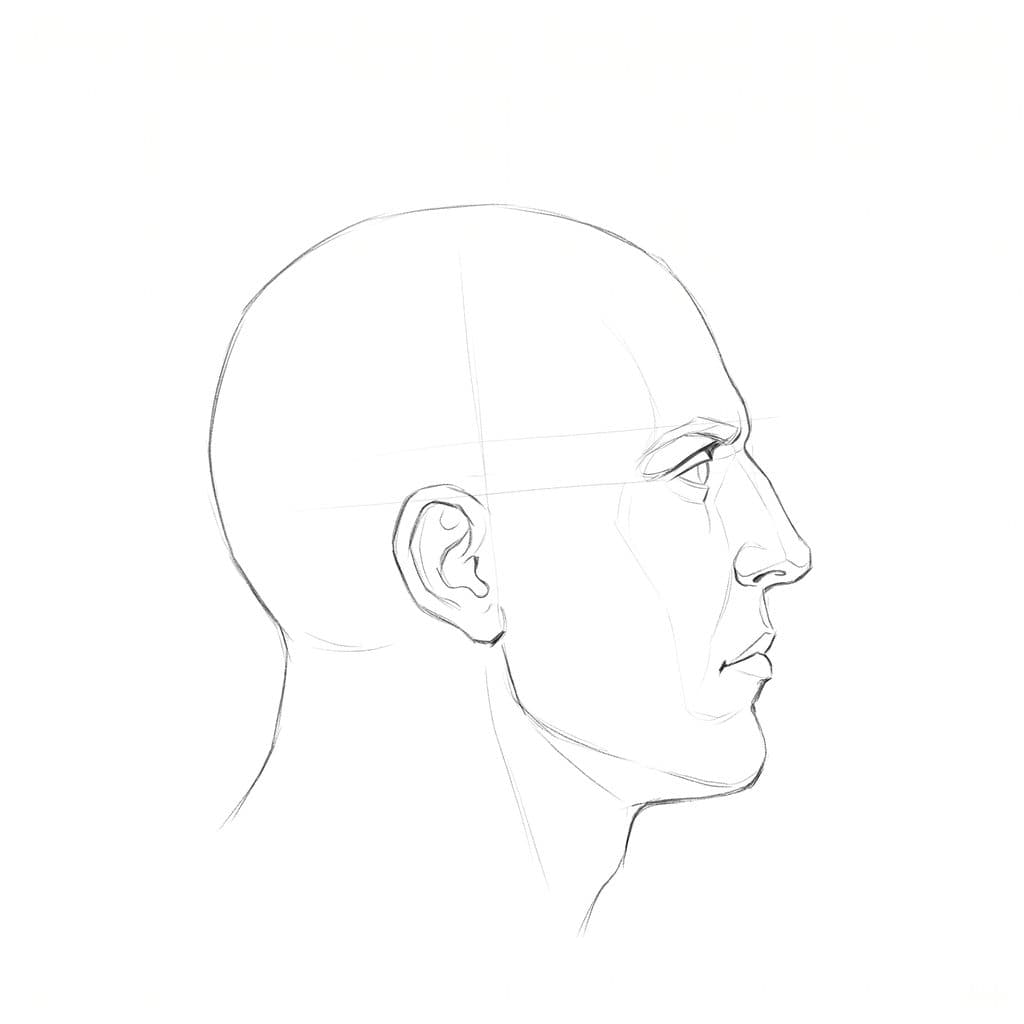
A nose in profile measured on ten drawn heads: the slope of the bridge, how far the tip stands out, where the wing sits and the angle underneath.
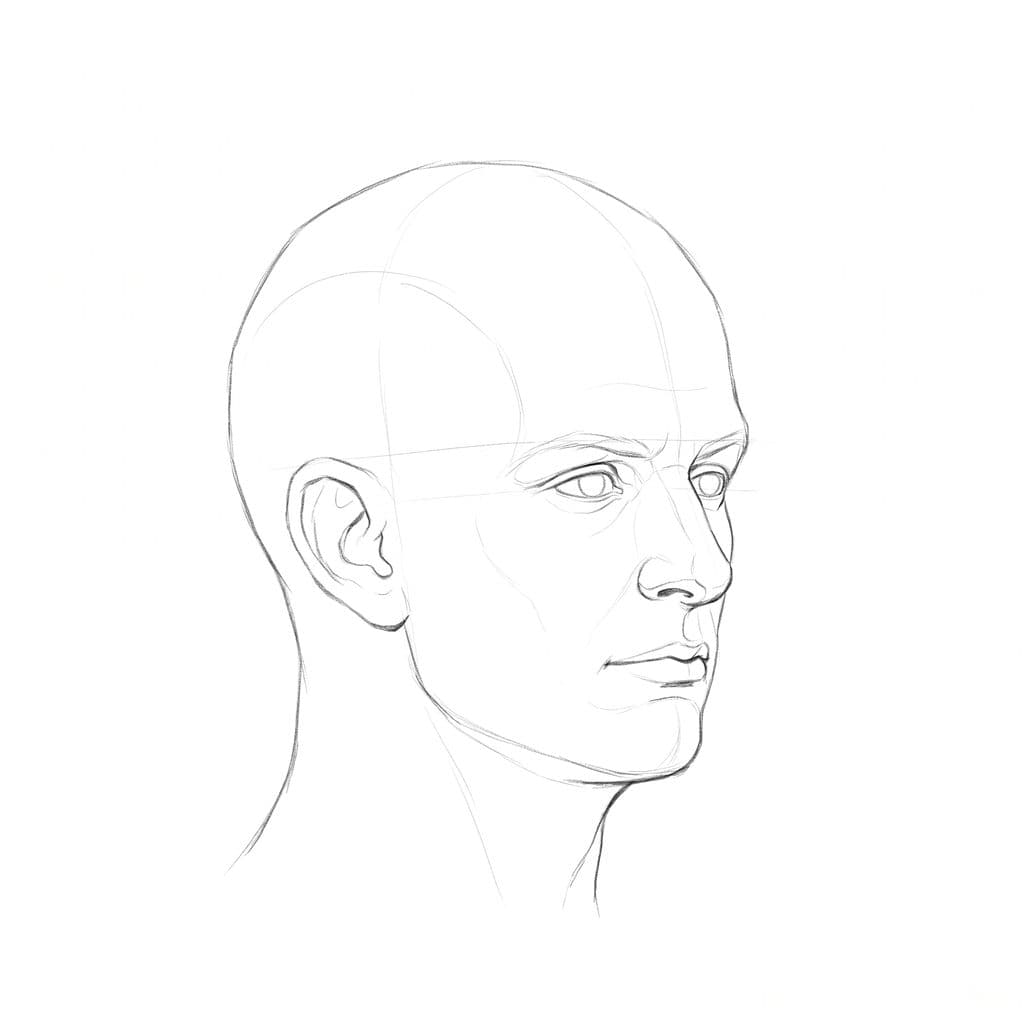
The nose against the far cheek measured on ten drawn heads at 22.5, 45 and 67.5 degrees: when it sits inside the outline, touches it and forms it.
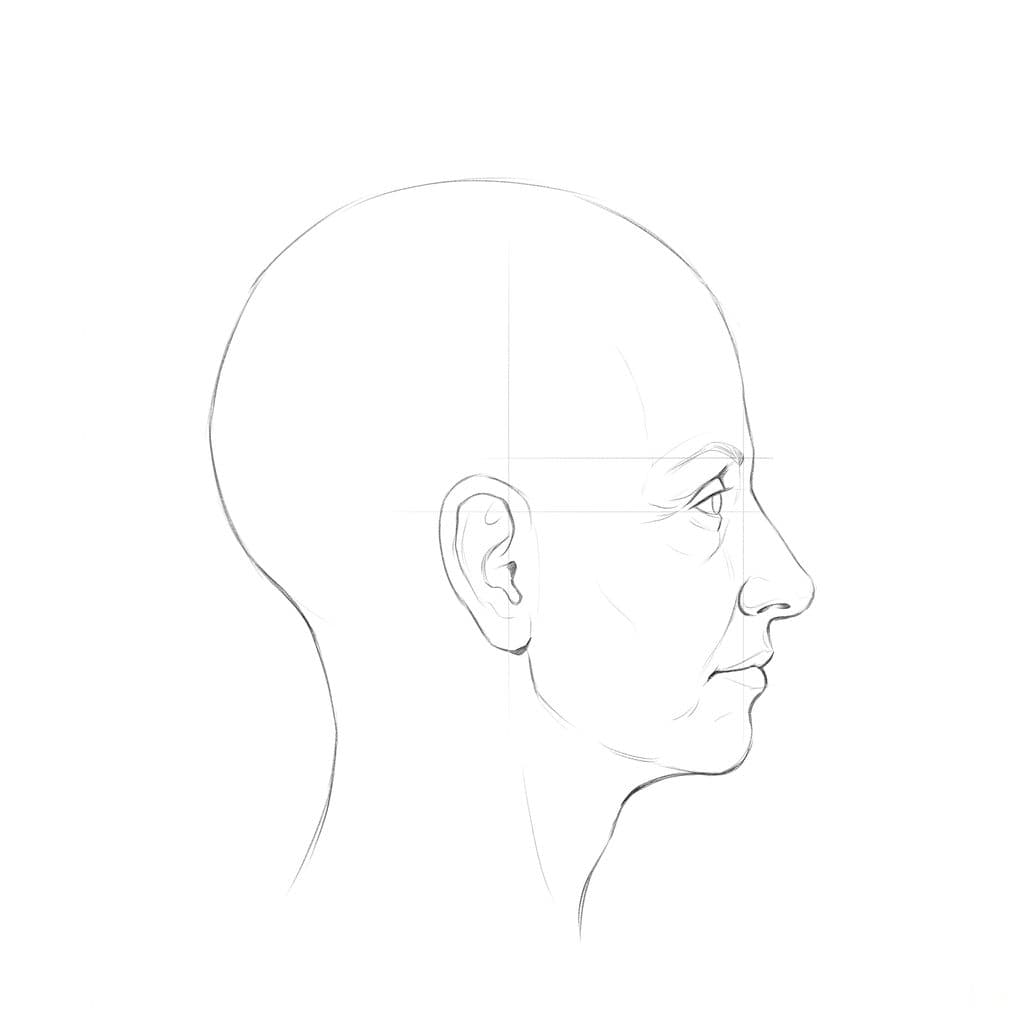
An eye in profile measured on ten drawn heads: how long it is, how far it sits behind the bridge, how wide the lids open and how narrow the iris gets.
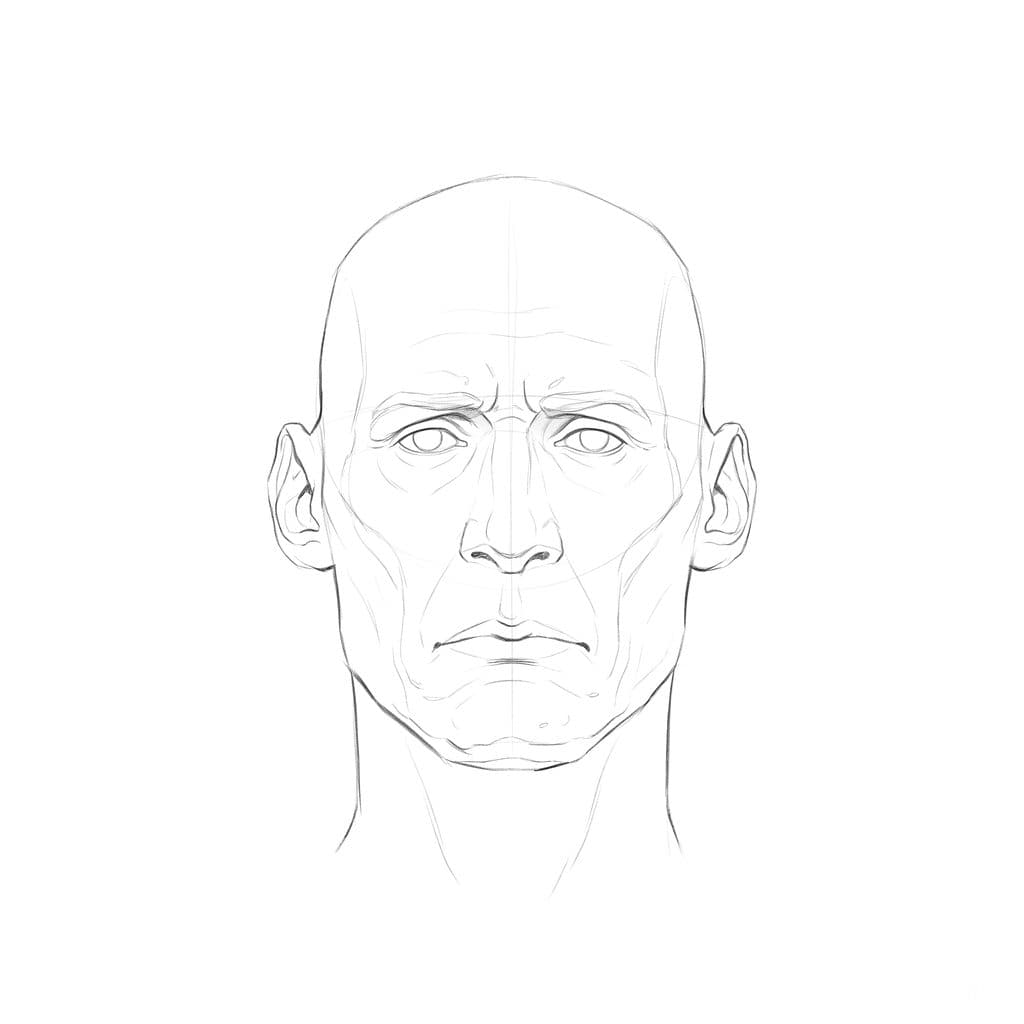
Upturned, level, open, narrow, close-set and wide-set eyes measured on ten drawn heads, and how downturned, hooded, round and deep-set eyes fall outside them.
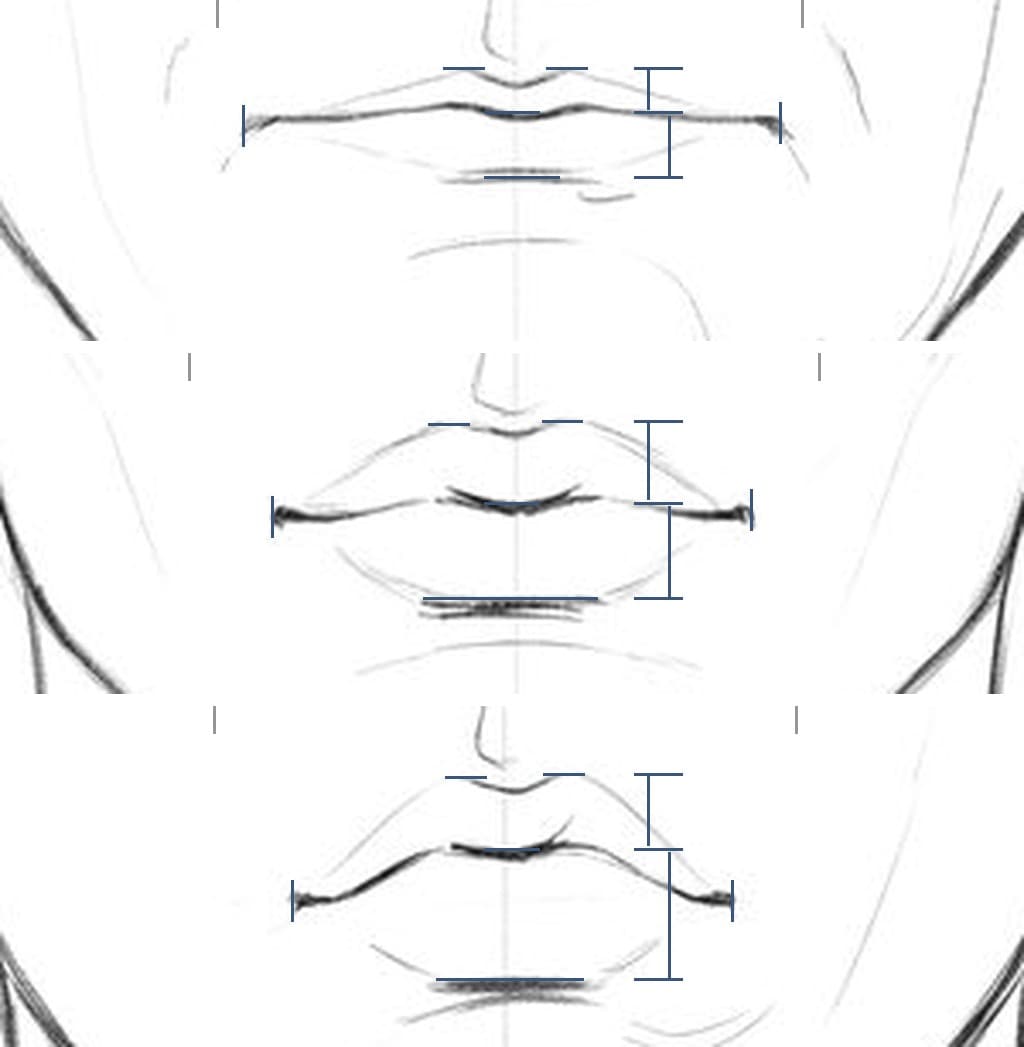
Full, thin, wide, narrow, bottom-heavy and downturned lips measured on ten drawn heads, and the lip shapes these plates don't show.
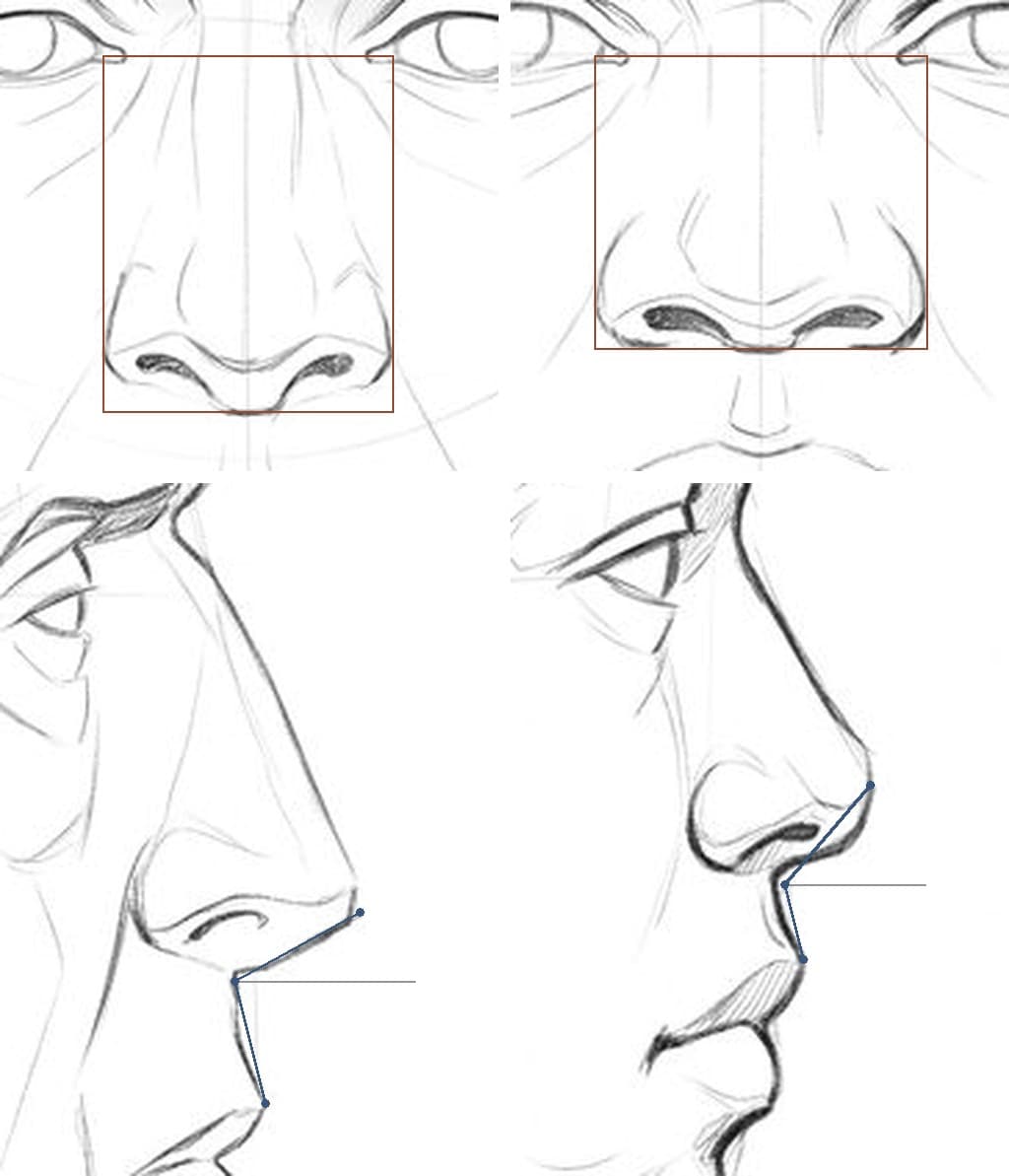
Long, broad, upturned and projecting noses measured on ten drawn heads, and where Roman, concave, bulbous and down-pointing noses fall outside them.
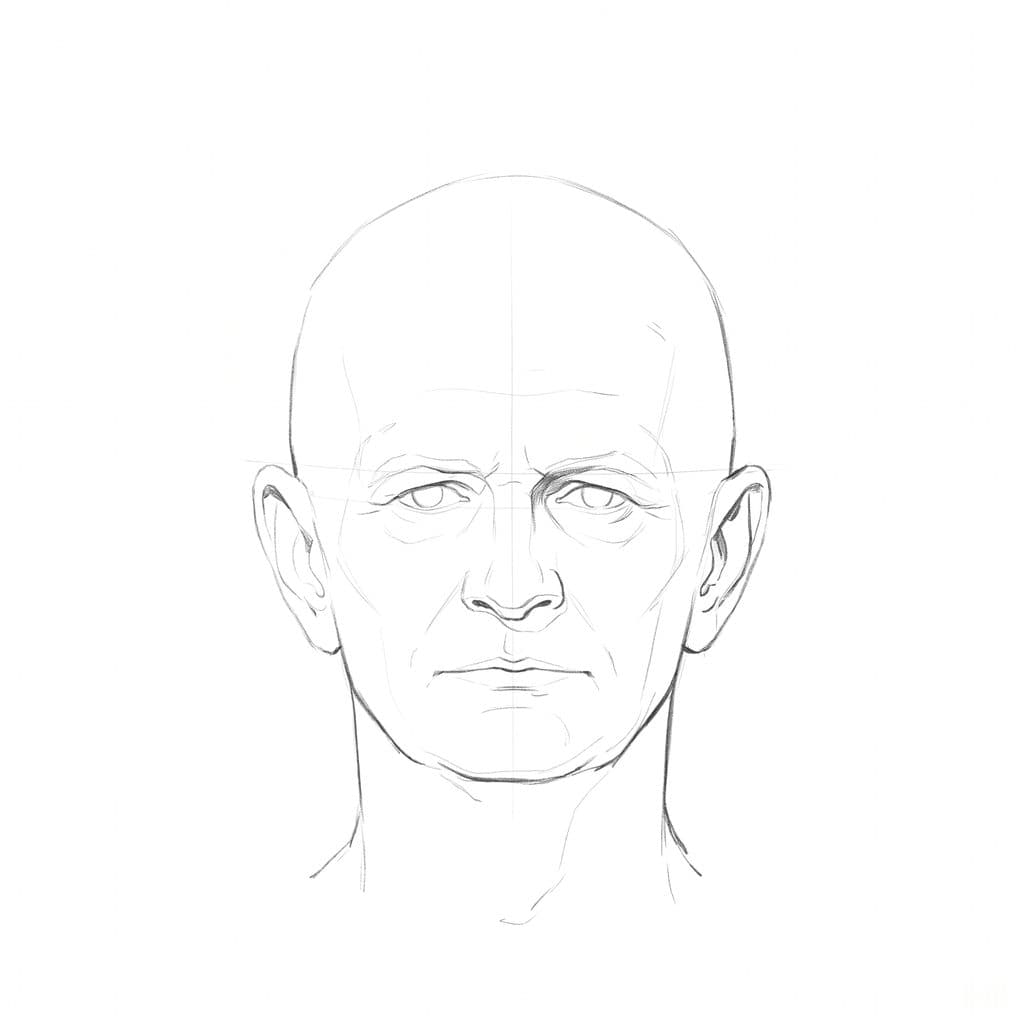
Ears from the front measured on ten drawn heads: where the top and lobe sit, how far the ear stands out from the skull and how wide the rim shows.
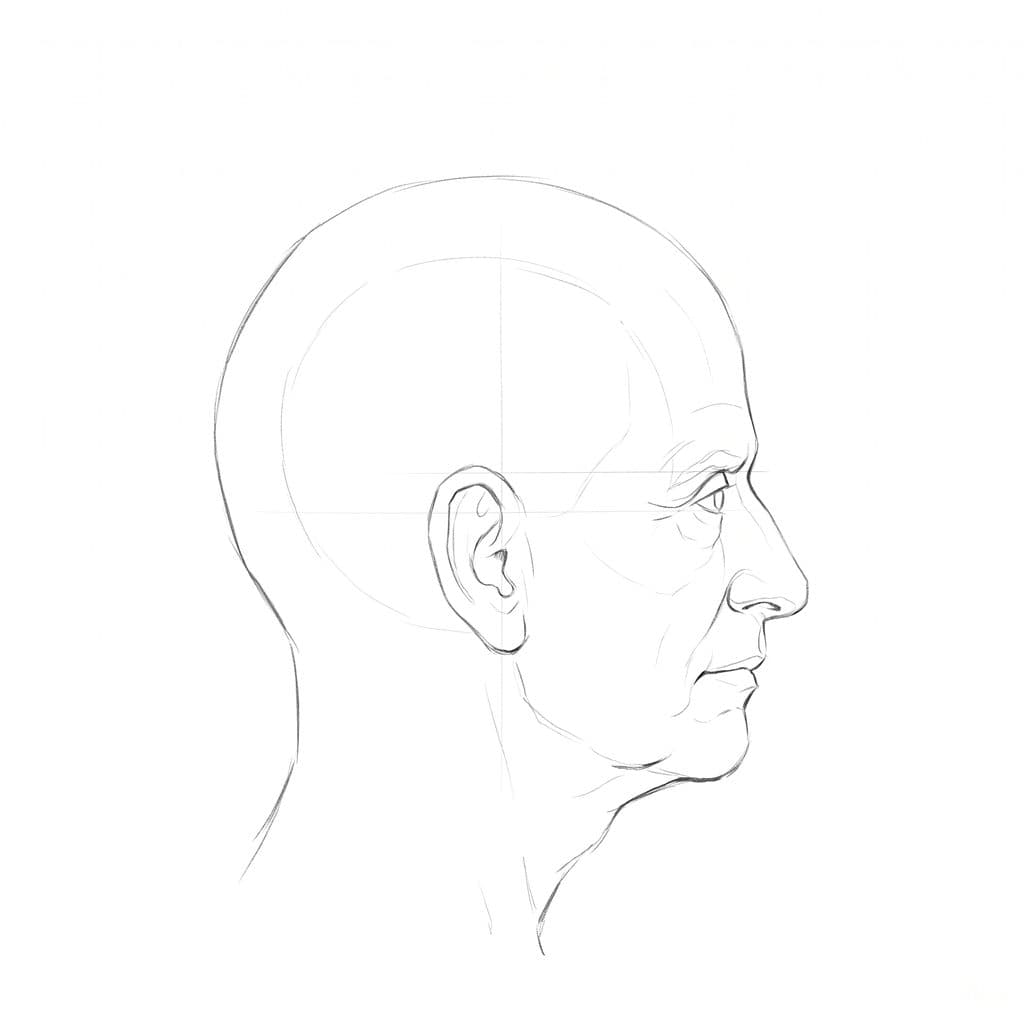
Ears from the side measured on ten drawn heads: how wide the ear is against its height, how far it leans back and where it sits in the depth of the head.
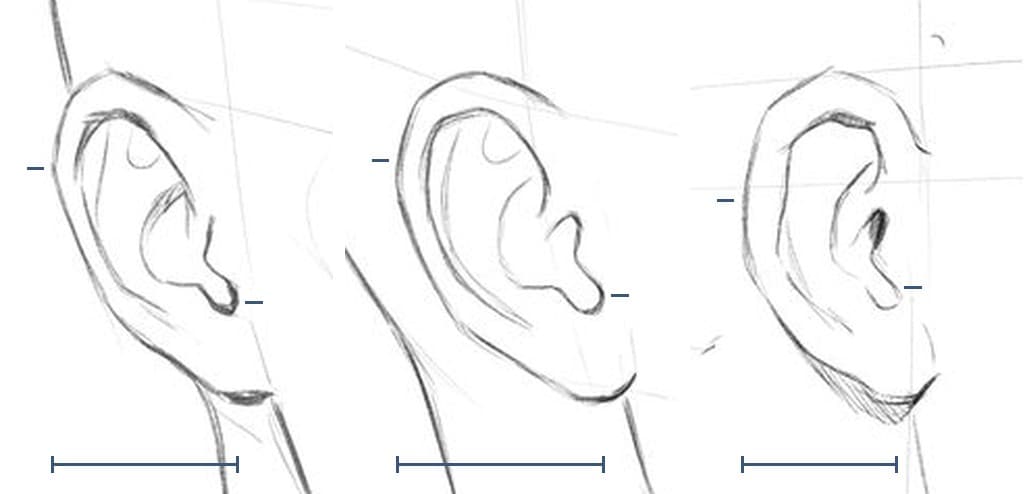
Ears measured on ten drawn heads at 22.5 and 45 degrees: why the ear looks wider in three-quarter view than in profile, and how far it sits from the eye.
The line under the lower lid measured on ten drawn heads: how far below the lid it sits, where it dips, and when a second curve appears.
The upper lid and its crease measured on ten drawn heads: how much of the iris the lid hides, how far above it the crease sits, and when the two merge.
Eyes from the front in six steps, measured on ten drawn heads: spacing, outer corners a touch high, a high upper lid over a shallow lower one, opening and iris.
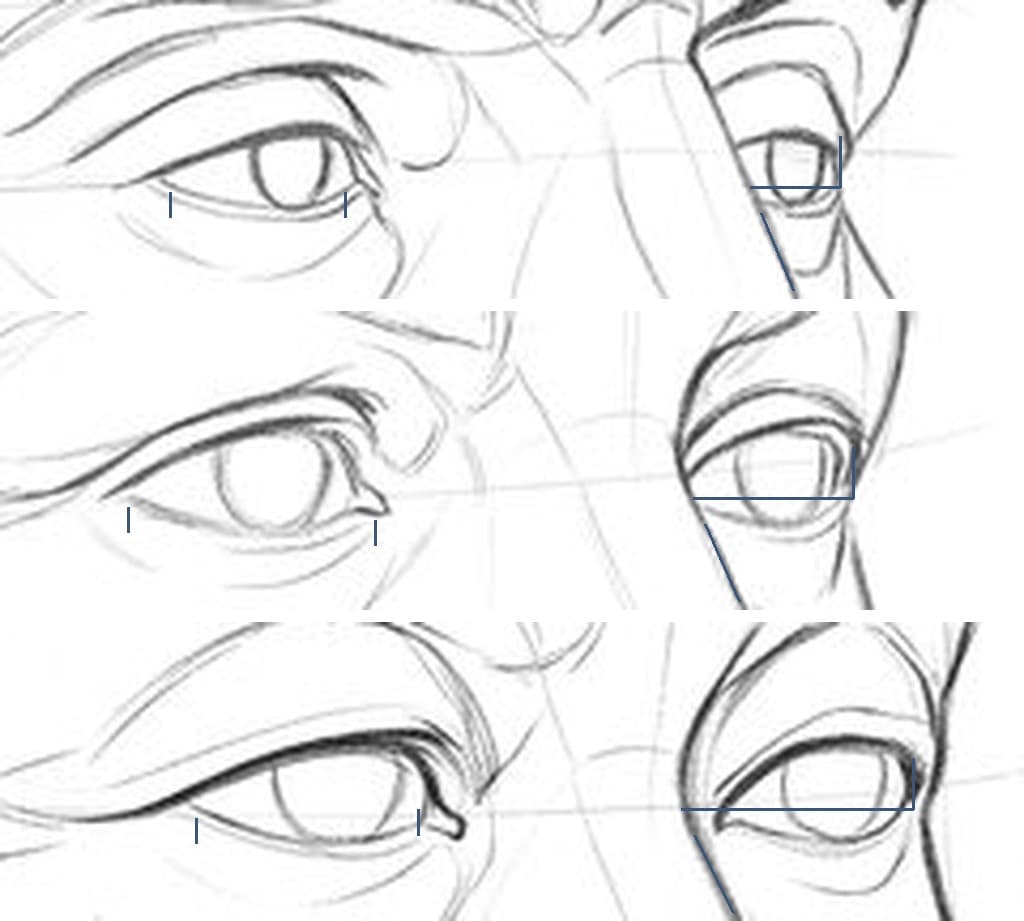
The far eye measured on ten drawn heads: how much narrower it is at 22.5 degrees, and the gap it fits between the nose and the far edge at 45.
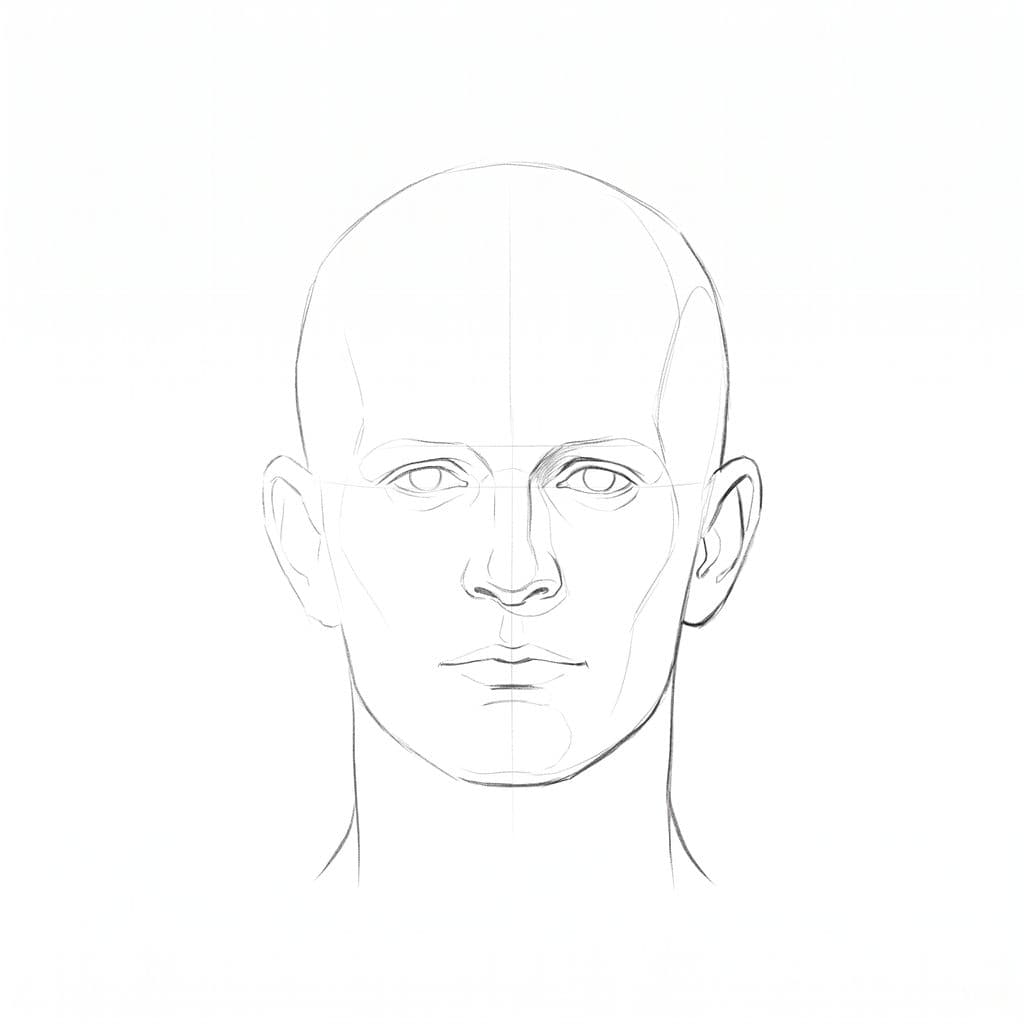
Lips from the front in six steps, measured on ten drawn heads: where the mouth line sits, its shape, and how much taller the lower lip is.
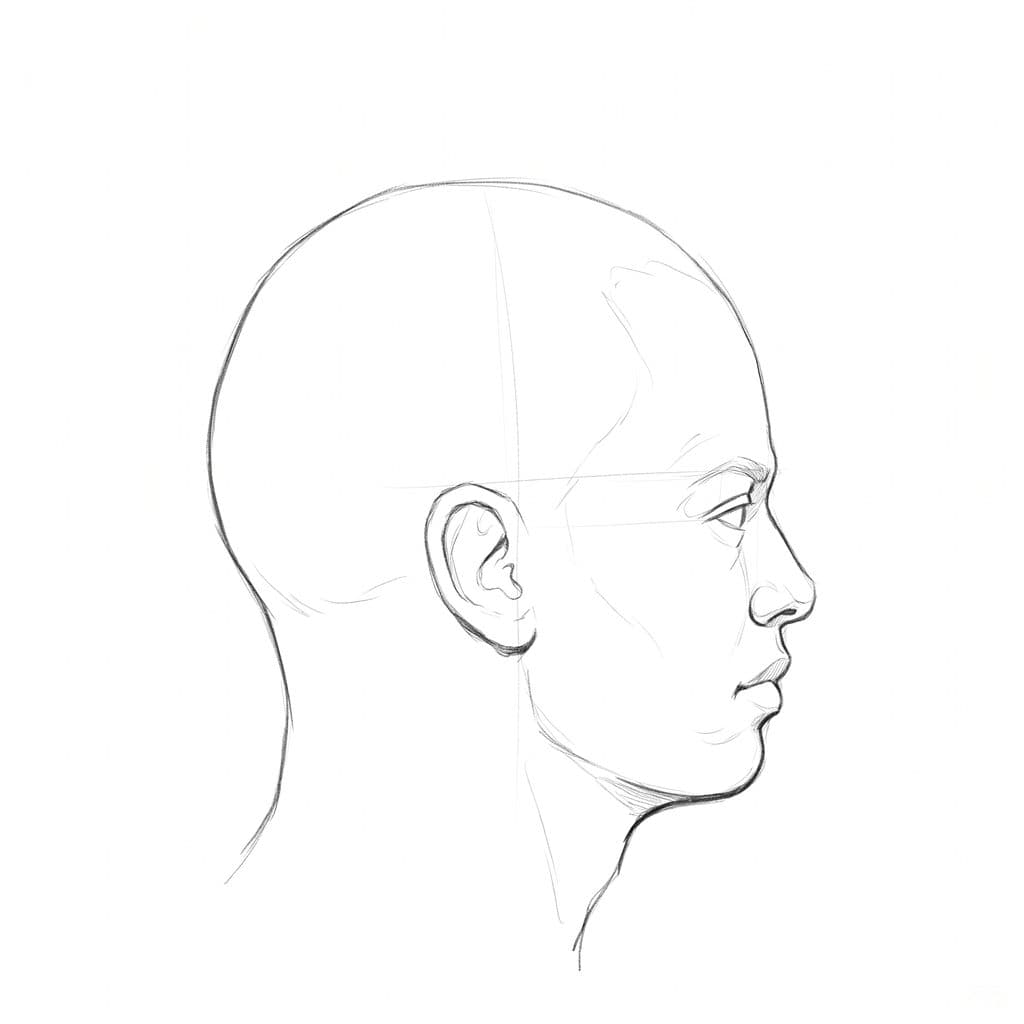
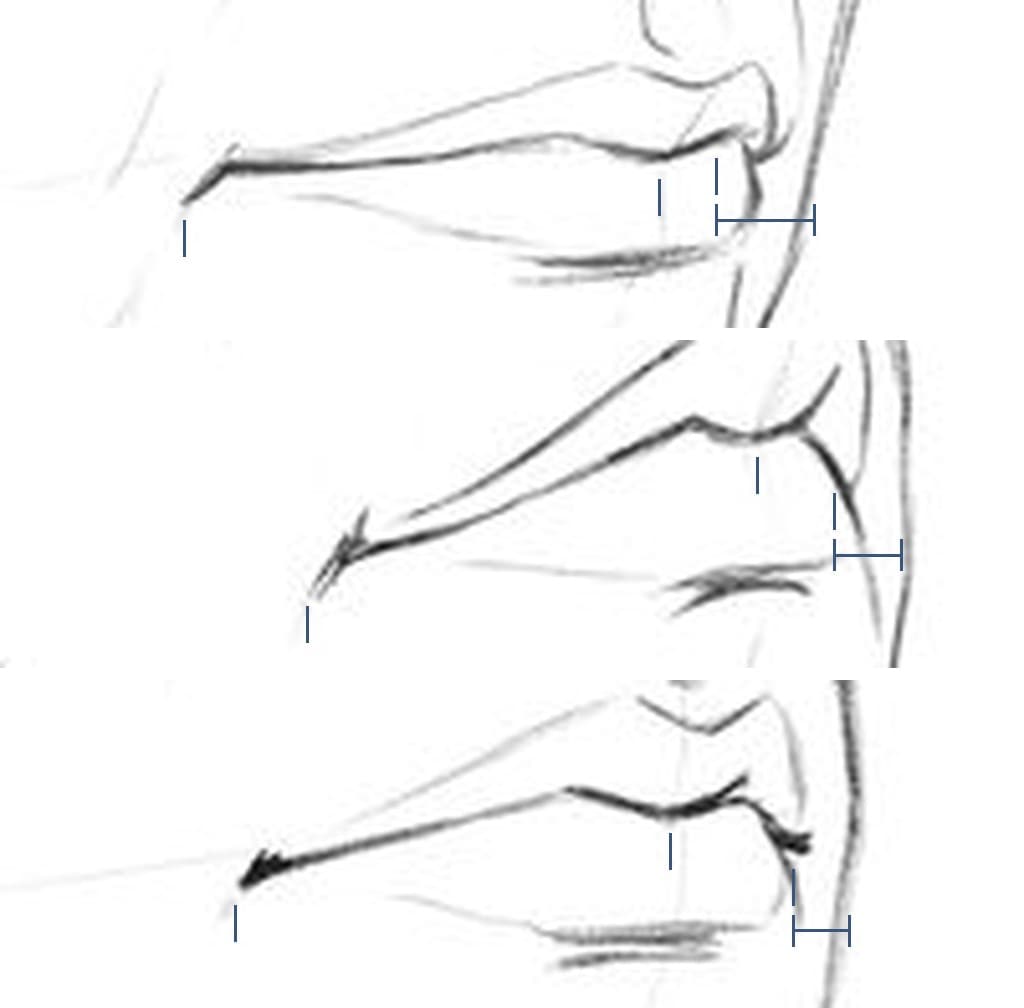
Lips in profile measured on ten drawn heads: how far back the corner sits, how the mouth line drops, and where the lips sit against the nose and chin.
Lips measured on ten drawn heads at 22.5 and 45 degrees: how short the far half of the mouth gets, and why the near half grows longer than from the front.
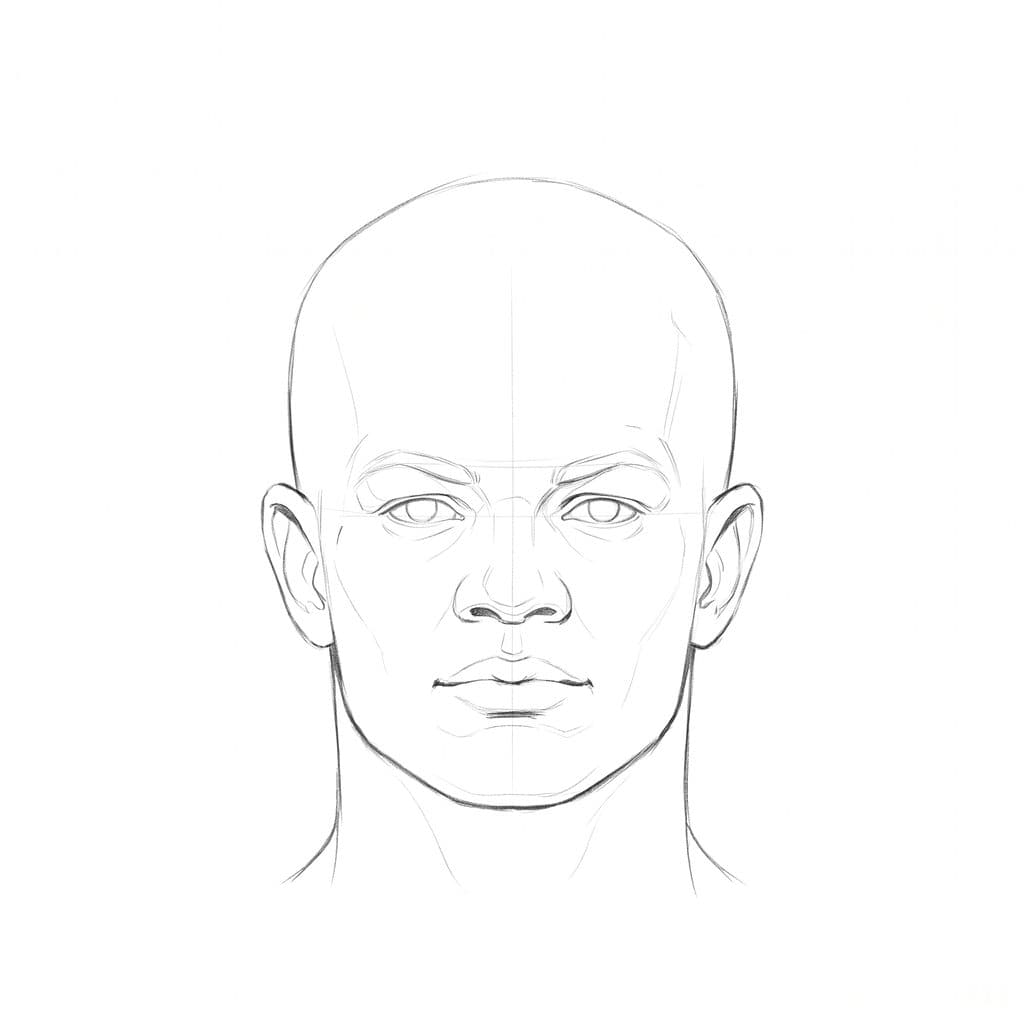
Nostrils measured on ten drawn heads: how wide each one is against the nose, the gap between them, which end thins and how dark to make them.
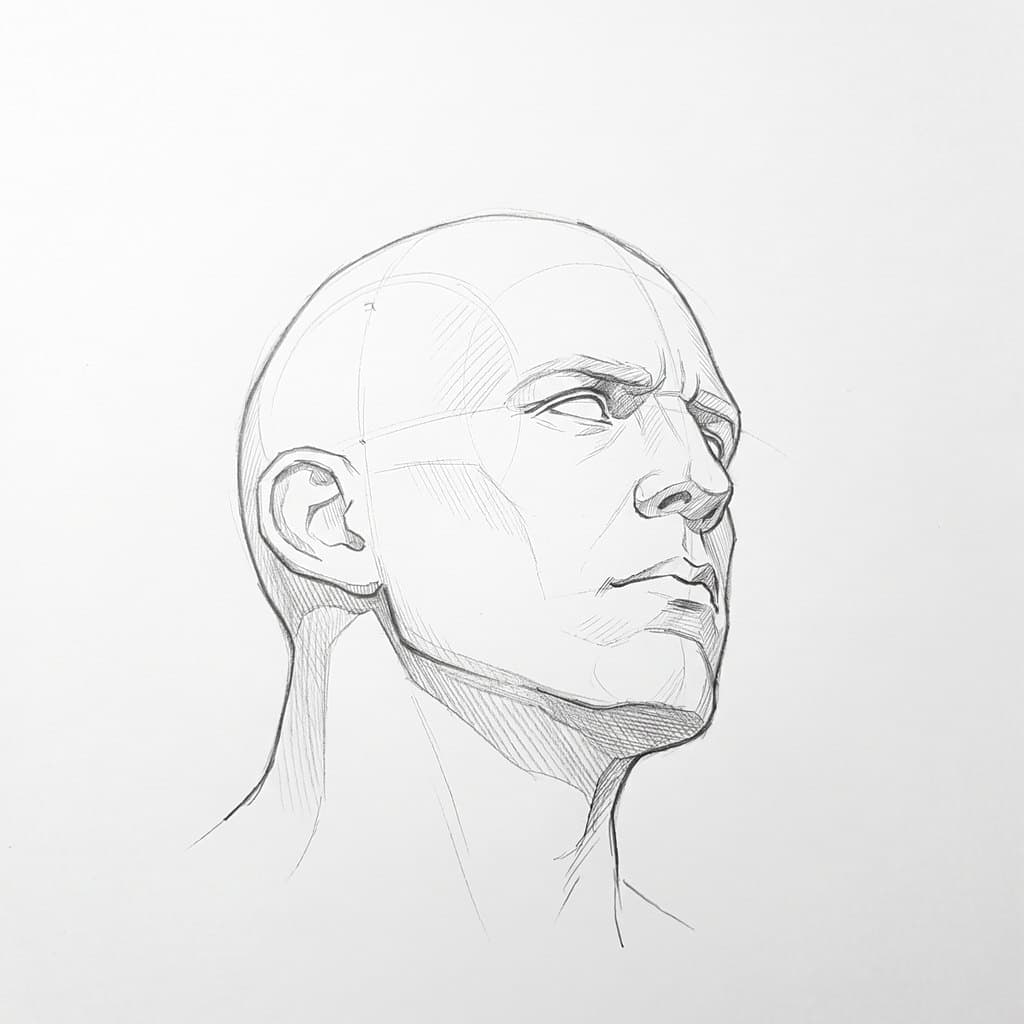
A head turned 45 degrees, seen from 20 degrees below, measured on two drawn heads: the ear stays near the eye line, the crown shortens, the jaw shows a band.
The iris measured on ten drawn heads: how big it is in the eye, where the lids cut it, and how much it narrows as the head turns.
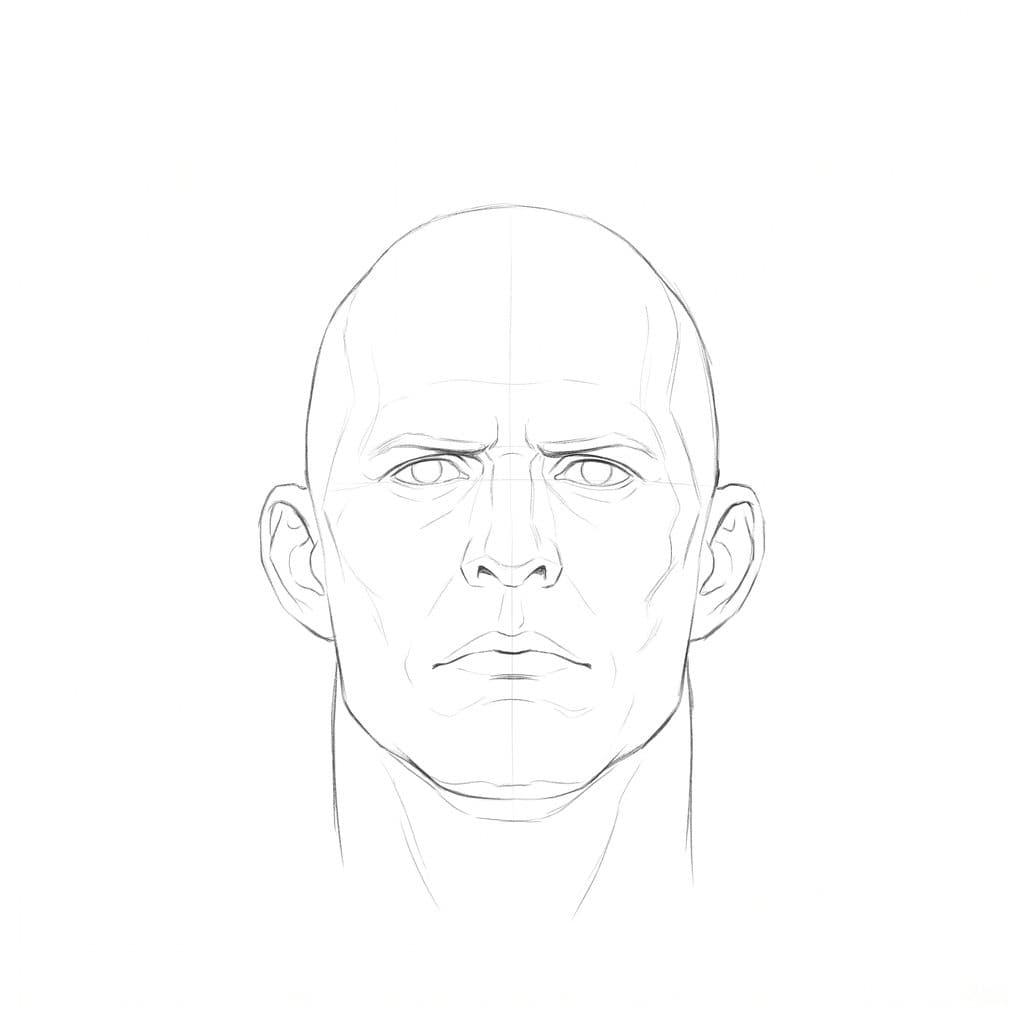
The groove under the nose and the bow of the upper lip, measured on ten drawn heads: how long, how wide, and where the two peaks of the bow sit.
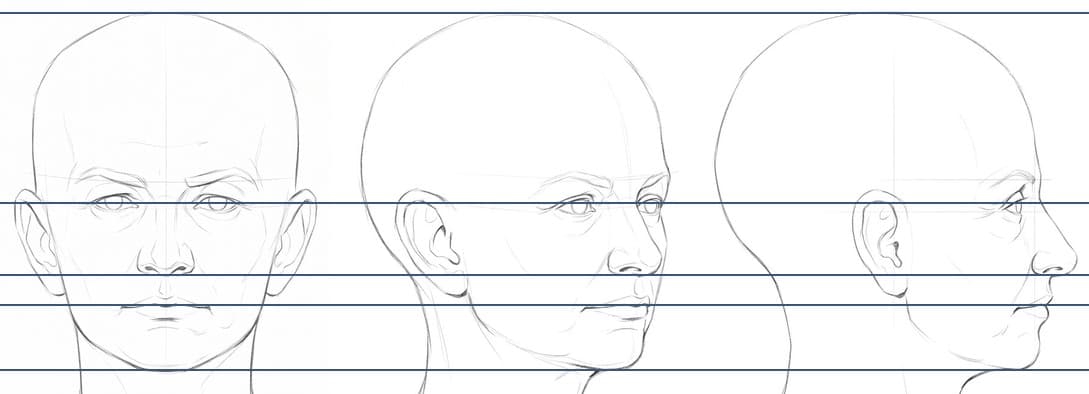
When a face turns, its heights stay put and its widths change. Measured on ten heads at the front, 45 degrees and profile, with how far each line moved.
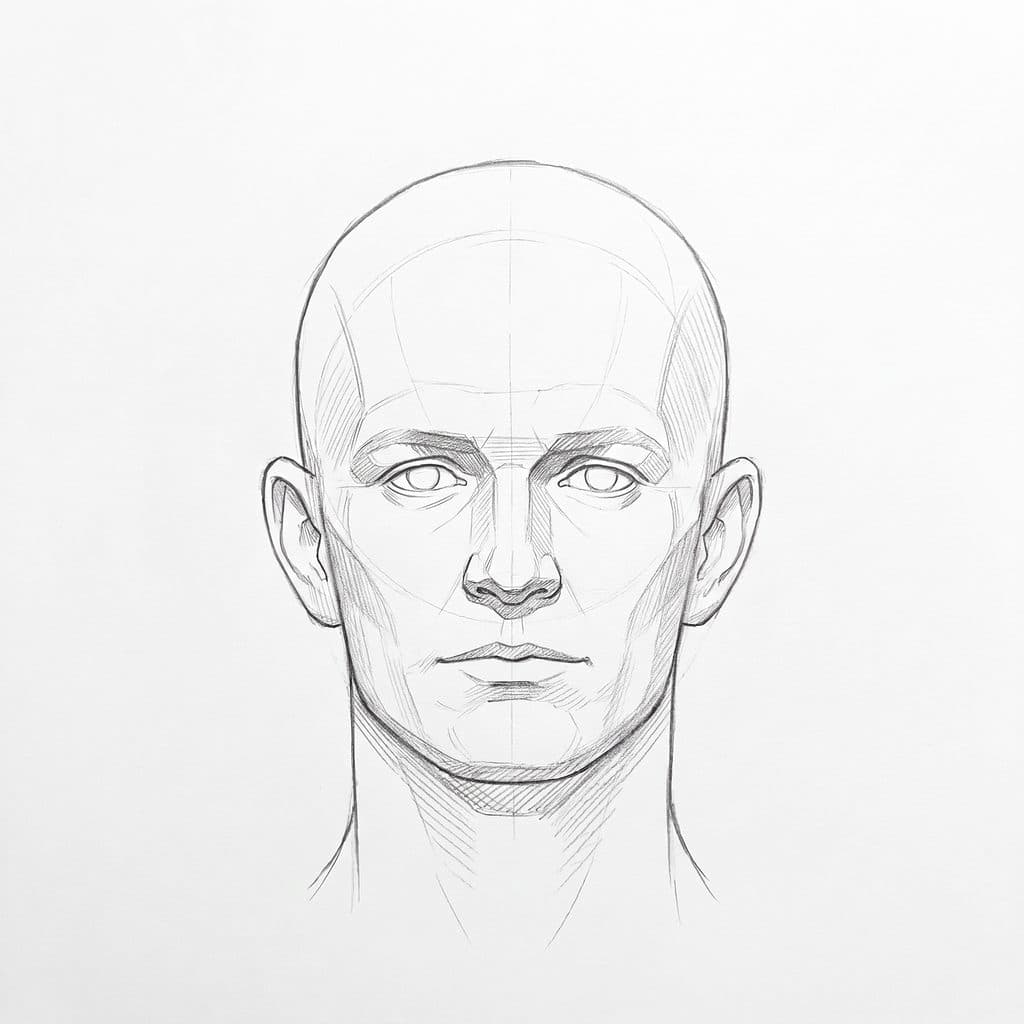
Stroke directions measured on twenty hatched head drawings: mirrored from the front, a new direction for temple, cheek and jaw at a turn.
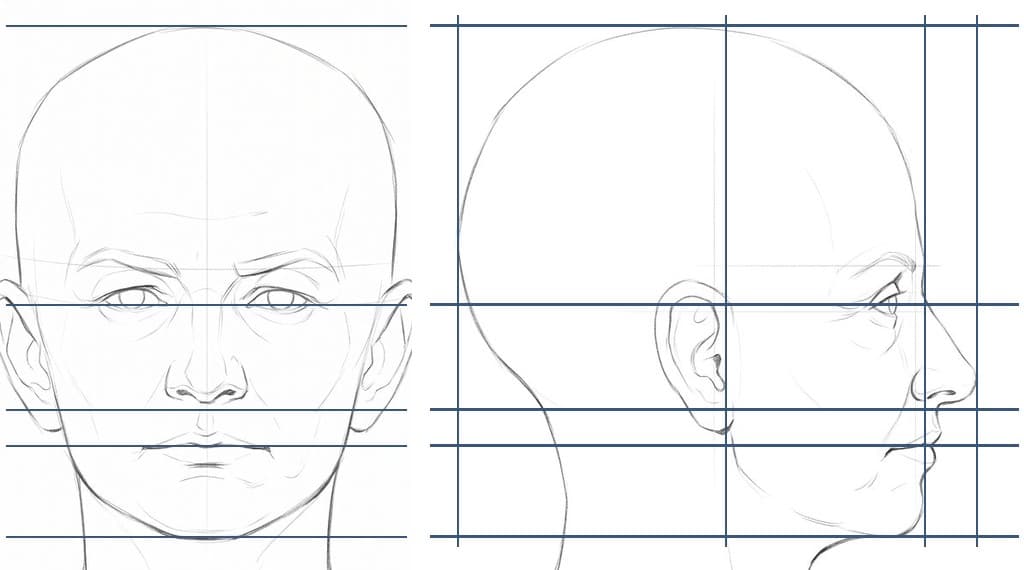
Side profile proportions measured on ten drawn heads: where the eyes, nose, mouth and ear fall, and how the brow, nose tip and chin line up.
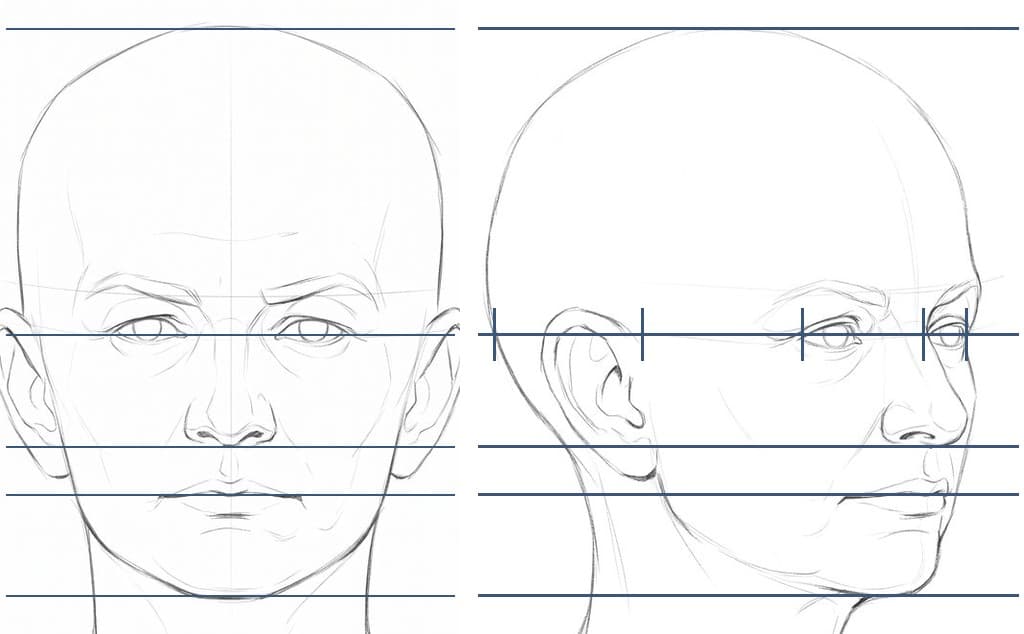
Three-quarter face proportions measured on ten drawn heads: the heights carry across from the front, and the eye line splits into about seven eye widths.
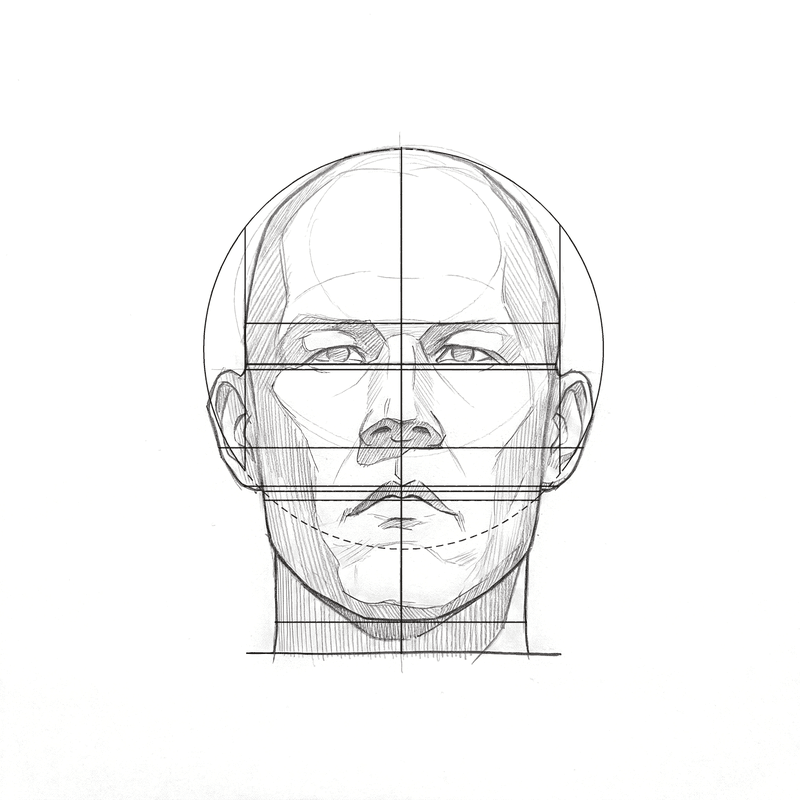
The usual face proportions checked against four measured heads: where the eyes, brow, nose and mouth fall, which rules hold and which ones bend.
Four width rules checked on ten drawn heads: the gap between the eyes, five eyes across, how wide the nose is and where the corners of the mouth fall.
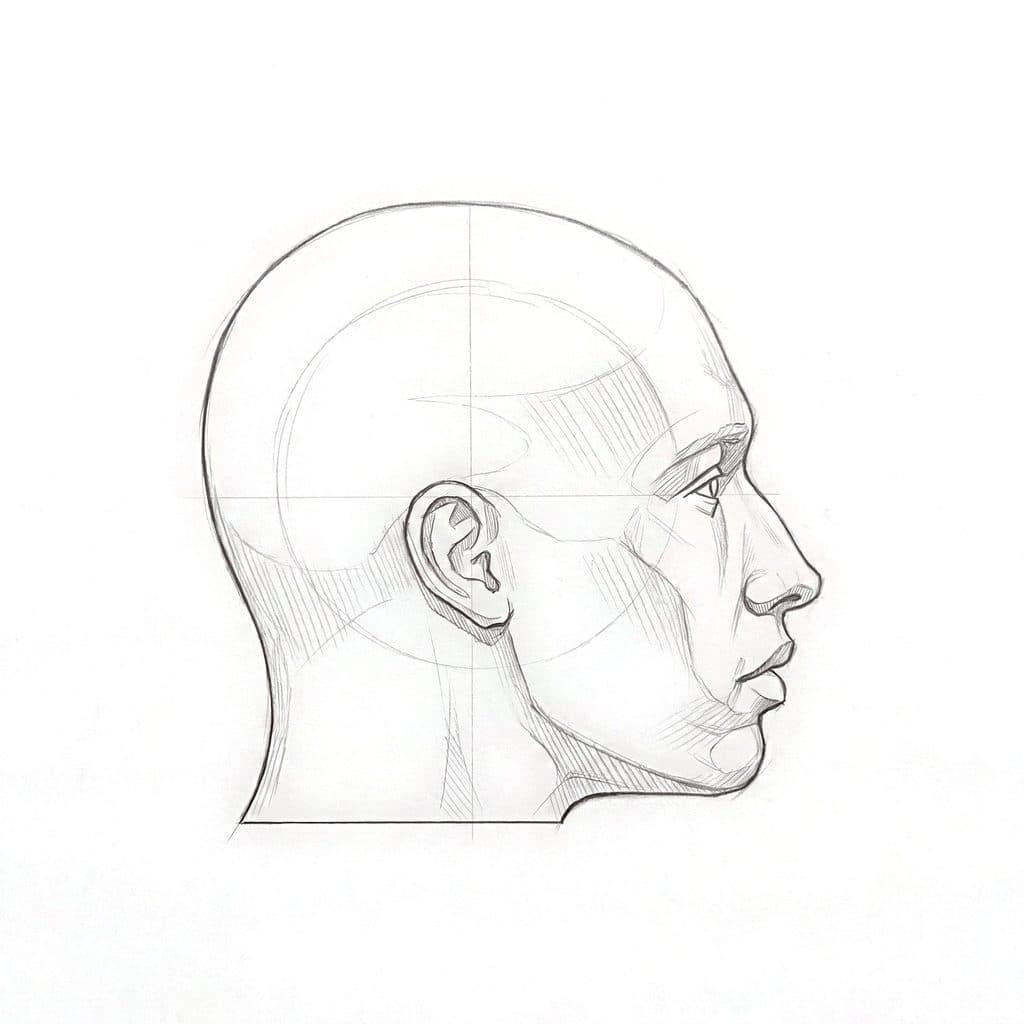
With no hair, the outline of the skull is the drawing. Five checks place its depth, its back, its crown and its sides, read off two heads.
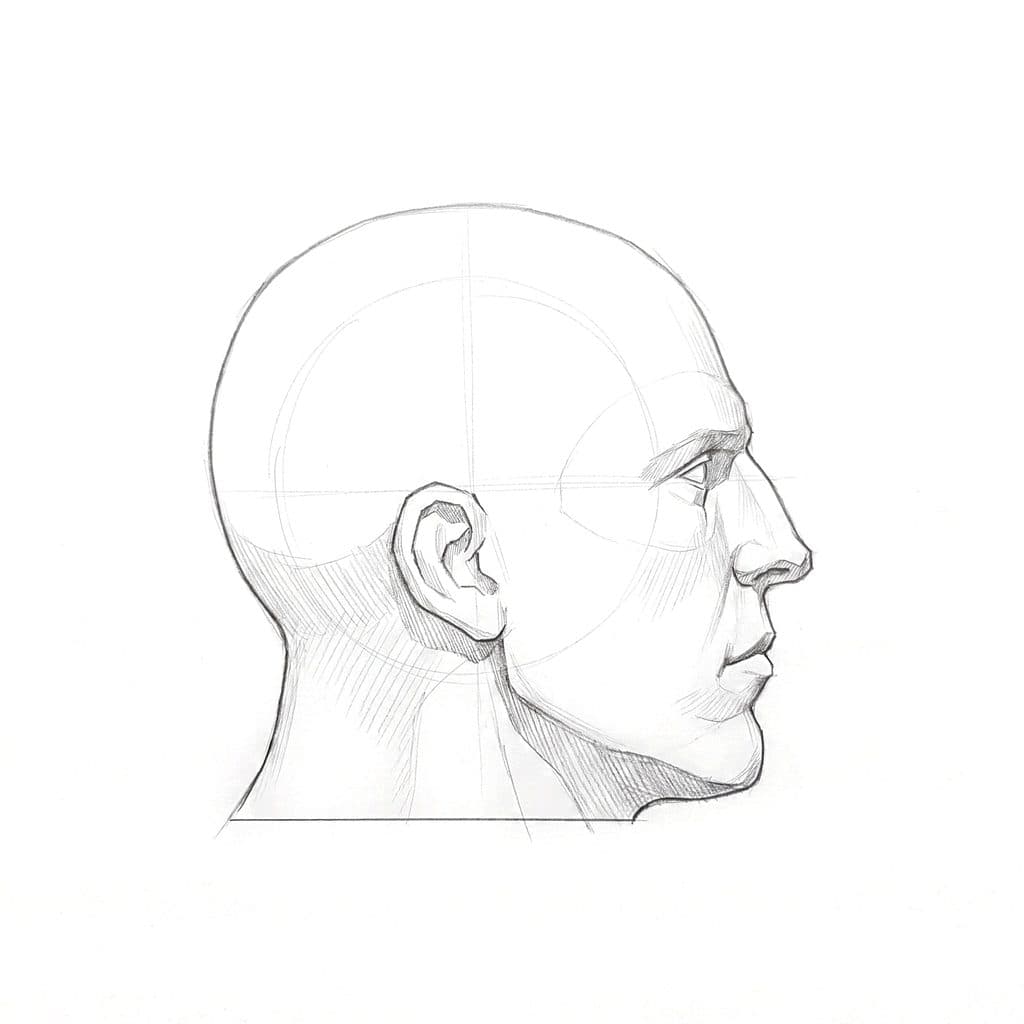
Two checks place the chin against the lower lip and the nose, and the shape under the lip shows whether a chin reads firm or soft. Read off three heads.
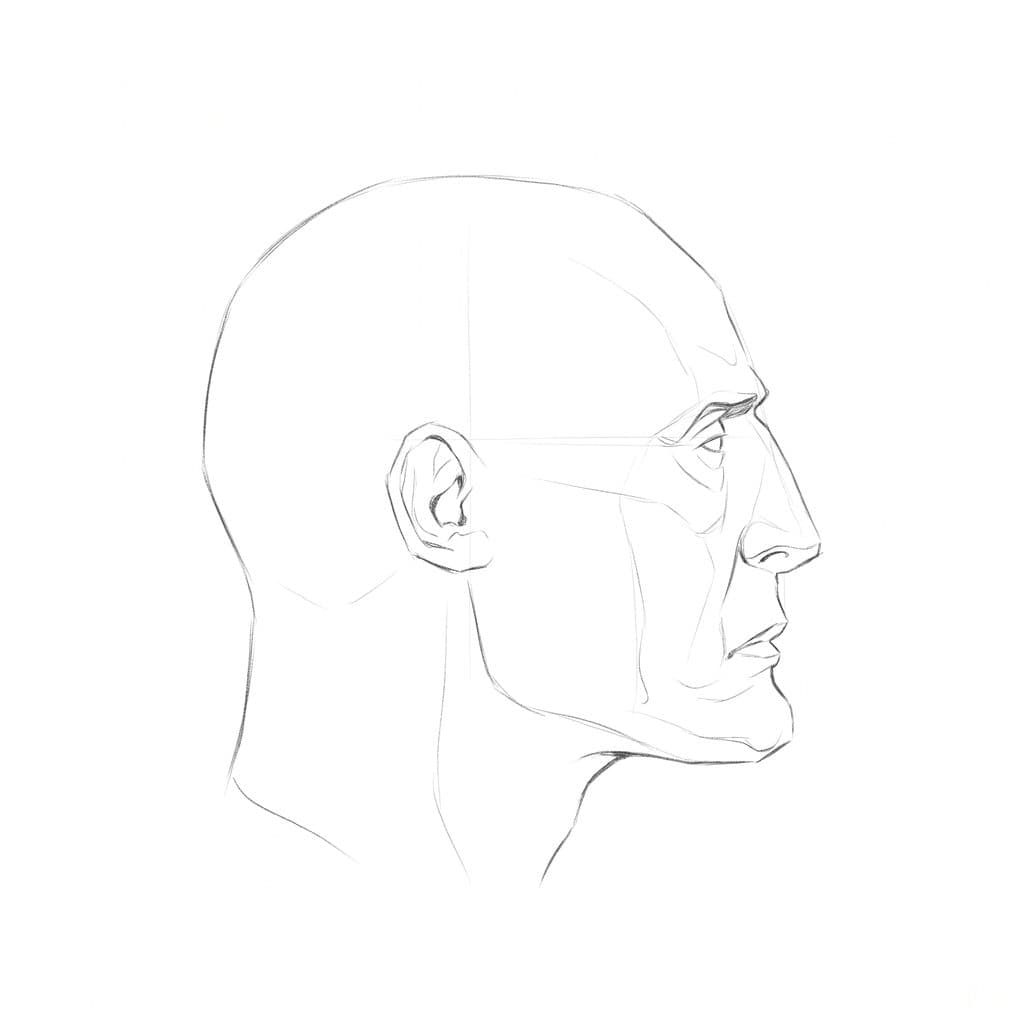
The forehead in profile, measured on ten drawn heads: how far it leans back, how far the brow steps out, and where it turns into the top of the head.
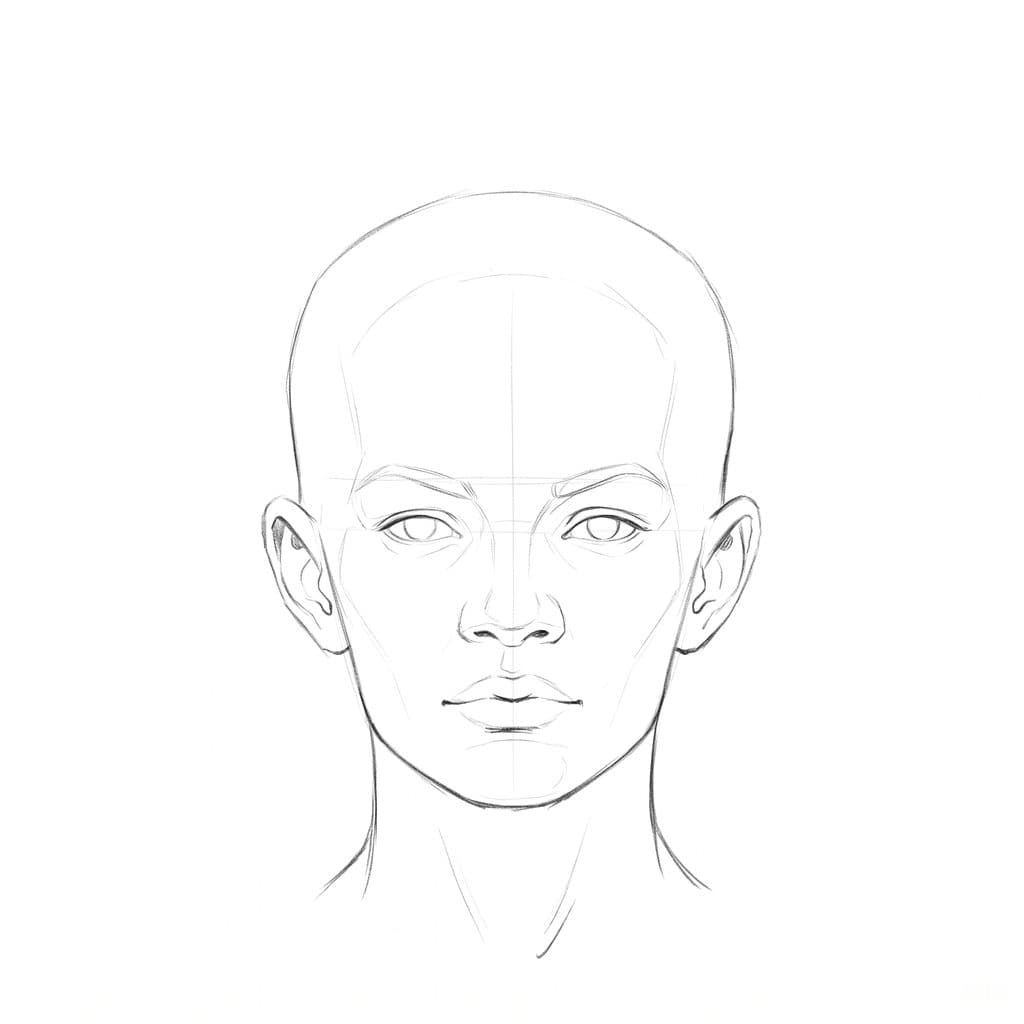
Two drawn heads with the same skull measured from the ear to the chin: the heart-shaped one is narrower all the way down, most of all just above the chin.
Ten drawn heads measured for face length: on the long ones the eyes and nose sit higher, the stretch to the chin is longer and the jaw is no narrower.
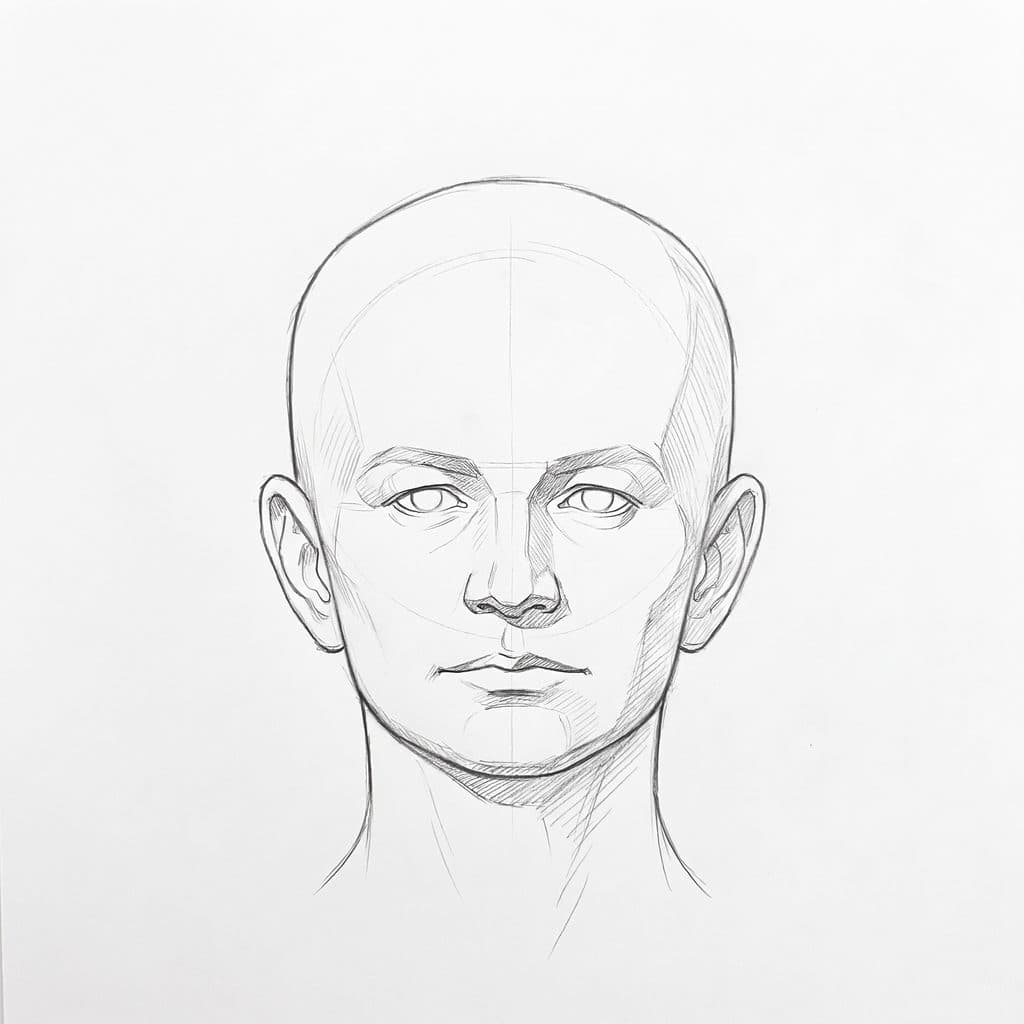
A round face and a lean one measured from the front and in profile: the width at the mouth, a jaw drawn as one curve, and tone that hugs the outline.
Two drawn heads measured from the ear lobe to the chin: on the square one the sides hold their width down to a corner below the mouth, then turn.
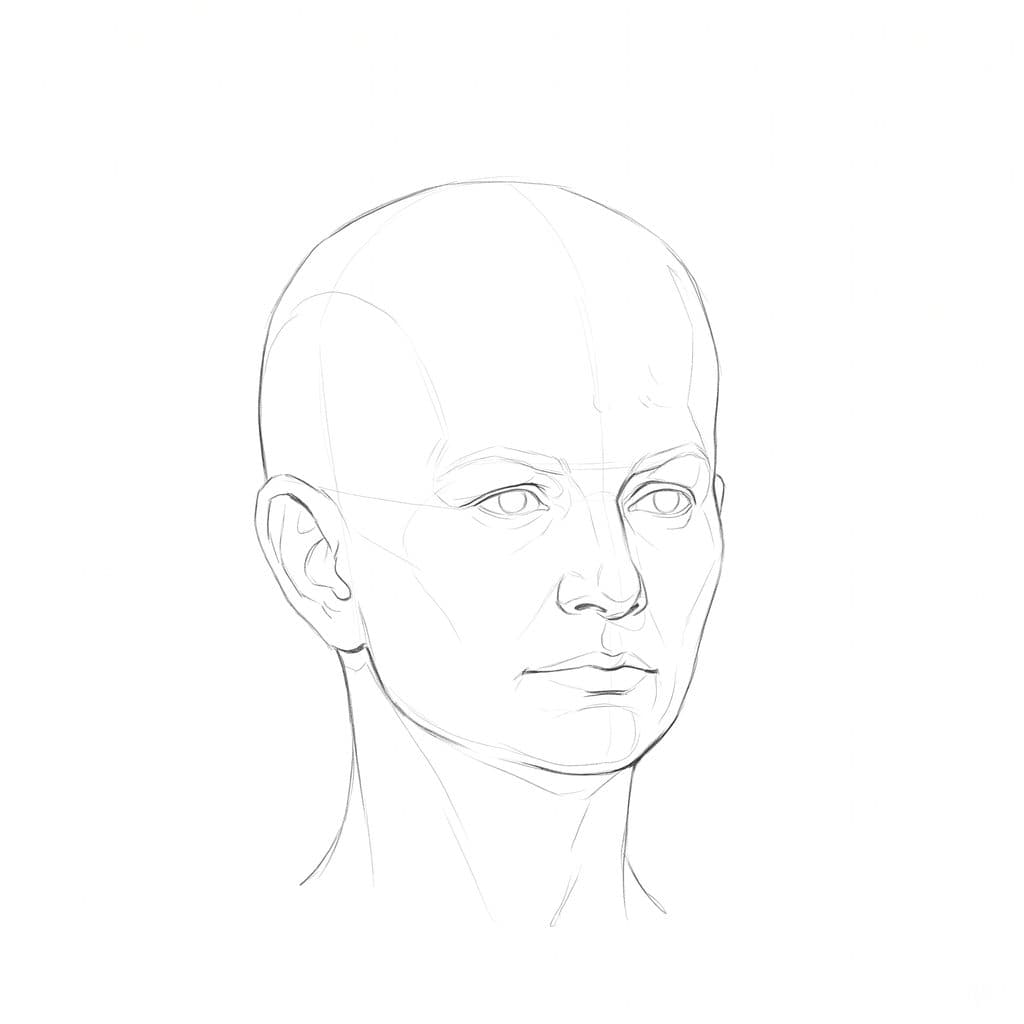
How even a front view is on ten drawn heads, how to check yours, and what a small turn does to the far eye and the far half of the mouth.
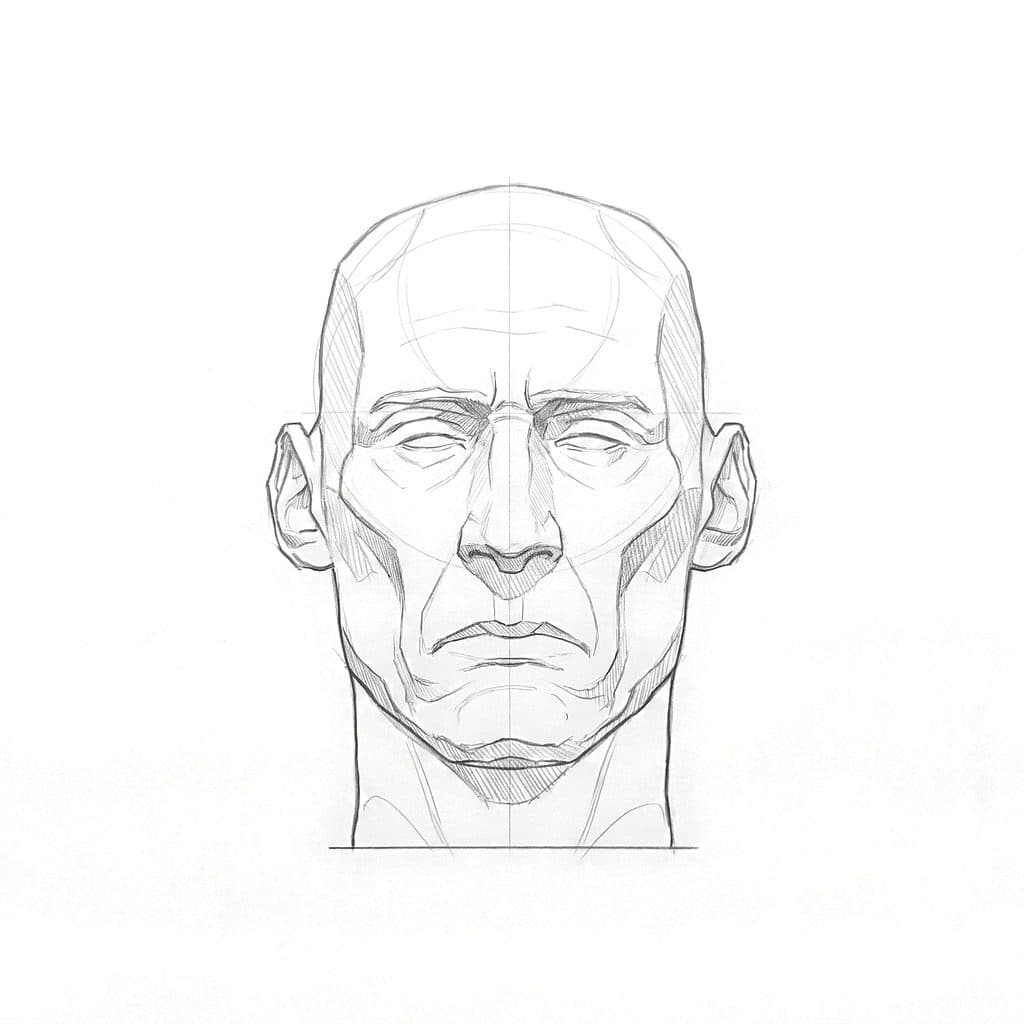
A gaunt head and a smoother one share the outline at the cheeks and jaw. The thin look is a band of tone down the outer cheek and a light patch below it.
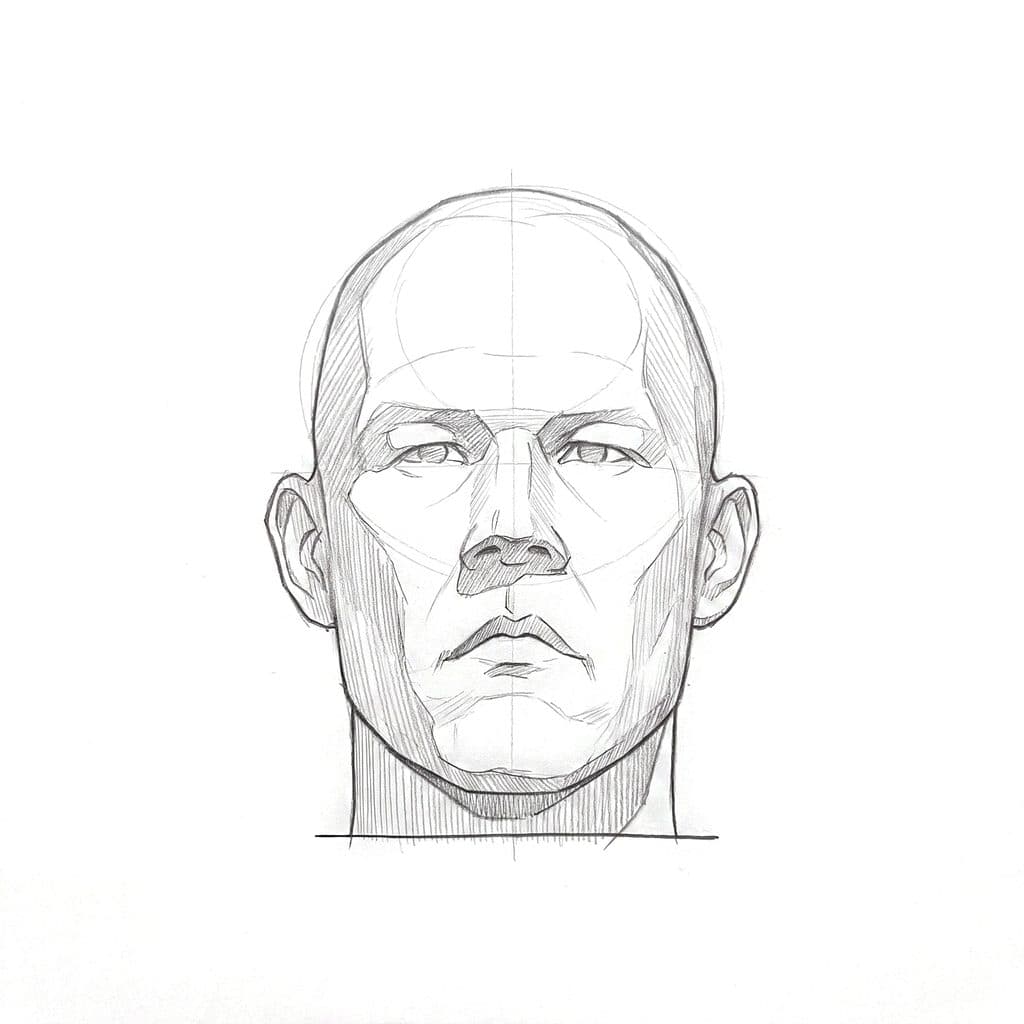
An angular face and a smoother one compared at three angles: the tone edge on the cheek, the straight runs of the jaw, and the step from forehead to brow.
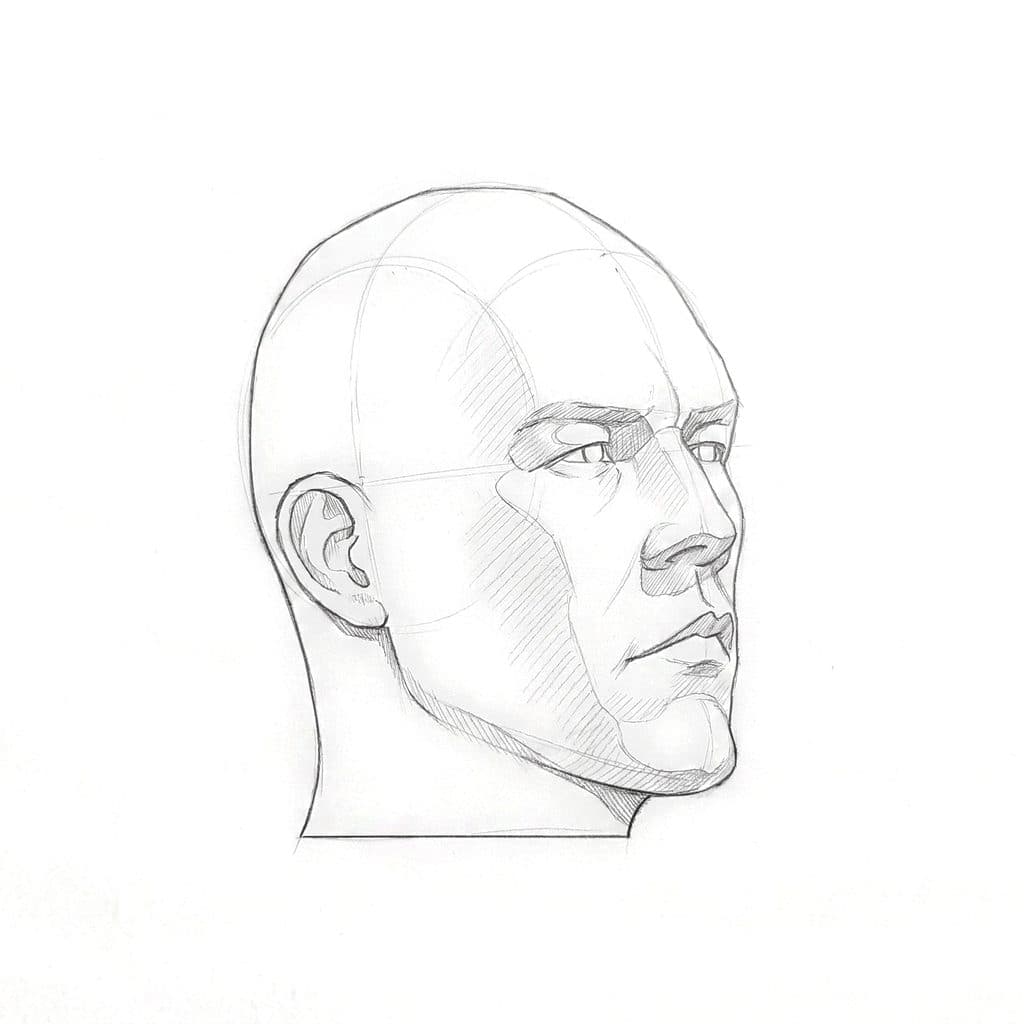
The eye sits in a hollow wider than itself, under the brow and beside the nose. Where its dark values go, read on two heads at three angles.
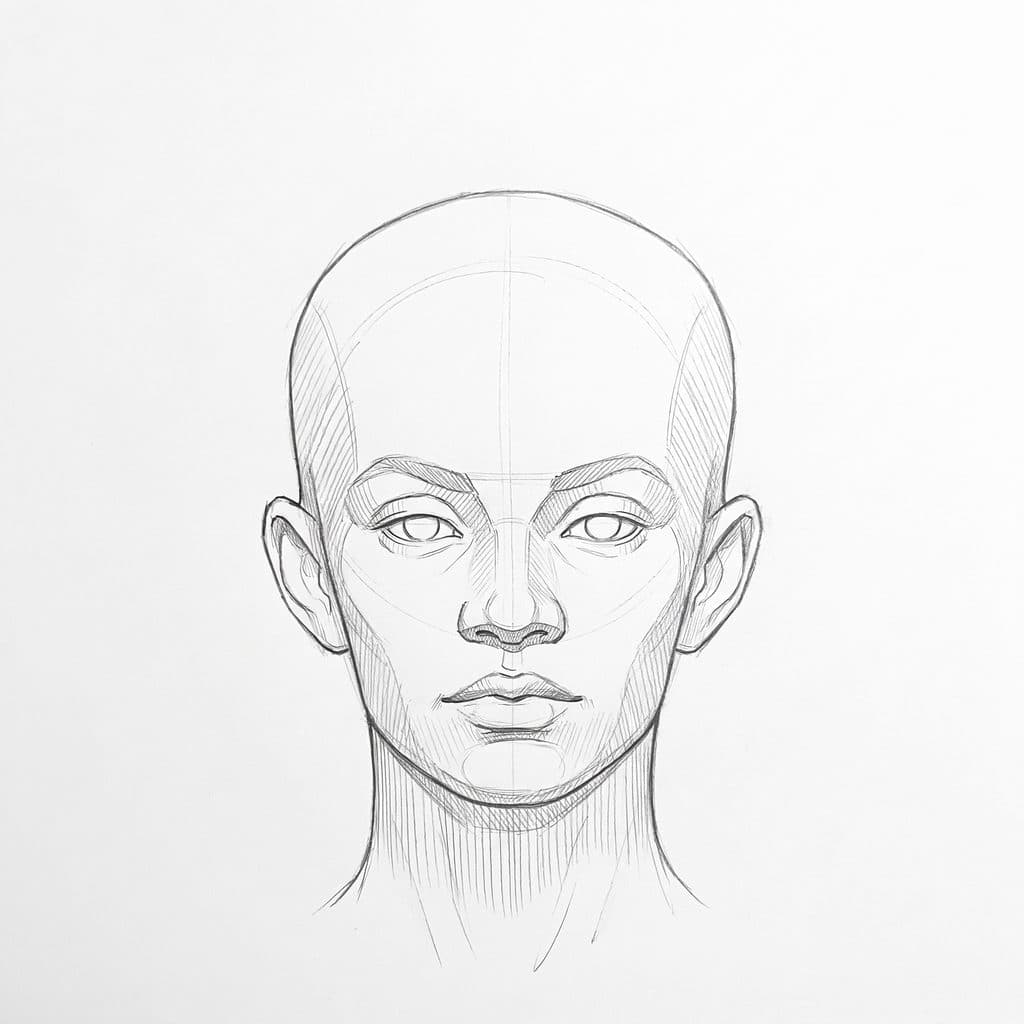
Full lips are taller, not wider. How much of the space from nose to chin they take, how the upper lip matches the lower, and how far they stand forward.
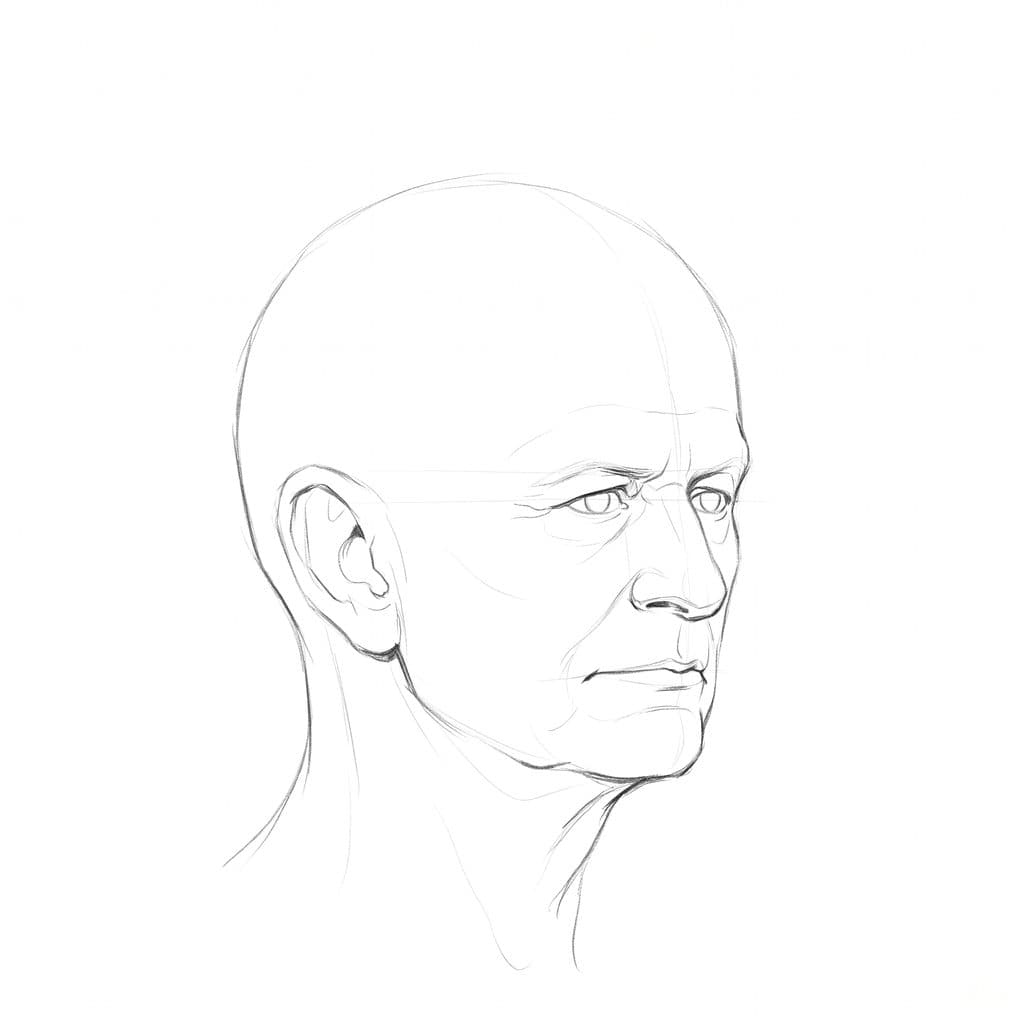
The fold from the nose to the mouth measured on ten drawn heads: where it leaves the nose, how far down it runs and where it passes the mouth.
The box method puts the head in a box before any features. Here is the size of that box, measured on ten heads, and how to turn it.
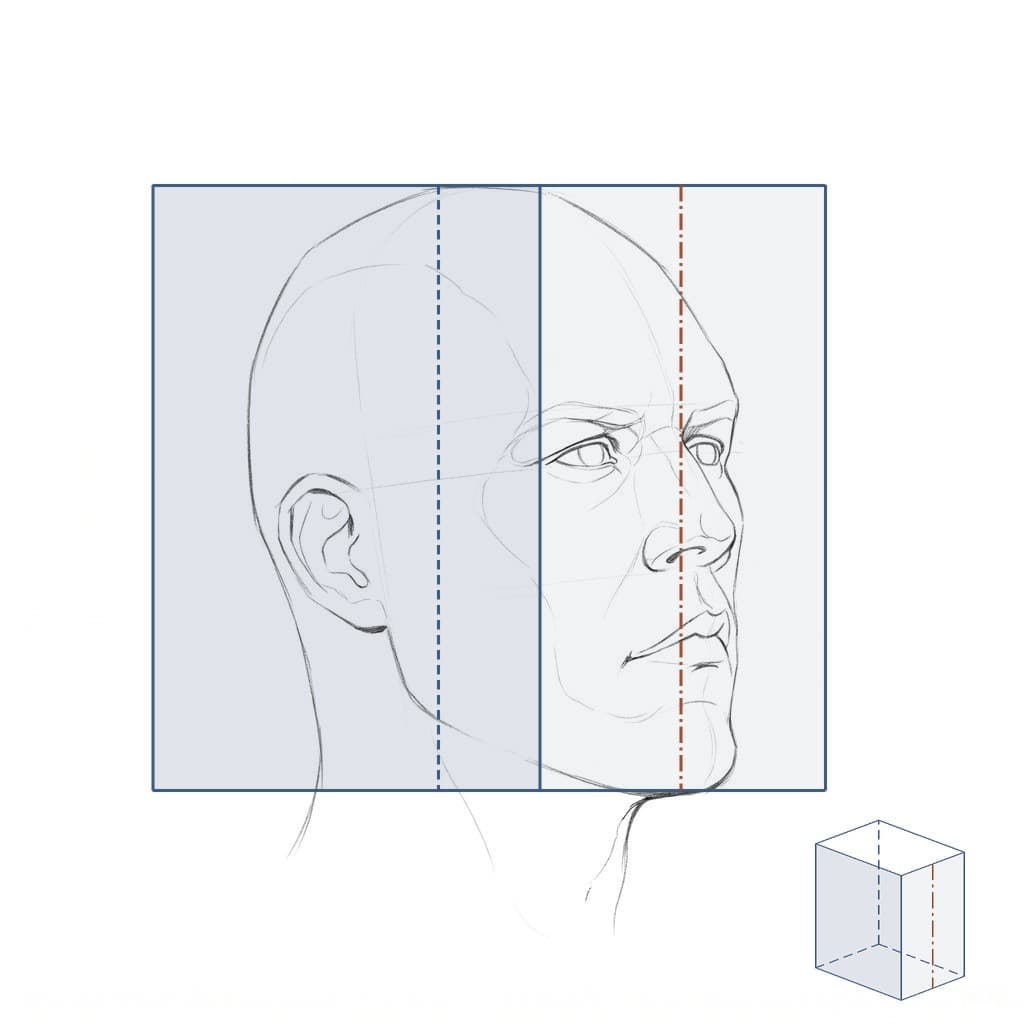
The Loomis ball, the box and the planes, fitted to one measured head: what each one settles, what it leaves to you, and which to start with.
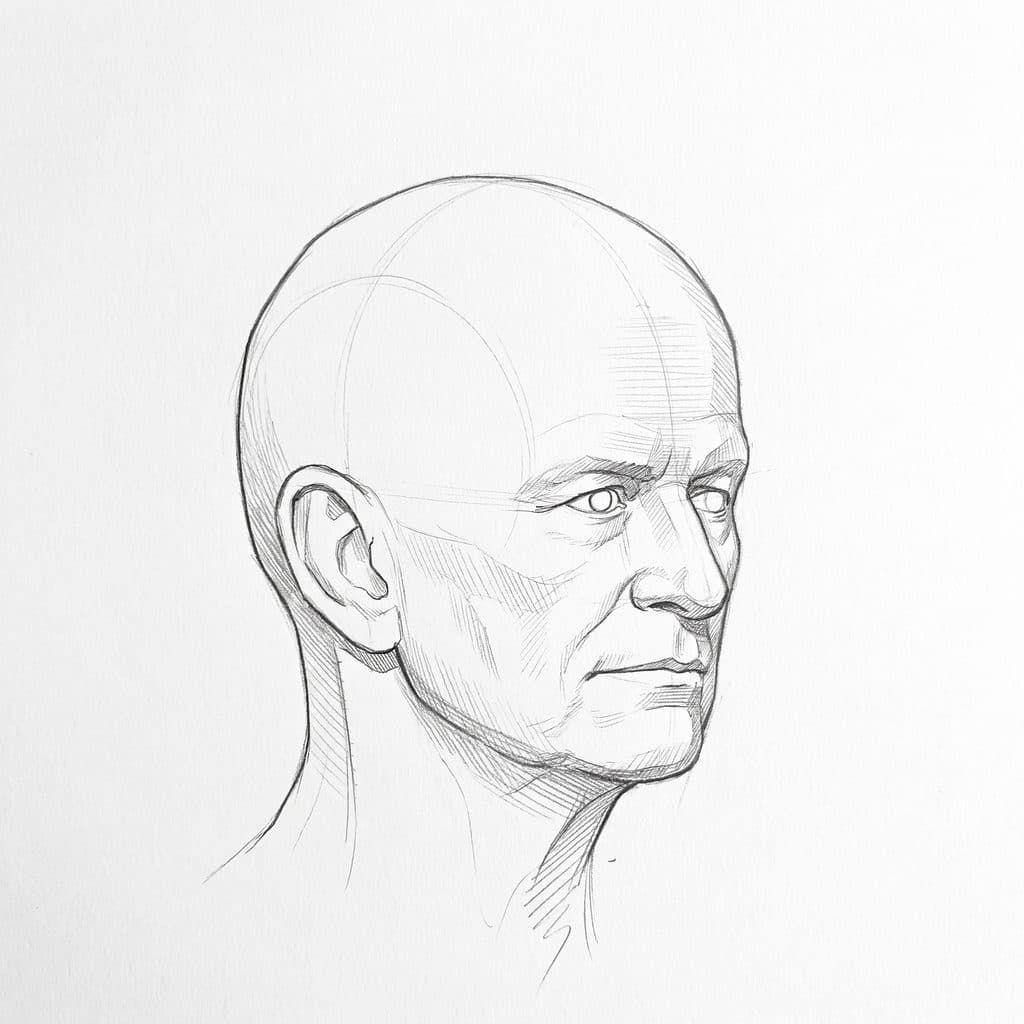
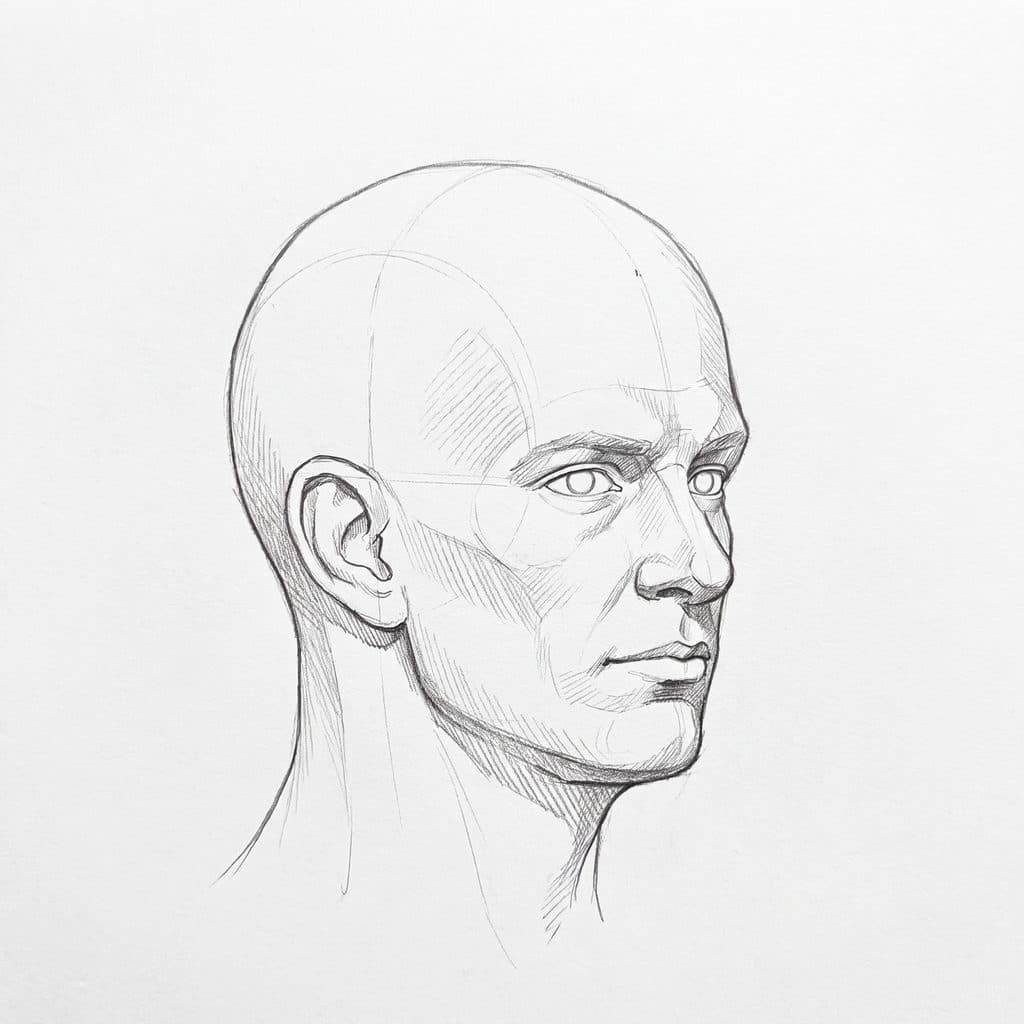
Where the brow ridge sits from the front, at three-quarter and in profile, and how the shadow under it, more than its outline, makes a brow look heavy.
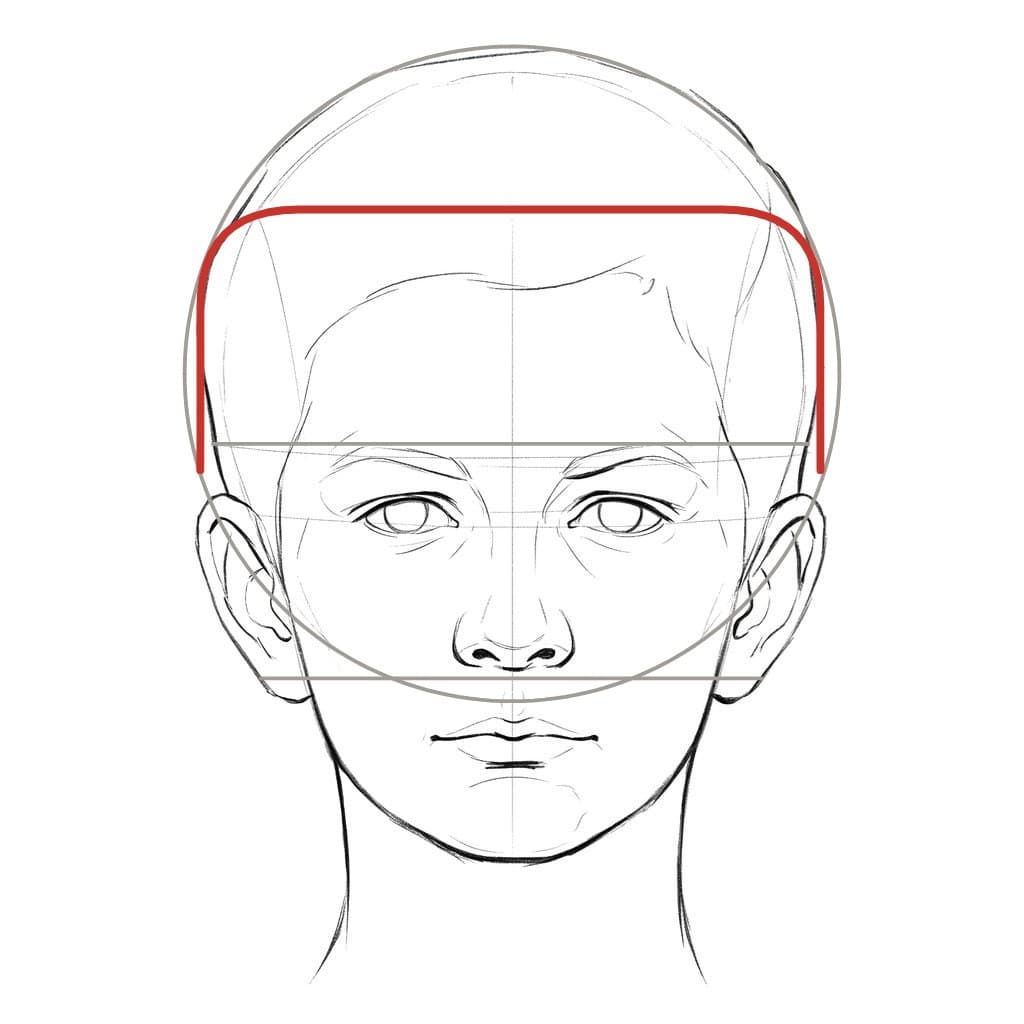
Find the hairline with one measurement, run it across the forehead and down the side planes, and follow it as the head turns to three-quarter and profile.
The Loomis head as Loomis wrote it: a ball with the sides sliced off, a cross for the brow and middle line, three equal spaces, then checked on our plates.
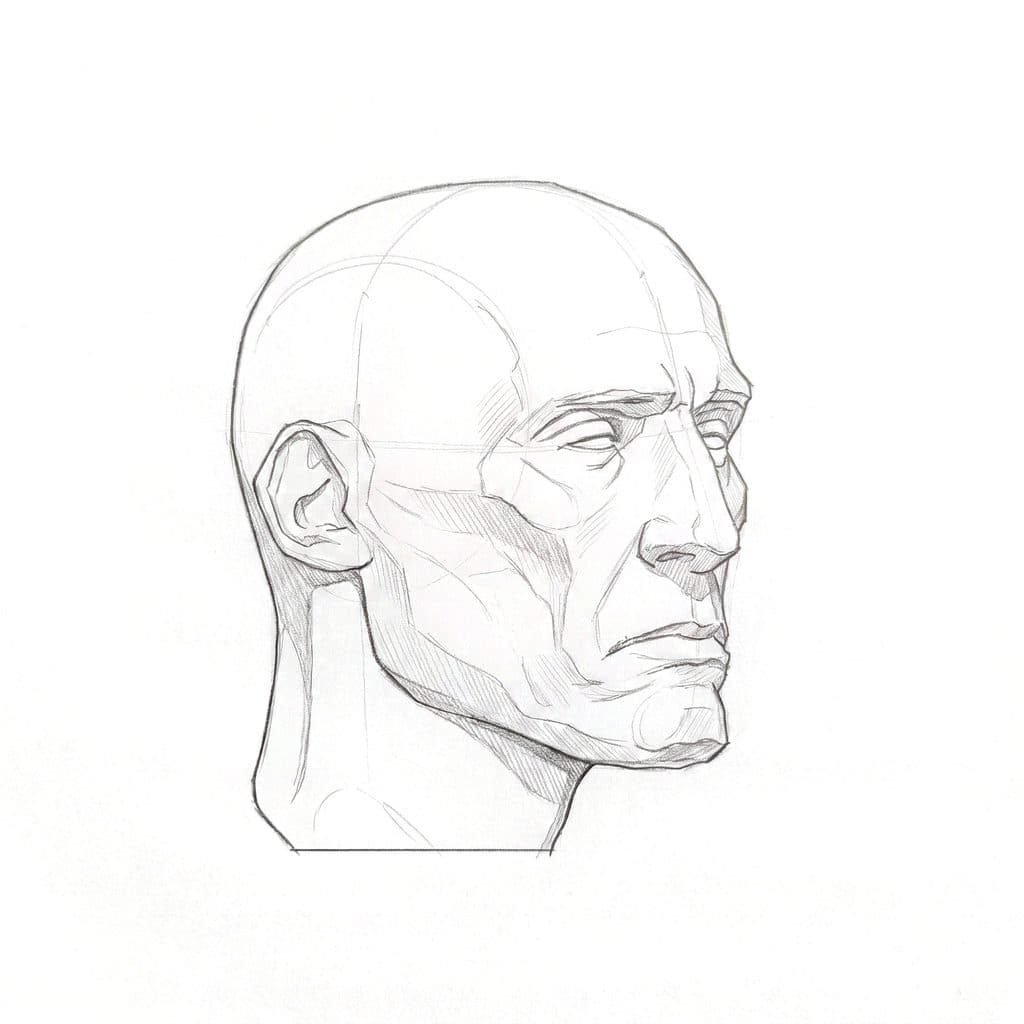
Where the cheekbone, its arch and the hollow under it sit from the front, at three-quarter and in profile, on a lean, older head and a younger, fuller one.
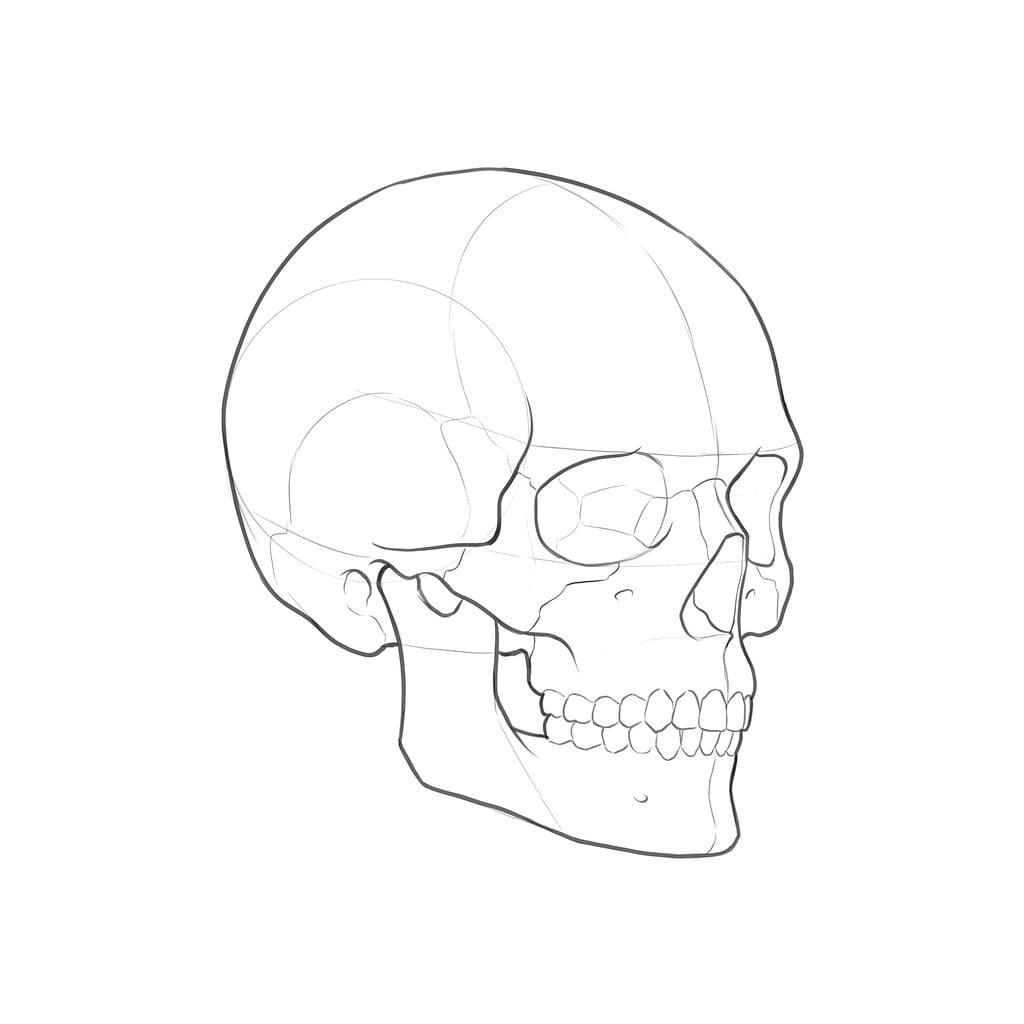
Draw the cranium as a ball with flat sides, hang the face under its front and hinge the jaw in front of the ear hole. Then turn it all the way around.
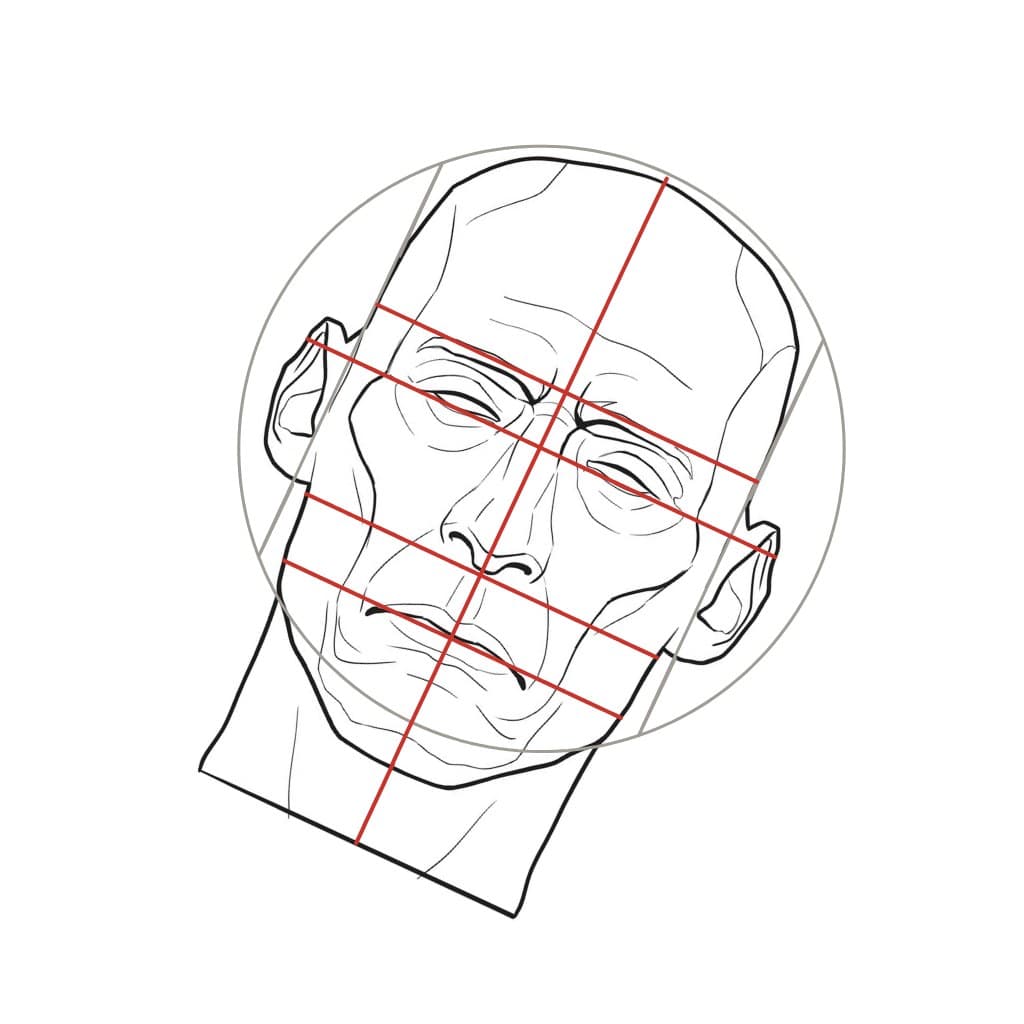
A head tilted toward one shoulder is the same head drawn on a leaning cross. In profile, the same lean turns into a head looking up or down.
Build the head at rest, then move three things: the brows against the eye line, the lower lids when the cheeks rise, and the jaw. The nose base stays put.
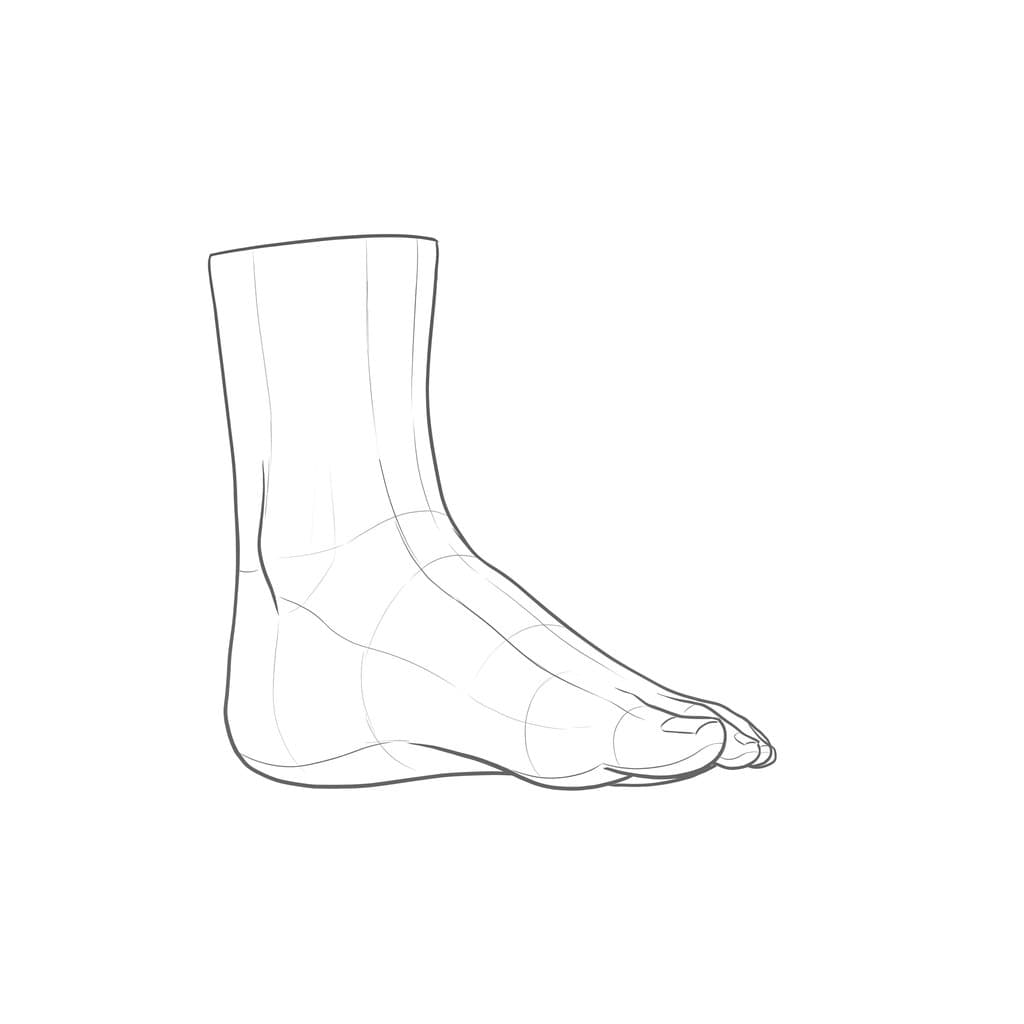
Draw the foot as a wedge, high at the ankle and low at the toes, with the heel as a block behind it. Then turn it from the inside to the front to the back.
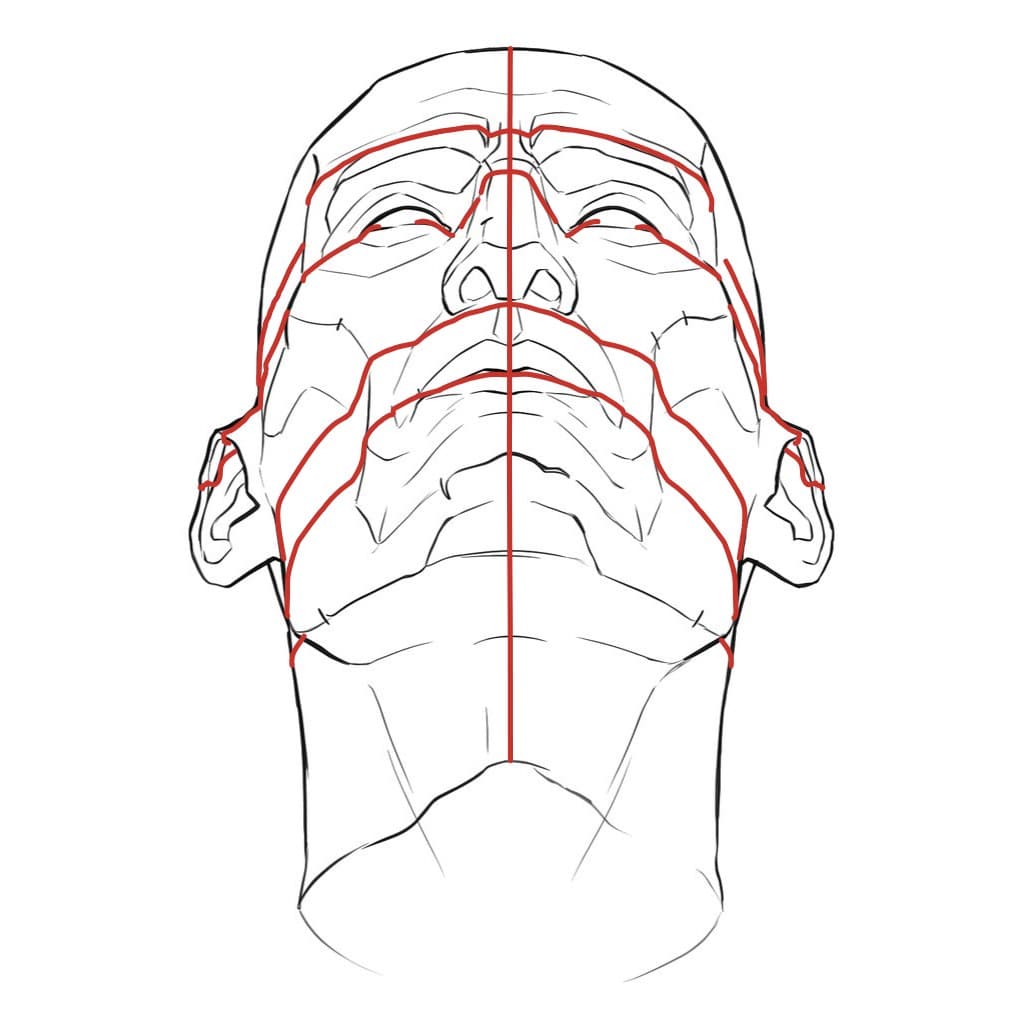
From far above or below, the feature lines curve almost twice as much as at a gentle angle, the ears slide past the features and one end of the head takes over.
Looking down at a face, the construction lines curve the other way, the ears rise against the features, the skull grows and the face under the nose shortens.
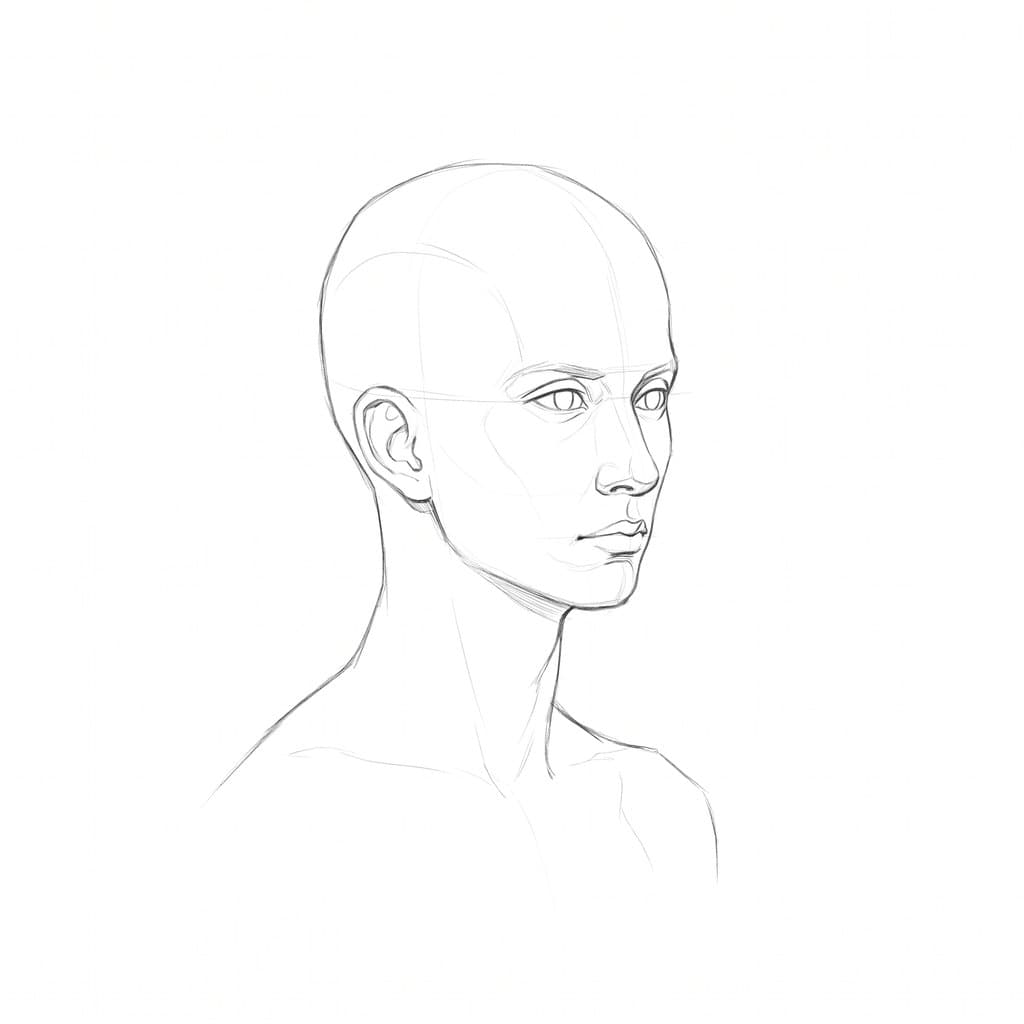
Draw the neck as a cylinder that leans forward out of the shoulders, then add the two muscles every neck shows and the collarbones under them.
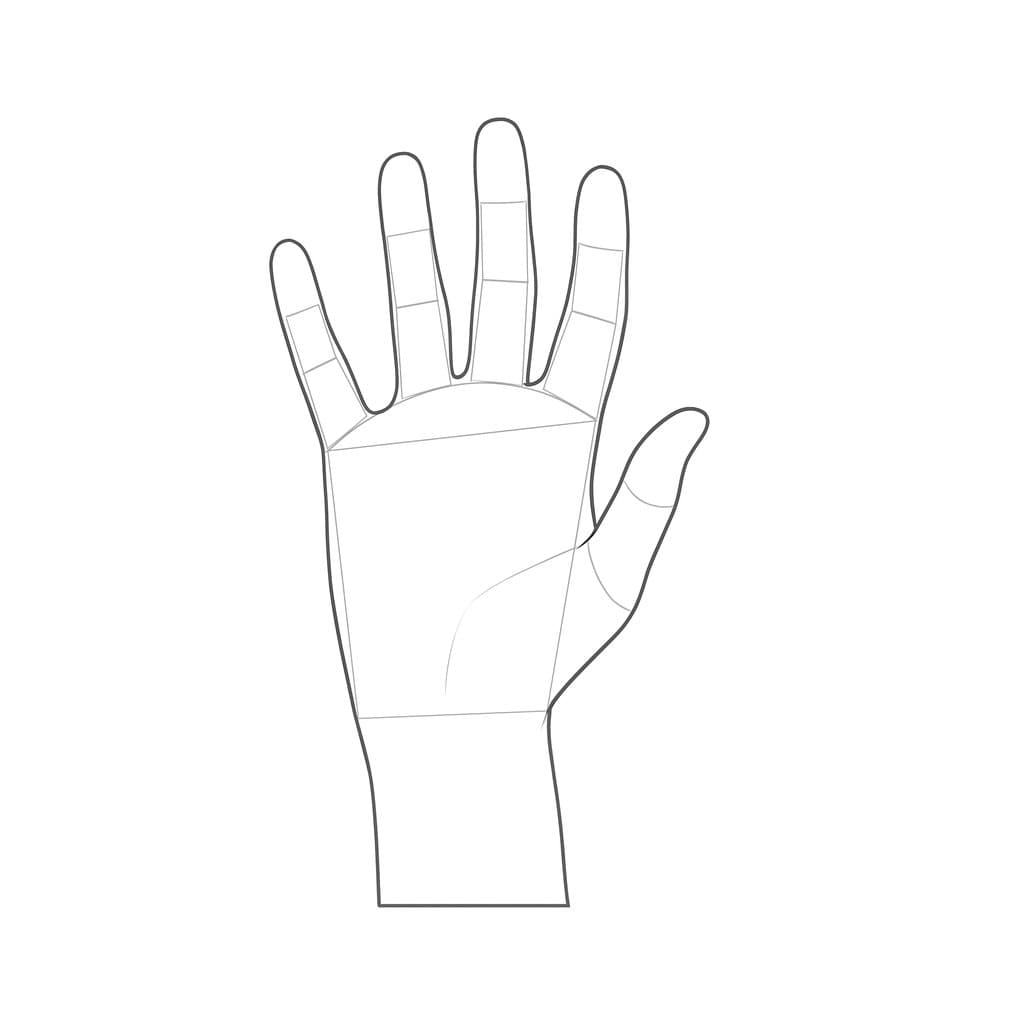
Draw the palm as a flat box, hang the fingers from an arc of knuckles and give the thumb its own side. Then turn the box from the palm to the edge to the back.
The jaw has a back edge, a corner and a chin. Where the corner sits against the earlobe and lower lip from the front, at three-quarter and in profile.
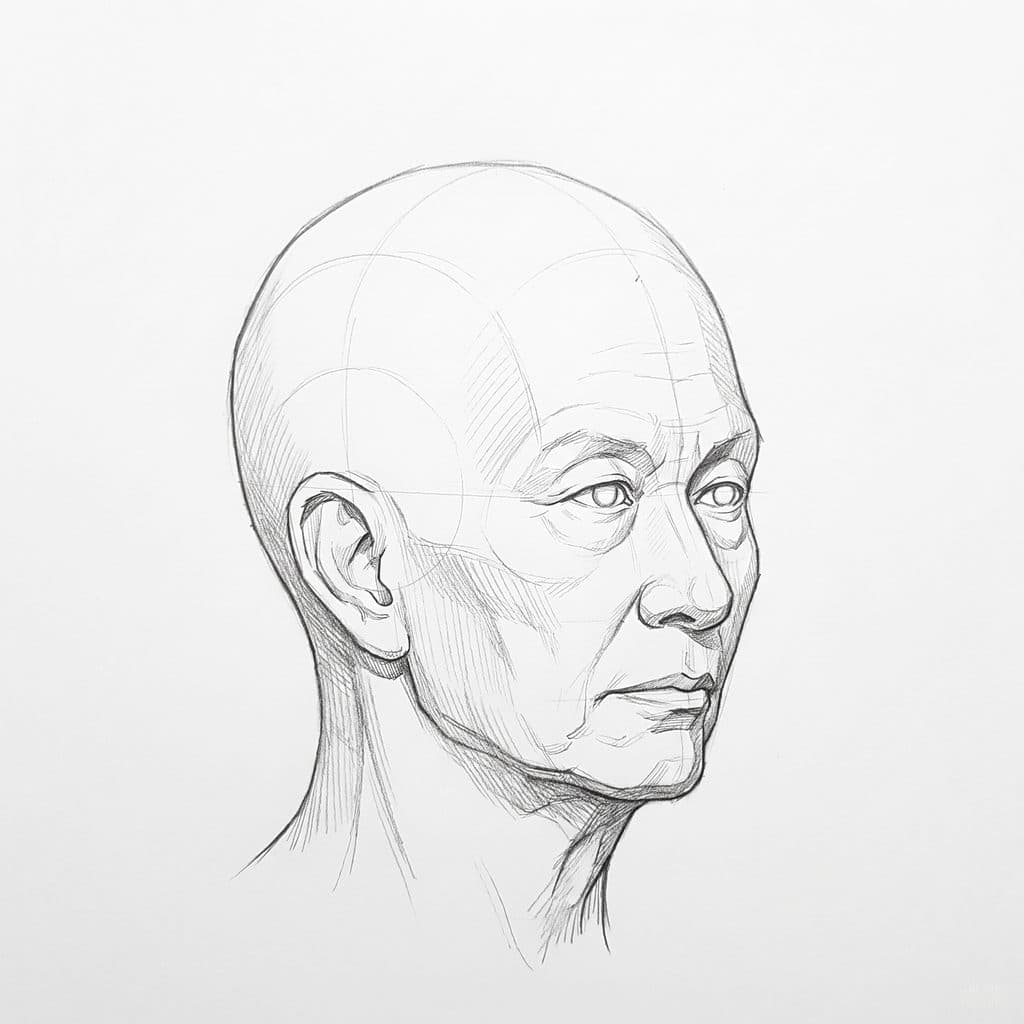
Where the nose-to-mouth fold, the lines under the eyes, the forehead lines, the jowl and the neck sit on an older head, built on a younger head's construction.
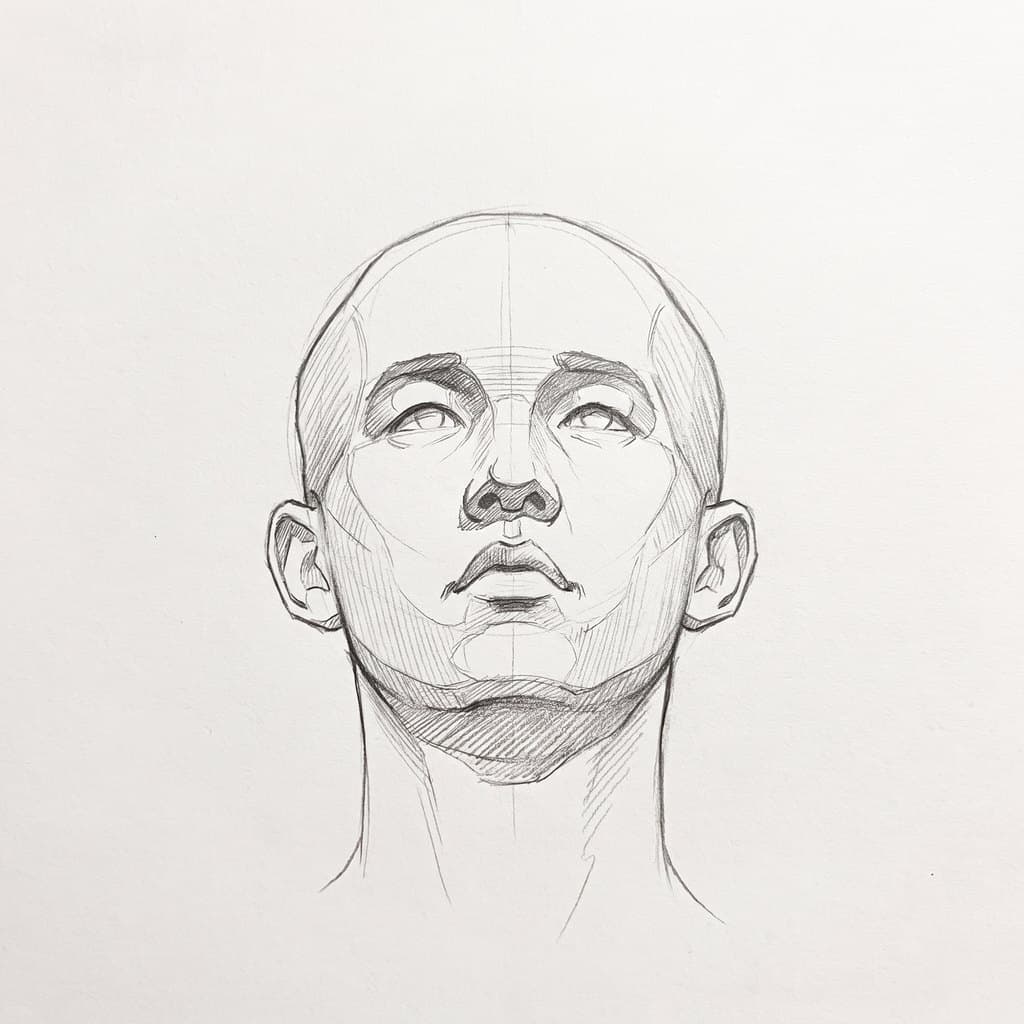
Looking up at a face, the construction lines arch, the ears move against the features, the jaw's underside becomes a shadow plane and the nostrils open.
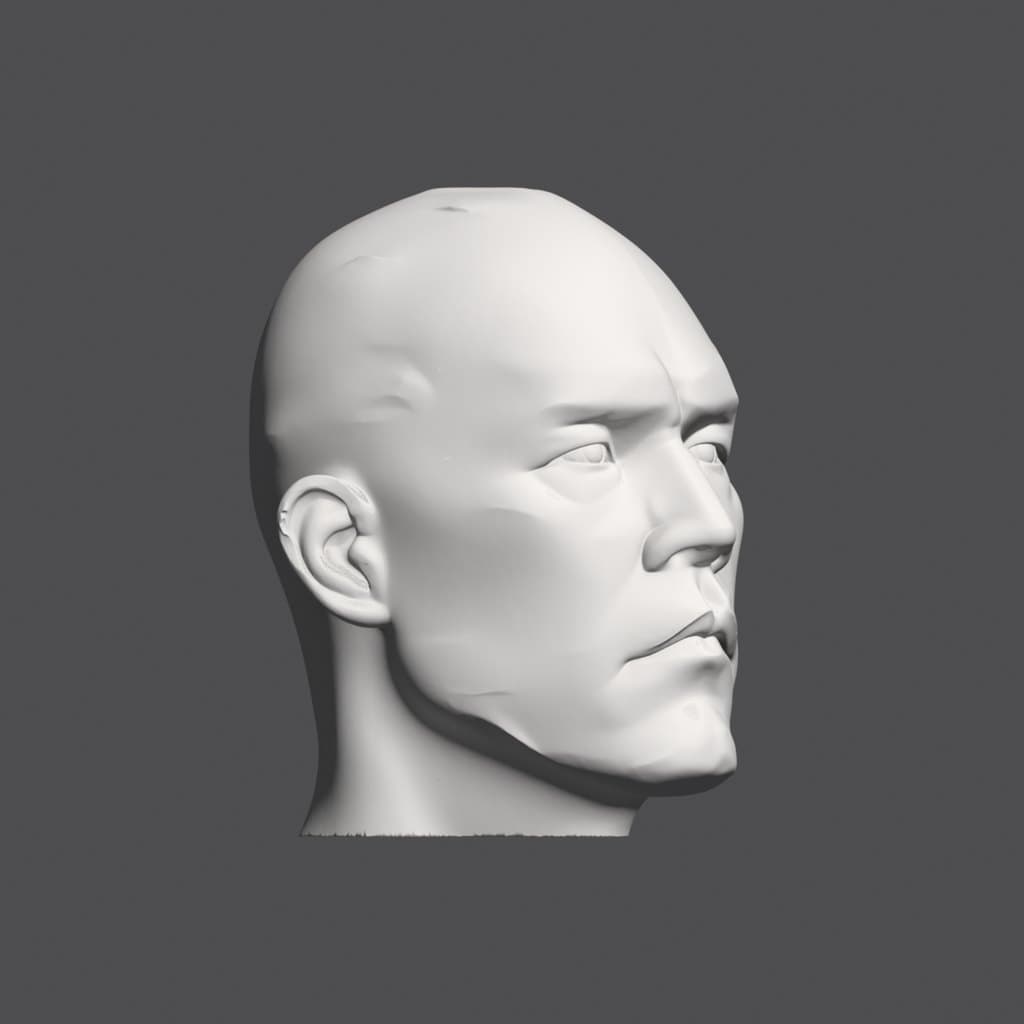
Shade a head in four passes: pick one light, find where light turns to shadow, fill the shadow side as one tone, then add the cast shadows.
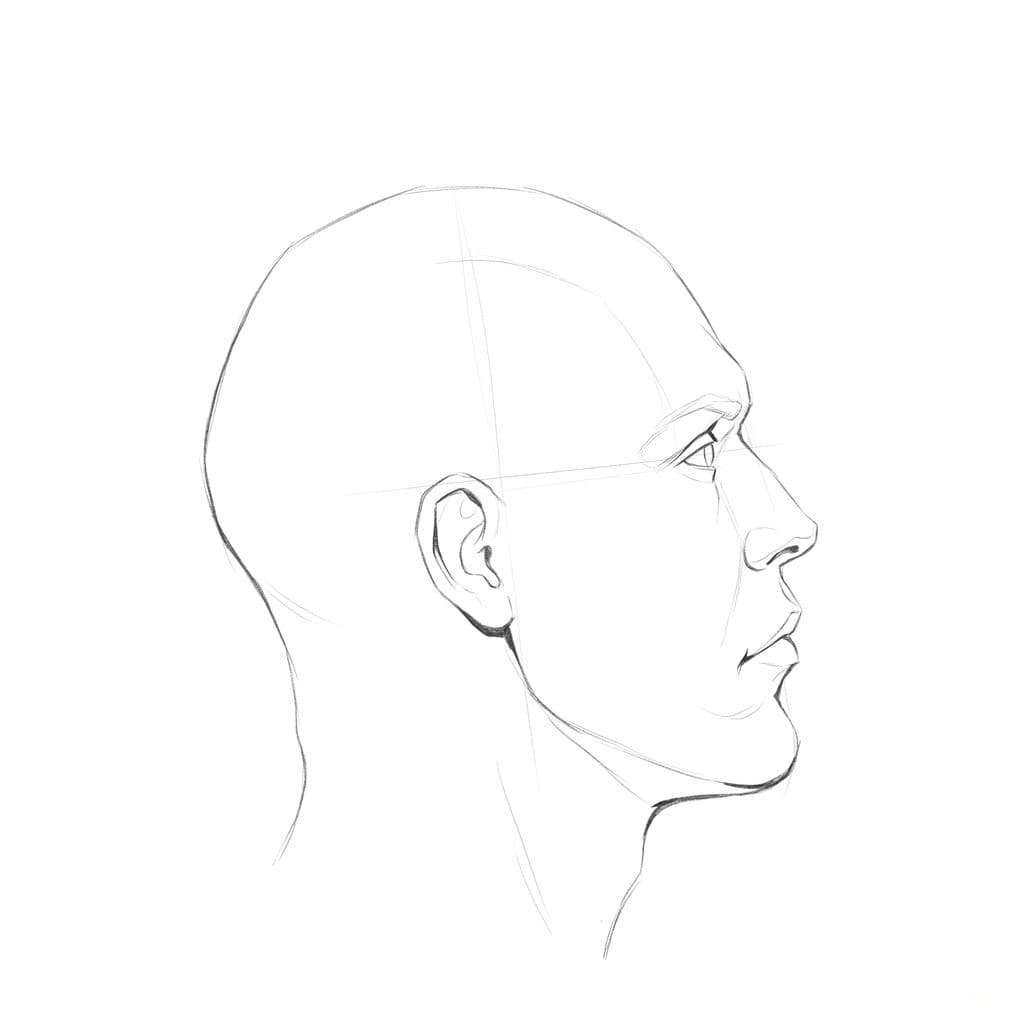
The head's parts an artist places first: cranium, brow ridge, eye sockets, cheekbone, jaw corner, chin, ear, back of the skull and where the neck attaches.
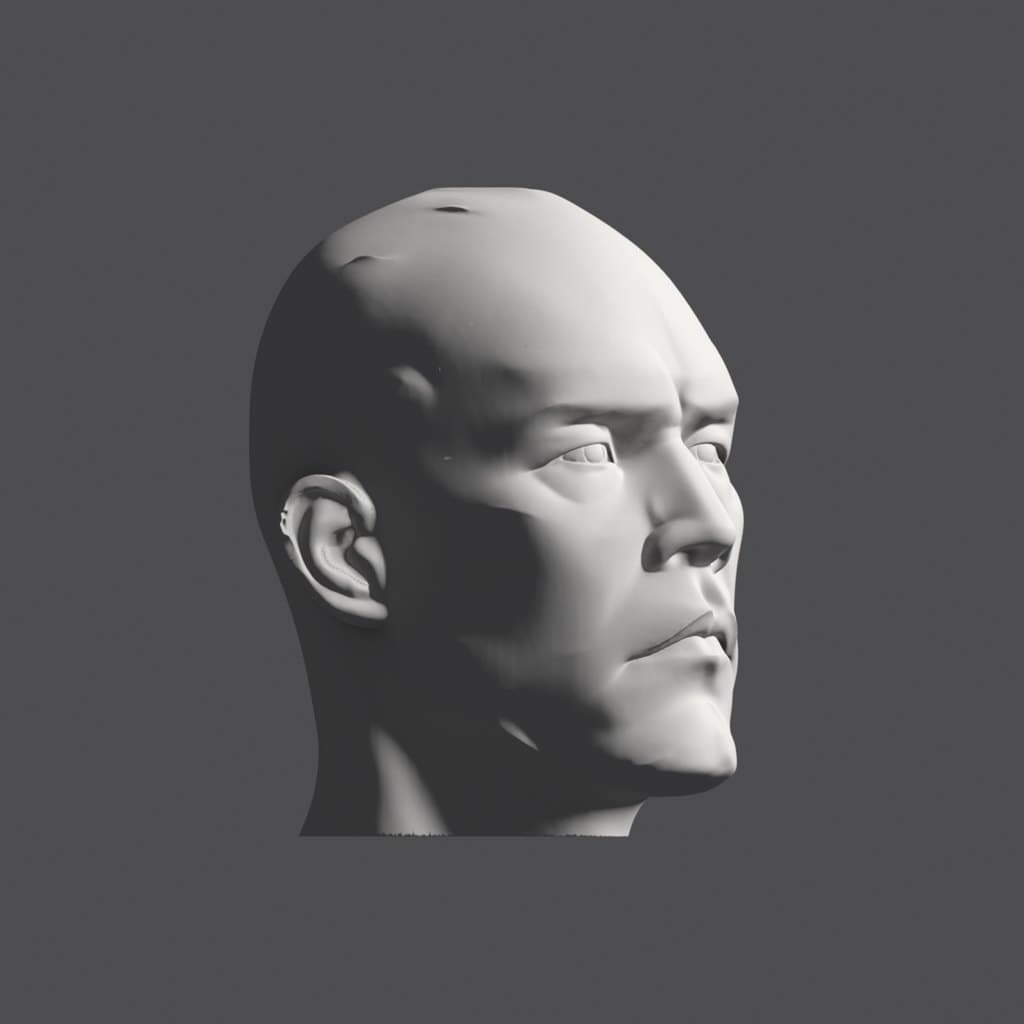
The head as a few flat planes: front, side, top and underside. Where they meet, and how one lit head shows each of them change from light to shadow.
Square jaws, high cheekbones and heavy brows are changes to a few landmarks on the same head. Here is where each one sits.
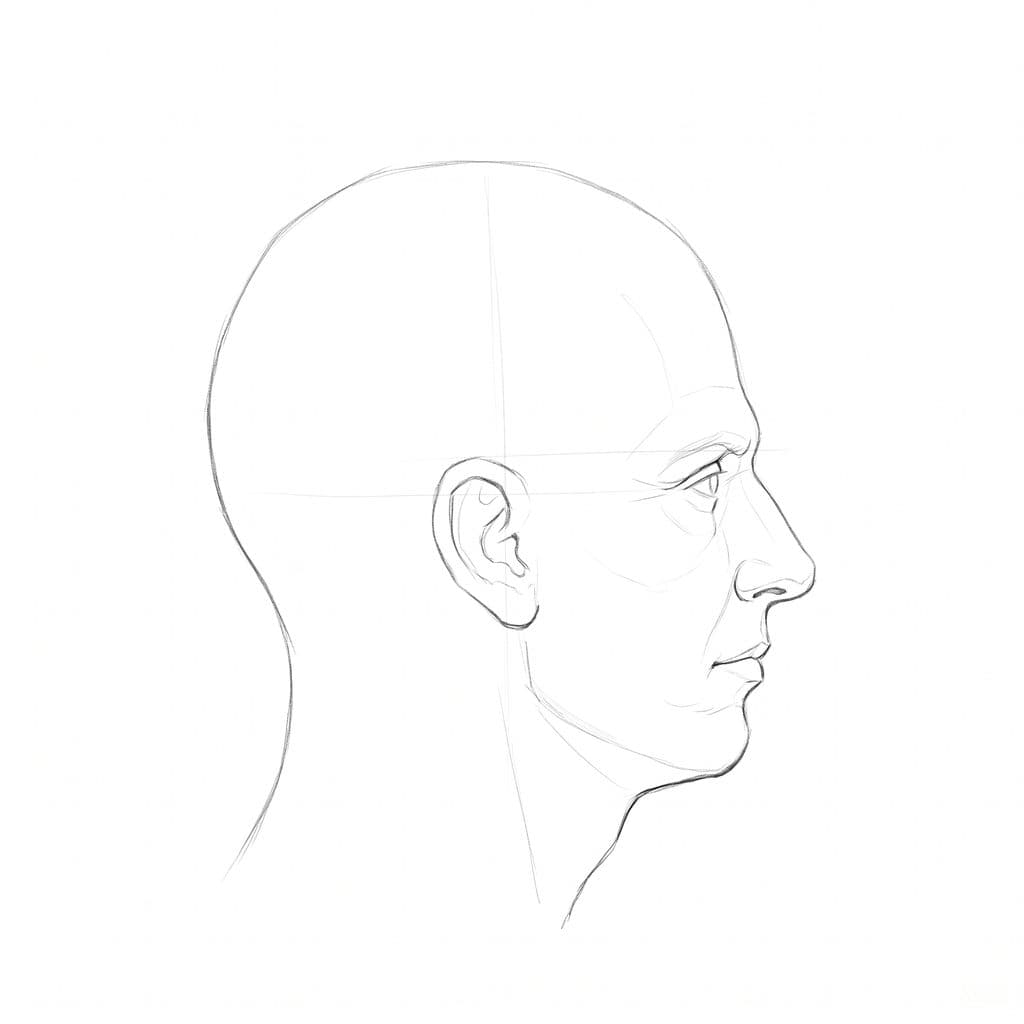
The ear keeps its height as the head turns while its shape goes from a narrow edge to a full C and back to a cup. Where it sits at each angle.
Eyes are balls set into sockets with lids wrapped around them. Draw them that way and the far eye shortens, the iris turns and the profile comes out on its own.
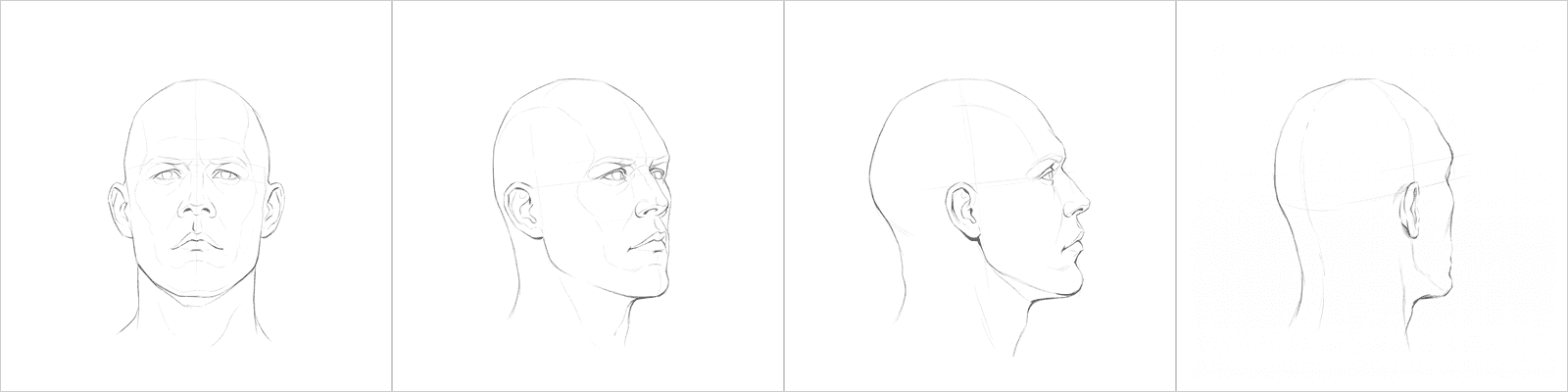
The method in five steps, then eighty-one guides in order: parts of the head, the turn from front to profile and back, features, shading and drills.
The front view on ten heads: eyes about halfway, ears near the eye and nose lines, a skull seven tenths as wide as the head is tall, wider than the face.
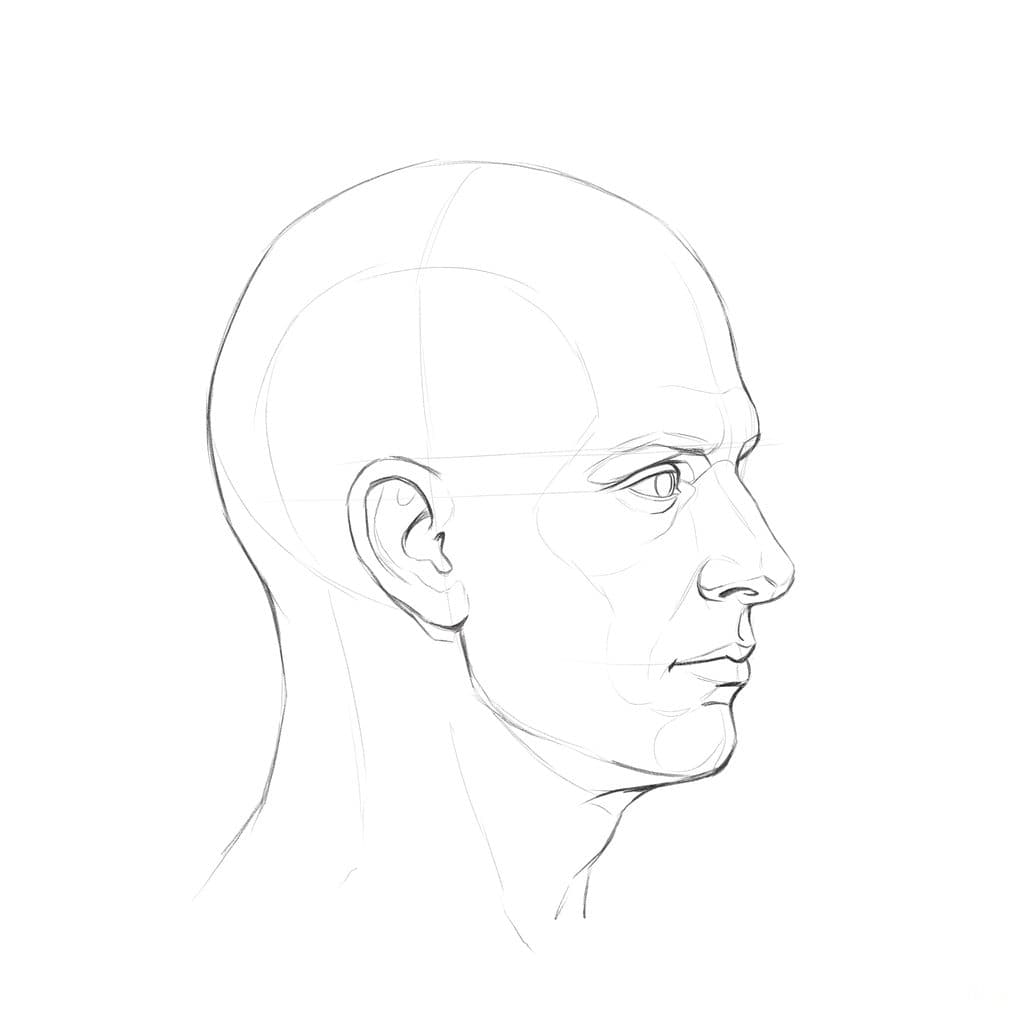
At 67.5 degrees the far eye shrinks to a sliver, the nose breaks the outline and the side of the head becomes the biggest plane in the drawing.
Build the side view from the depth of the skull, place the ear behind the middle, and let the face hang off the front of the cranium.
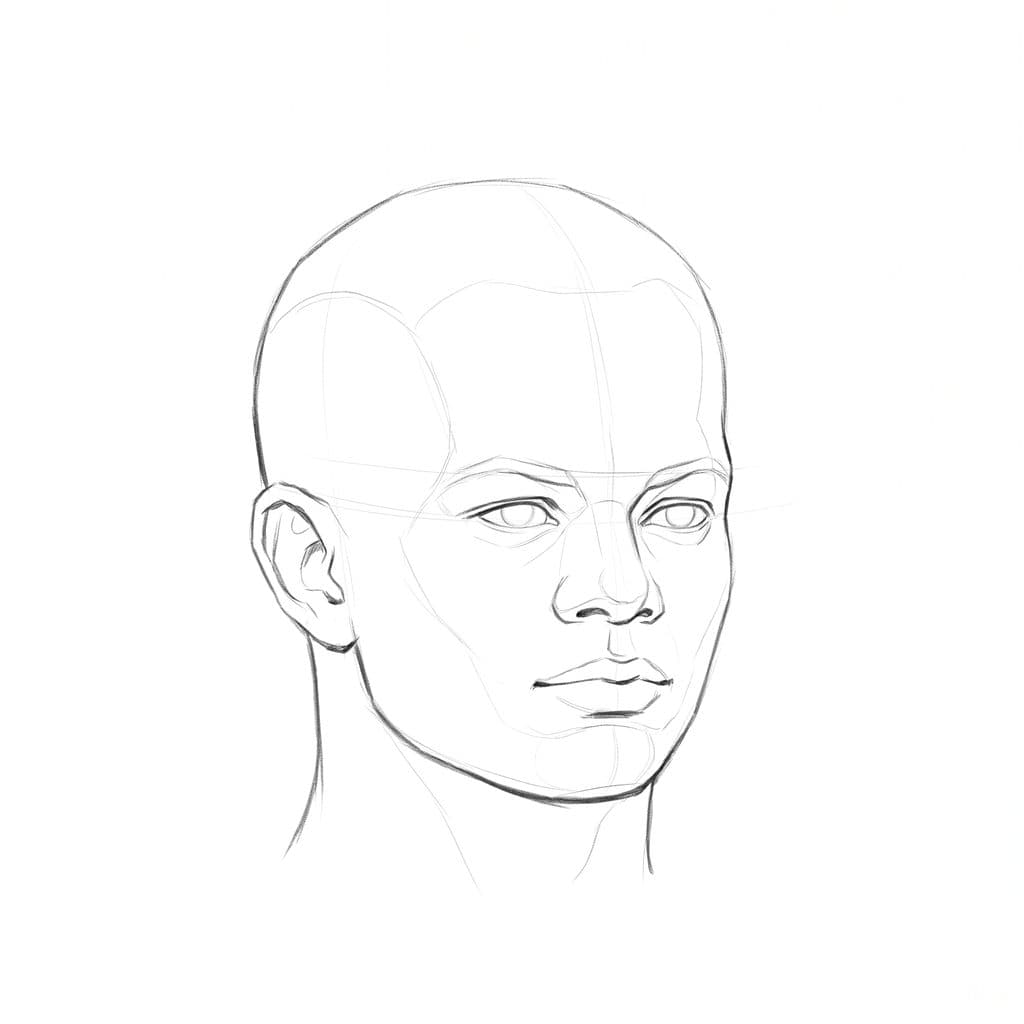
At 22.5 degrees the center line curves, the far ear disappears and the far eye shortens, even though the head has barely turned.
The head at 45 degrees, measured on ten drawn heads: where the brow, the top of the ear, the nose tip and the jaw corner fall as it turns.
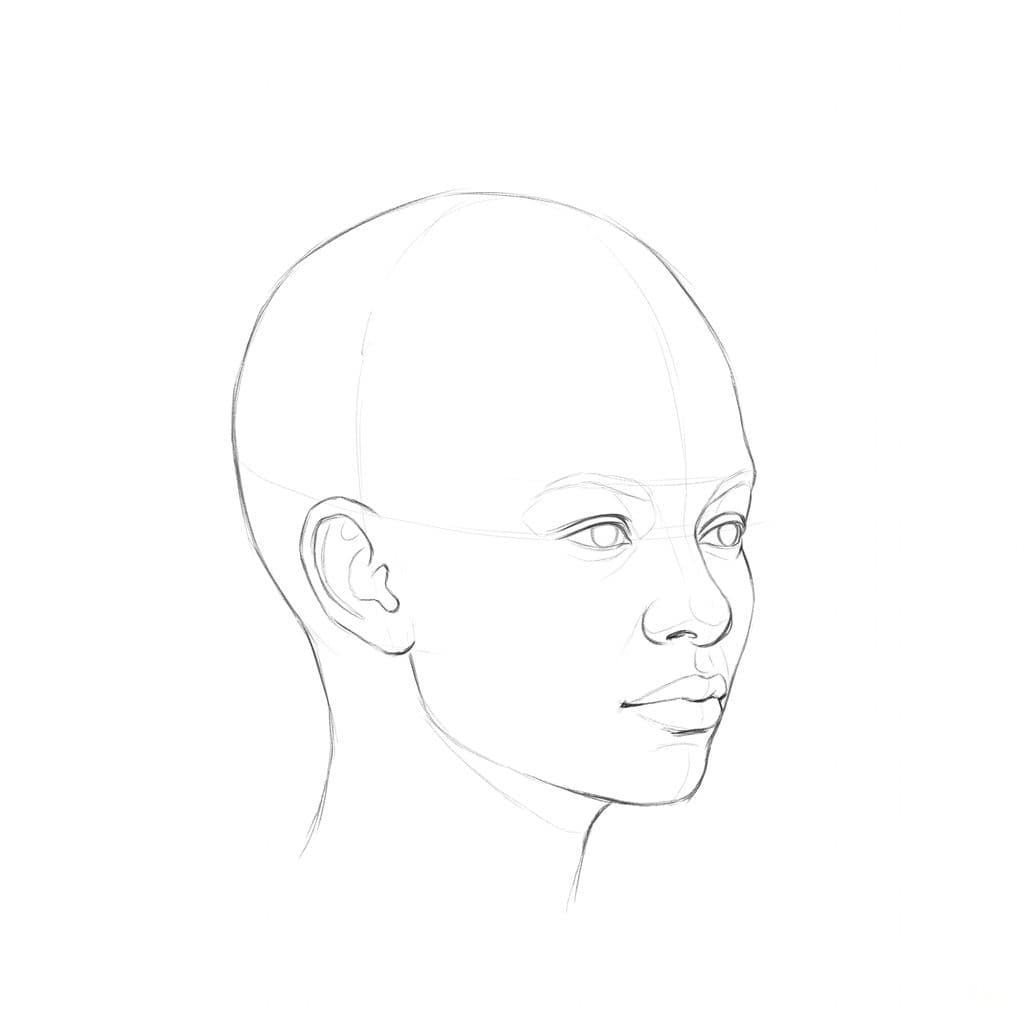
The mouth wraps around a curved row of teeth, so it shortens on the far side as the head turns, and in profile the upper lip sits forward of the lower.
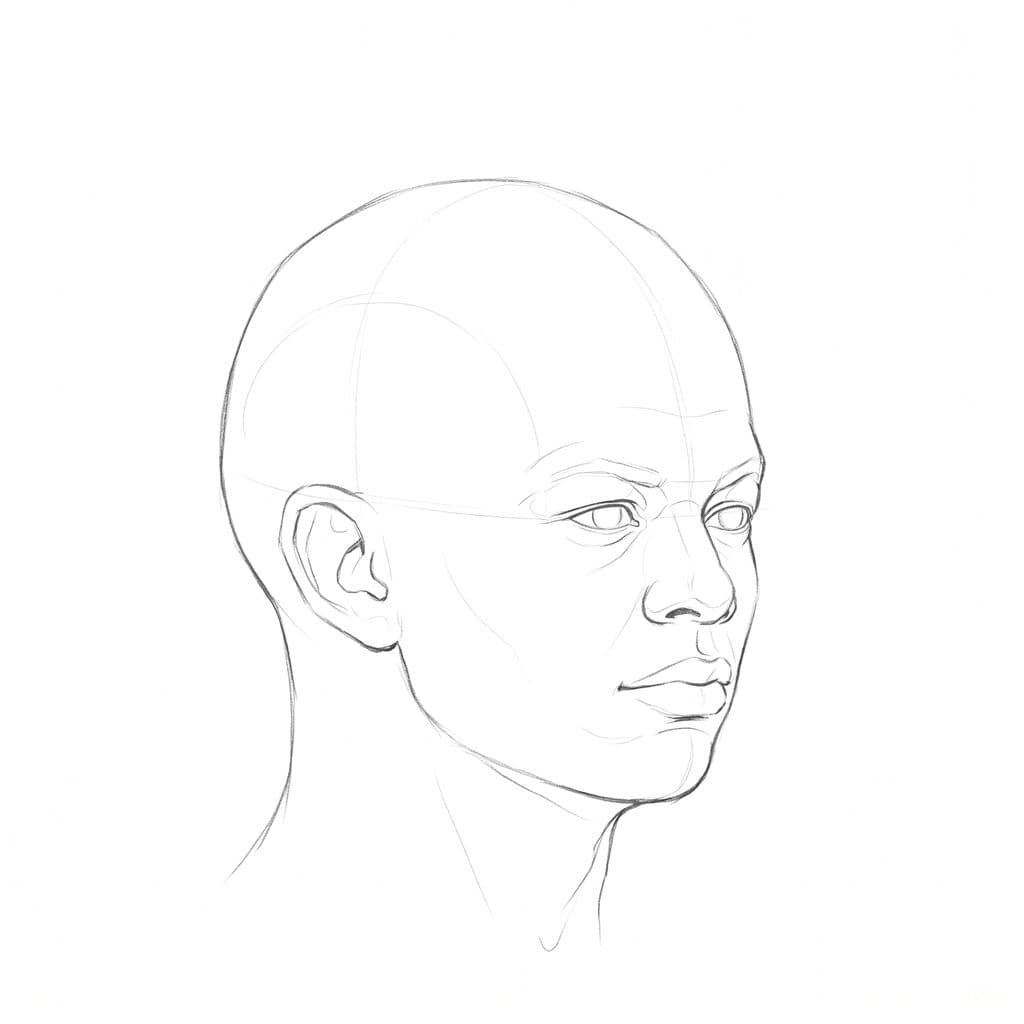
Draw the nose as a wedge on the face. As the head turns, one side plane opens, the far nostril hides first and by near profile it breaks the outline.
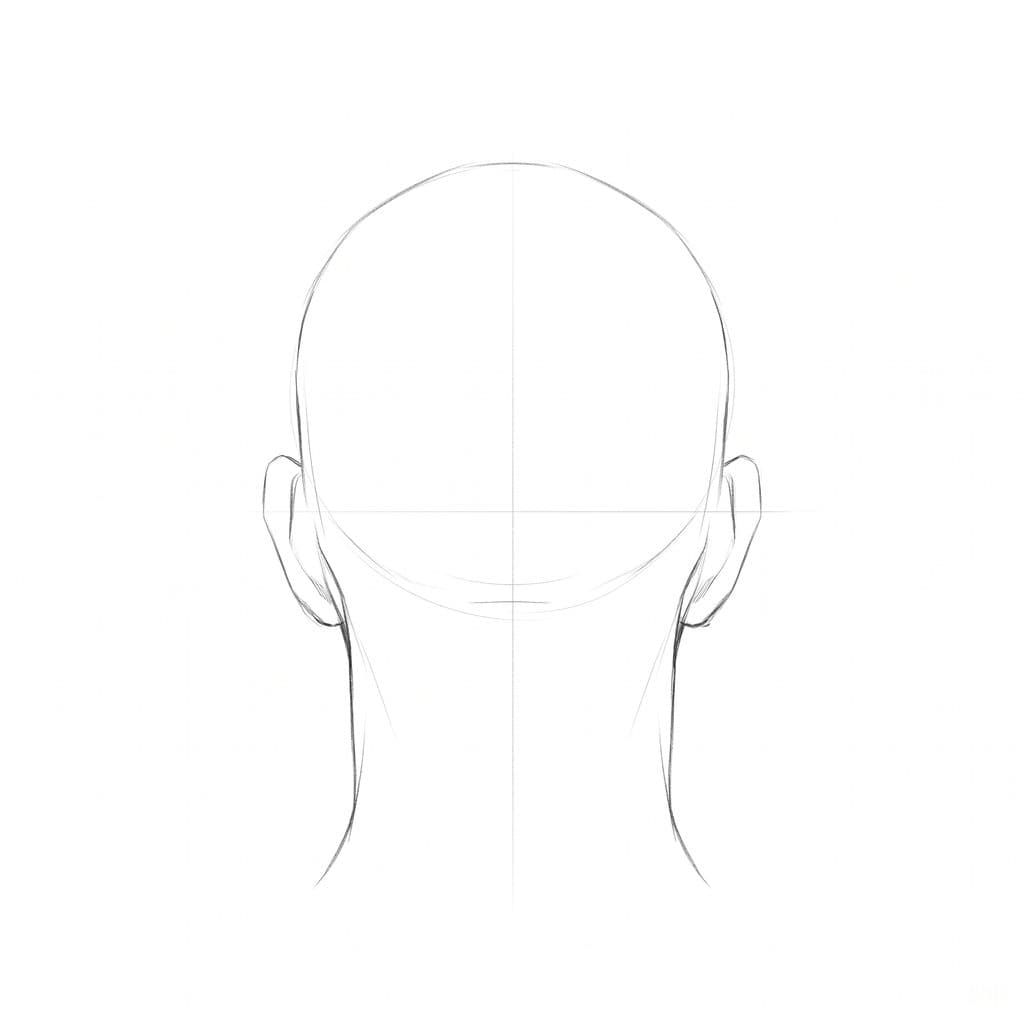
The back of the head, measured on ten drawn heads: how wide the skull is, where the ears sit and stand out, and how wide the neck comes out under them.
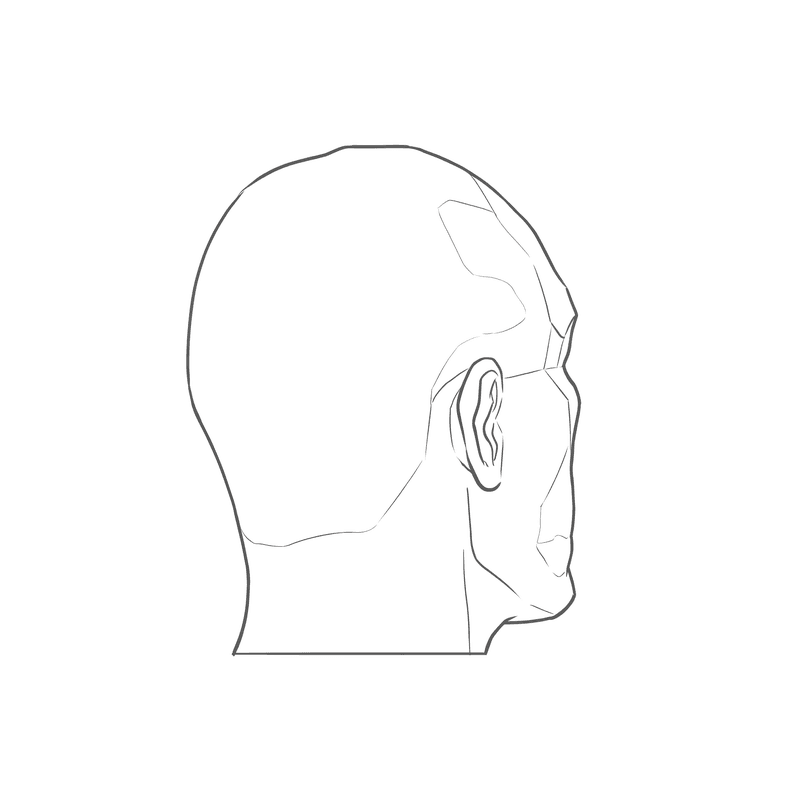
How to organize the cranium, ear, jaw, and small remaining facial wedge at three-quarter back.
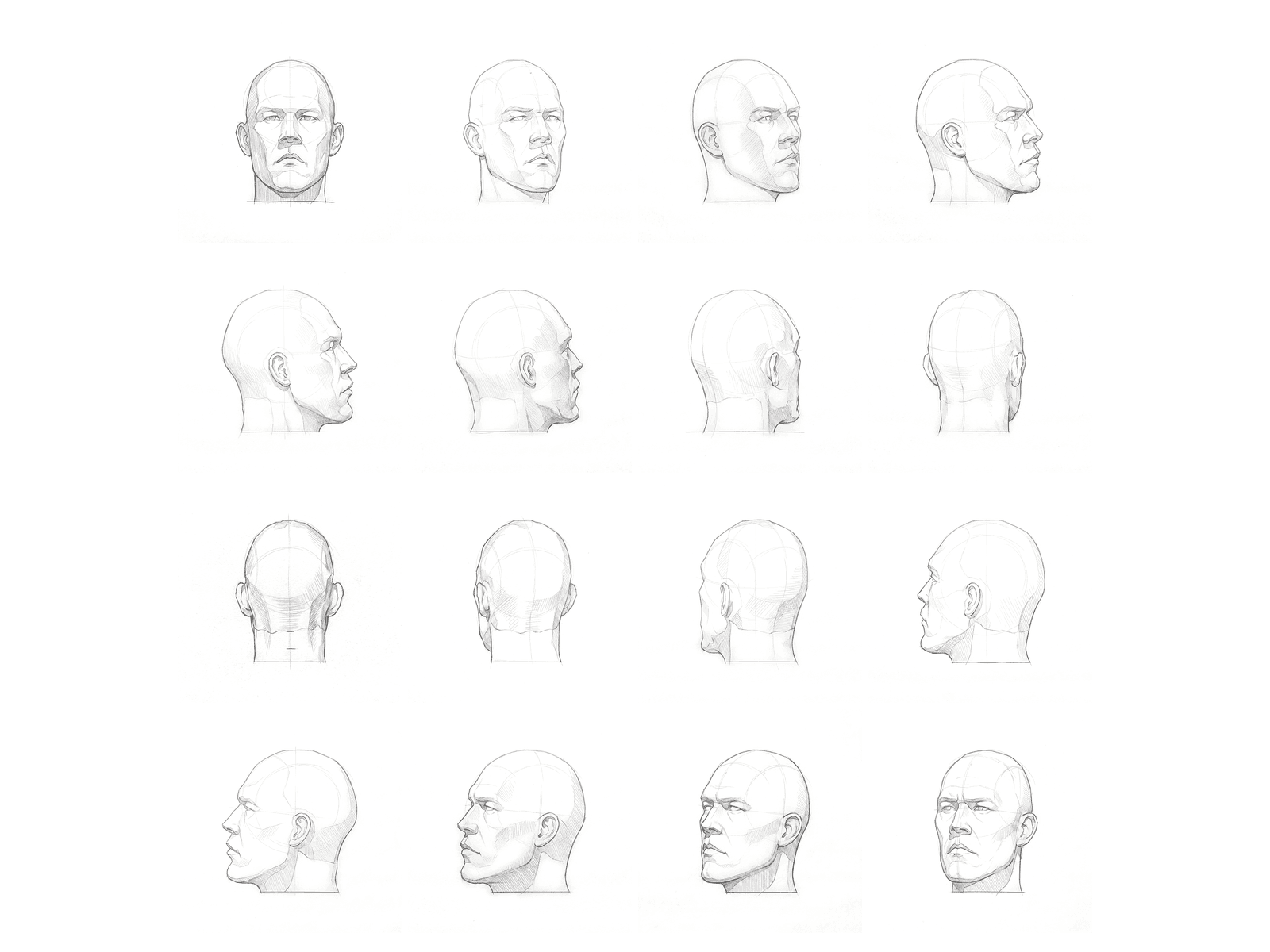
A timed drill that treats sixteen views as one turning form instead of sixteen separate portraits.
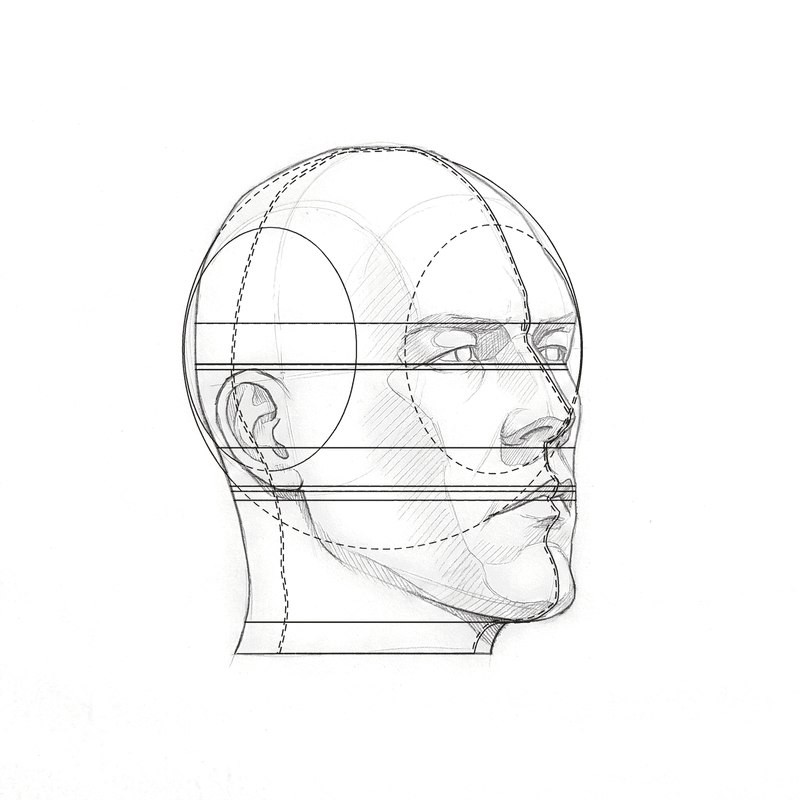
Construction lines drift when they are redrawn as symbols instead of carried around one form. These checks keep them attached.