Archive of Fine Arts wordmark

Head lighting reference: one head under eight lights

These eight frames keep everything still except the light. The head is the hard-plane study head, turned 45 degrees to its left, so its ear faces you and the face turns toward the right of the page. The light circles the head at one height, 35 degrees up. Watch where the shadow edge lands on each plane: the brow, the cheekbone, the side of the nose and the corner of the jaw.

Eight light directions
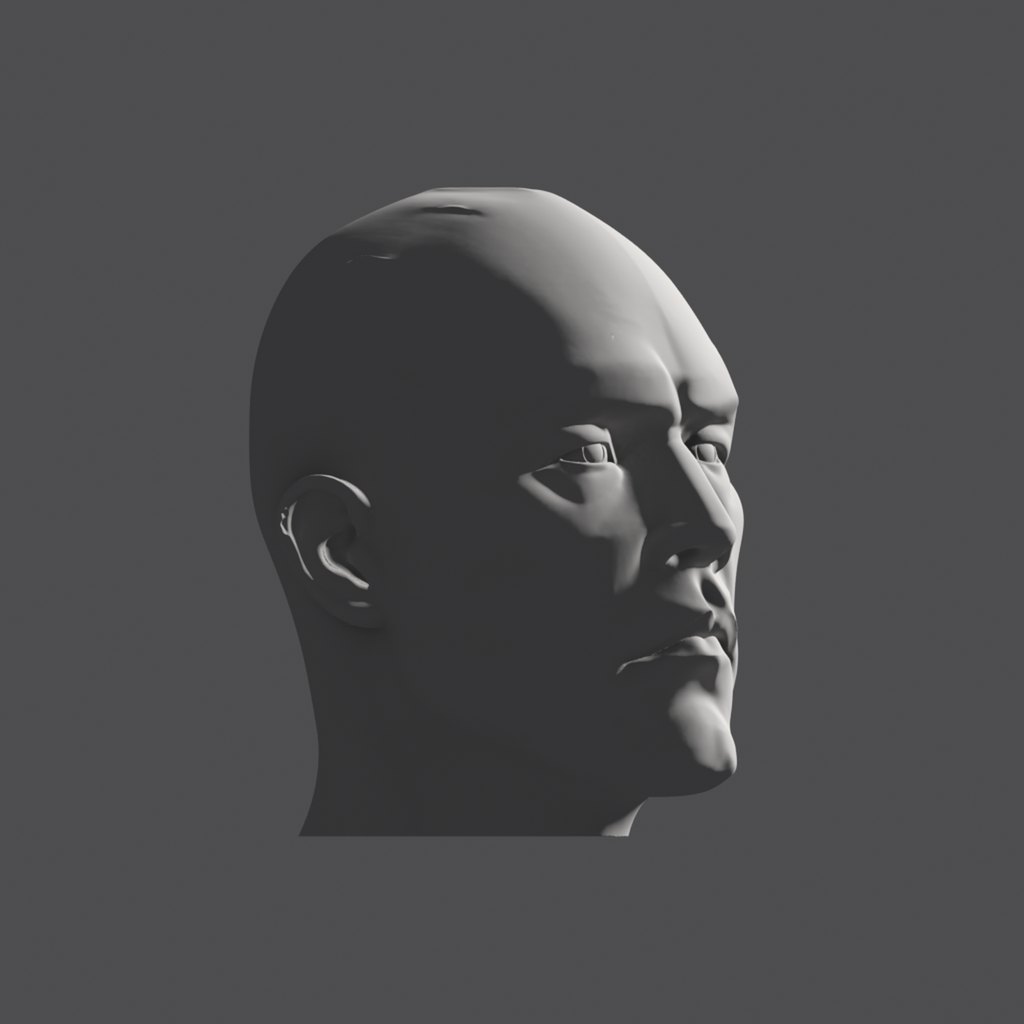
Head lighting reference, hard-plane head at a 45 degree turn, light from the front, a little toward the face side
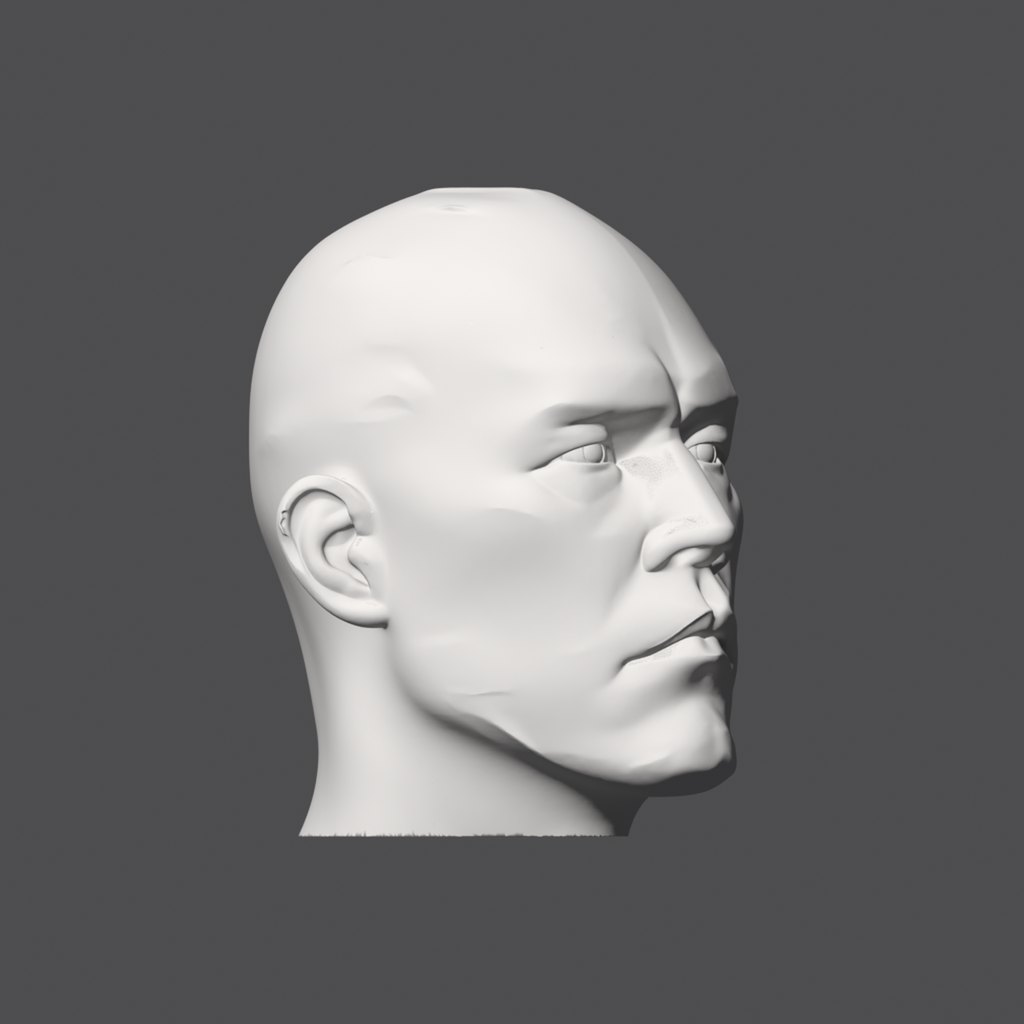
Light from the front, a little toward the face side. The front of the face and the top of the skull are lit. Below the cheekbone, the side of the face toward the ear turns into shadow, and small dark shapes sit under the brow, the nose and the lower lip. In a flat light like this, those few shadows carry the form.
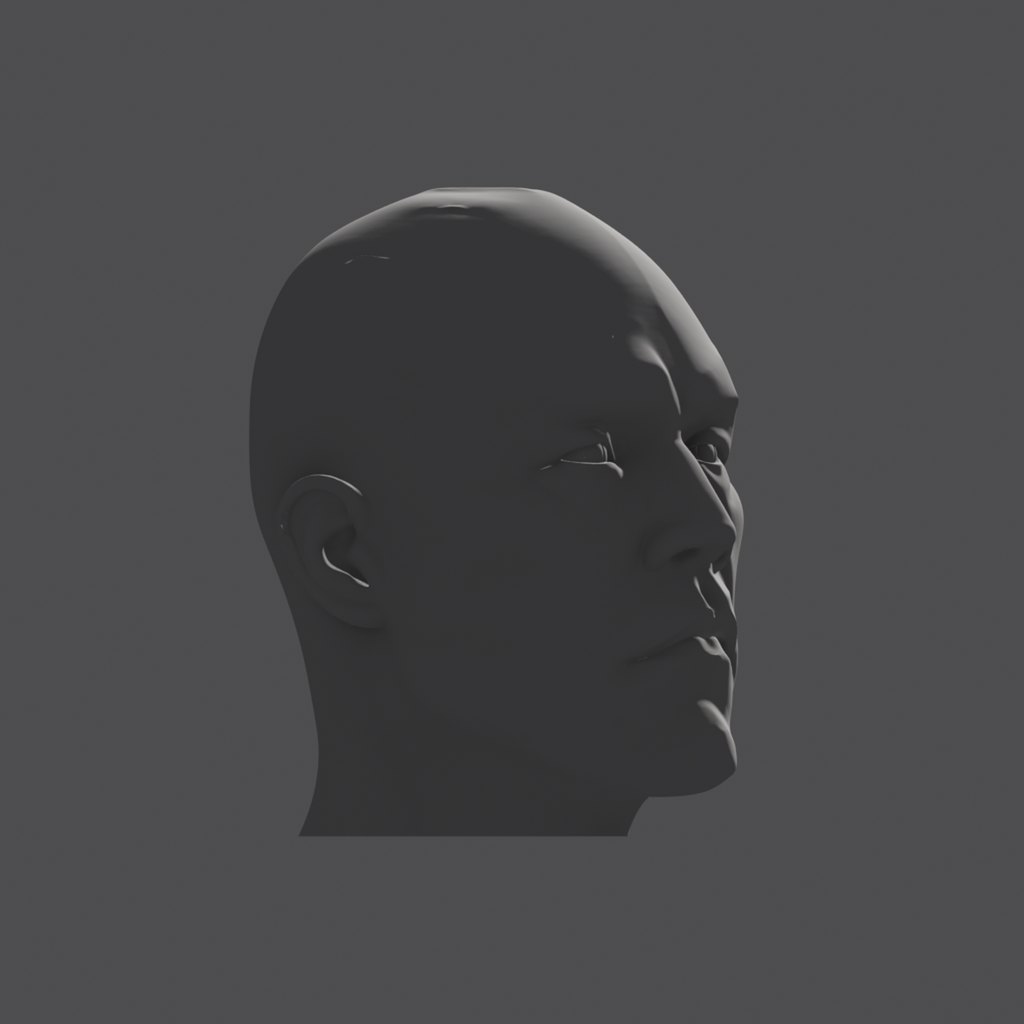
Head lighting reference, hard-plane head at a 45 degree turn, light from the face side, raking across the front
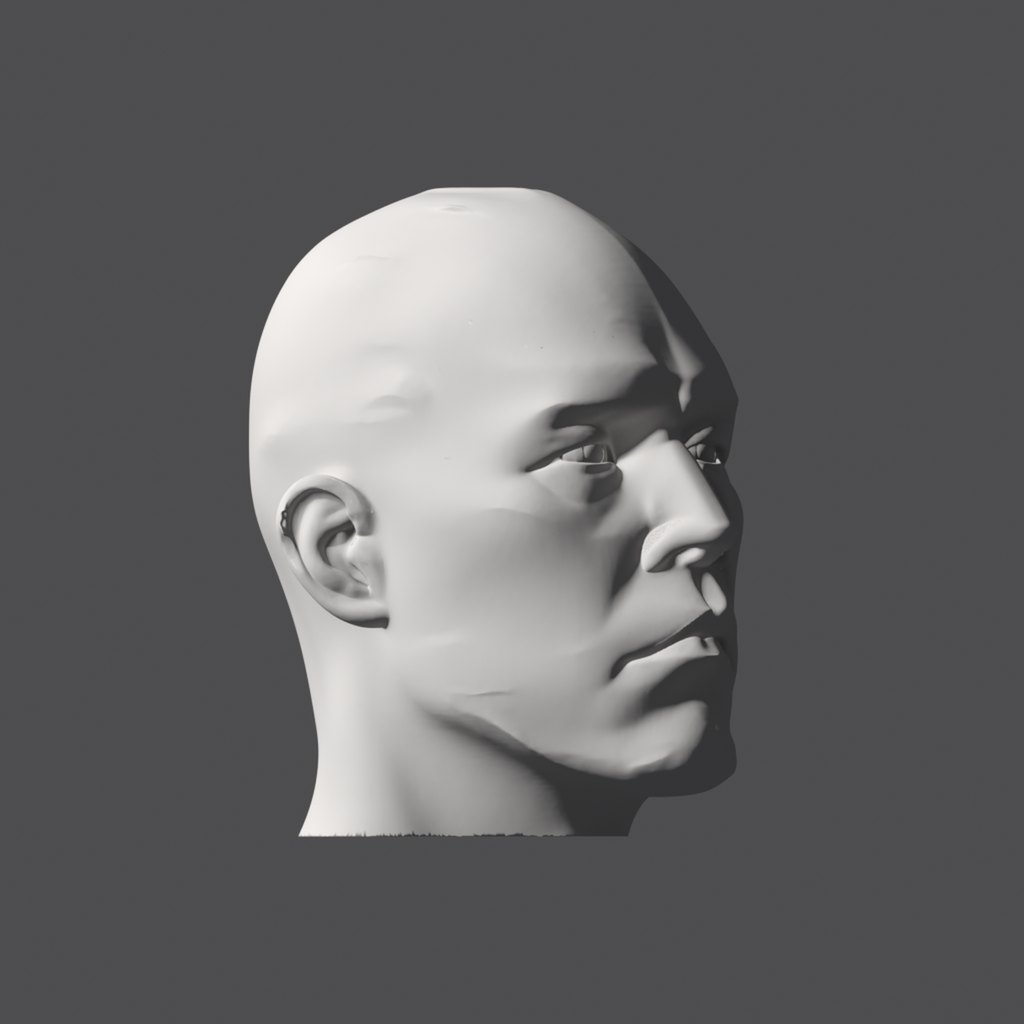
Light from the face side, raking across the front. Most of the head falls into shadow, and the light catches only the front planes of the brow, the cheekbone, the nose and the chin. The edges of those lit shapes show exactly where each plane turns.
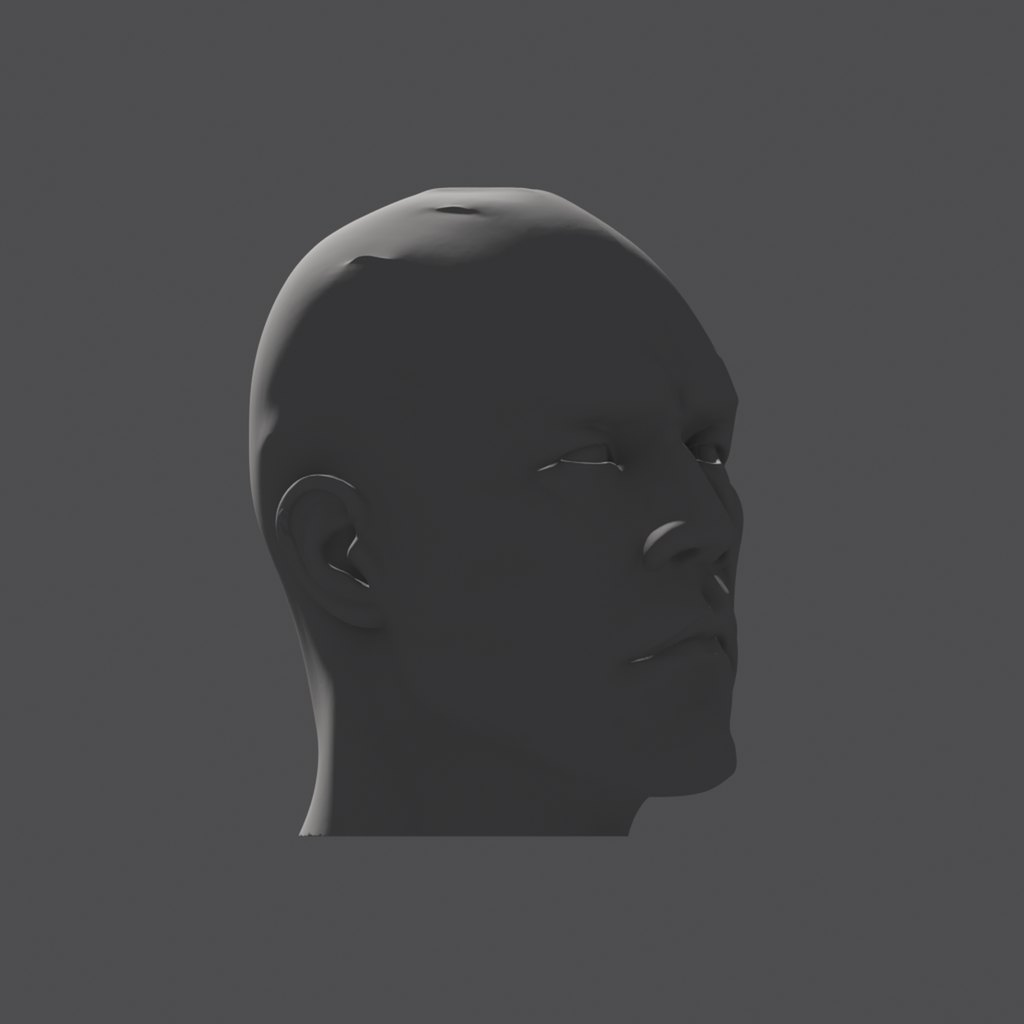
Head lighting reference, hard-plane head at a 45 degree turn, light from the far side of the face
Light from the far side of the face. The face is in shadow and the light only grazes the top of the forehead and the outer edge of the face. Keep the shadow side as one connected shape, and draw the features inside it with small value changes rather than lines.
Head lighting reference, hard-plane head at a 45 degree turn, light from behind
Light from behind. A thin rim of light runs along the back of the skull, with a few small accents on the nose and lips. The silhouette does most of the work here, so check the outside shape of the skull and jaw before anything inside it.
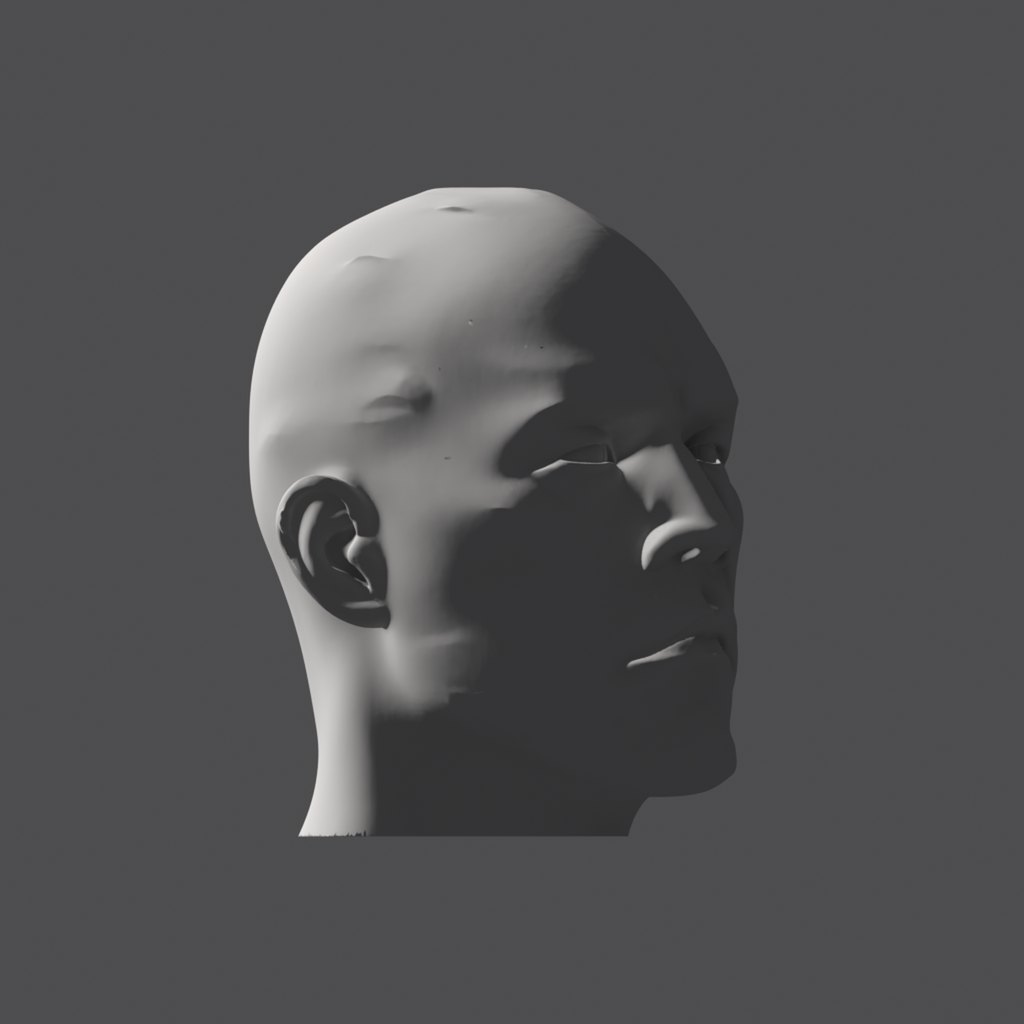
Head lighting reference, hard-plane head at a 45 degree turn, light from behind, on the ear side
Light from behind, on the ear side. The back of the skull and the ear are lit while the face turns away into shadow. The line where light turns into shadow runs down the side of the head in front of the ear.
Head lighting reference, hard-plane head at a 45 degree turn, light from the ear side
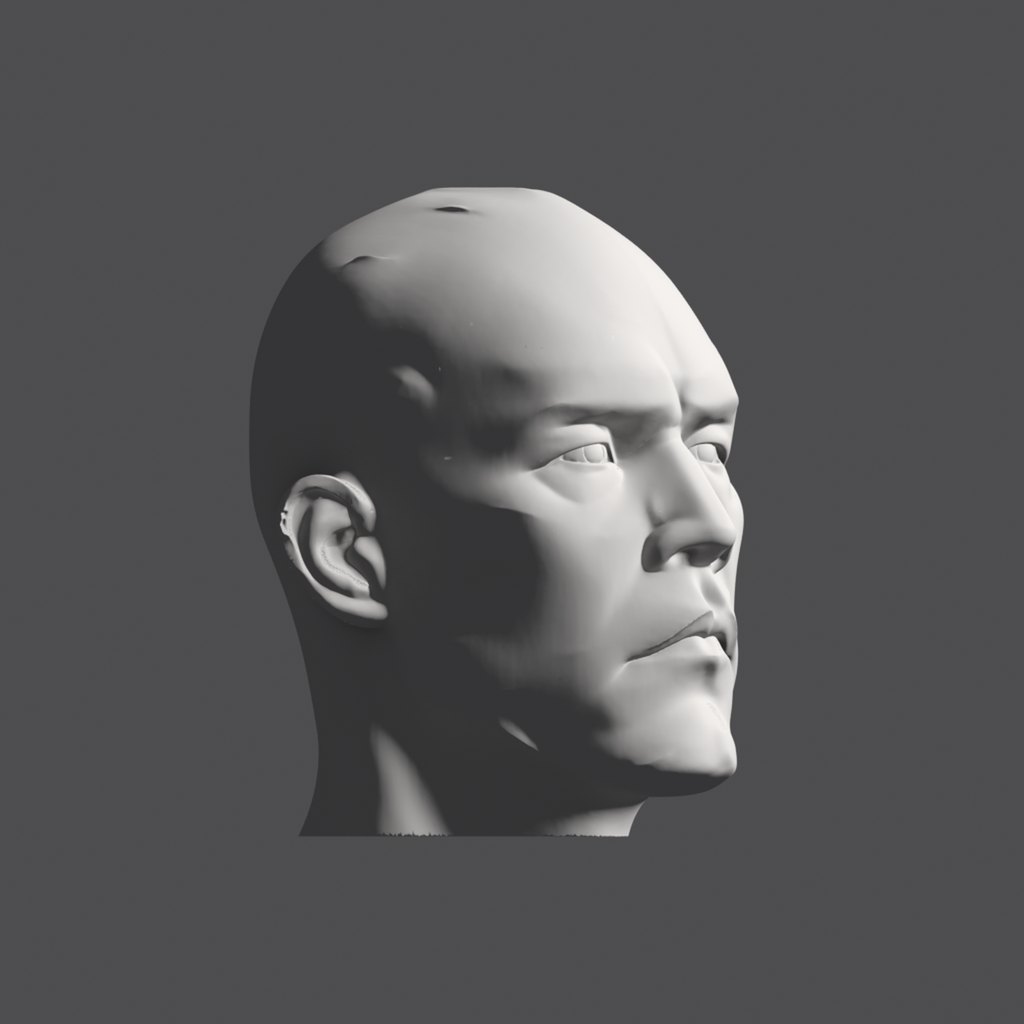
Light from the ear side. The side of the head and the ear take the light, and the front of the face stays mostly lit. The darkest shapes run from the far brow and temple down the side of the nose and along the far cheek, with a cast shadow under the jaw.
Head lighting reference, hard-plane head at a 45 degree turn, light from the front and the ear side
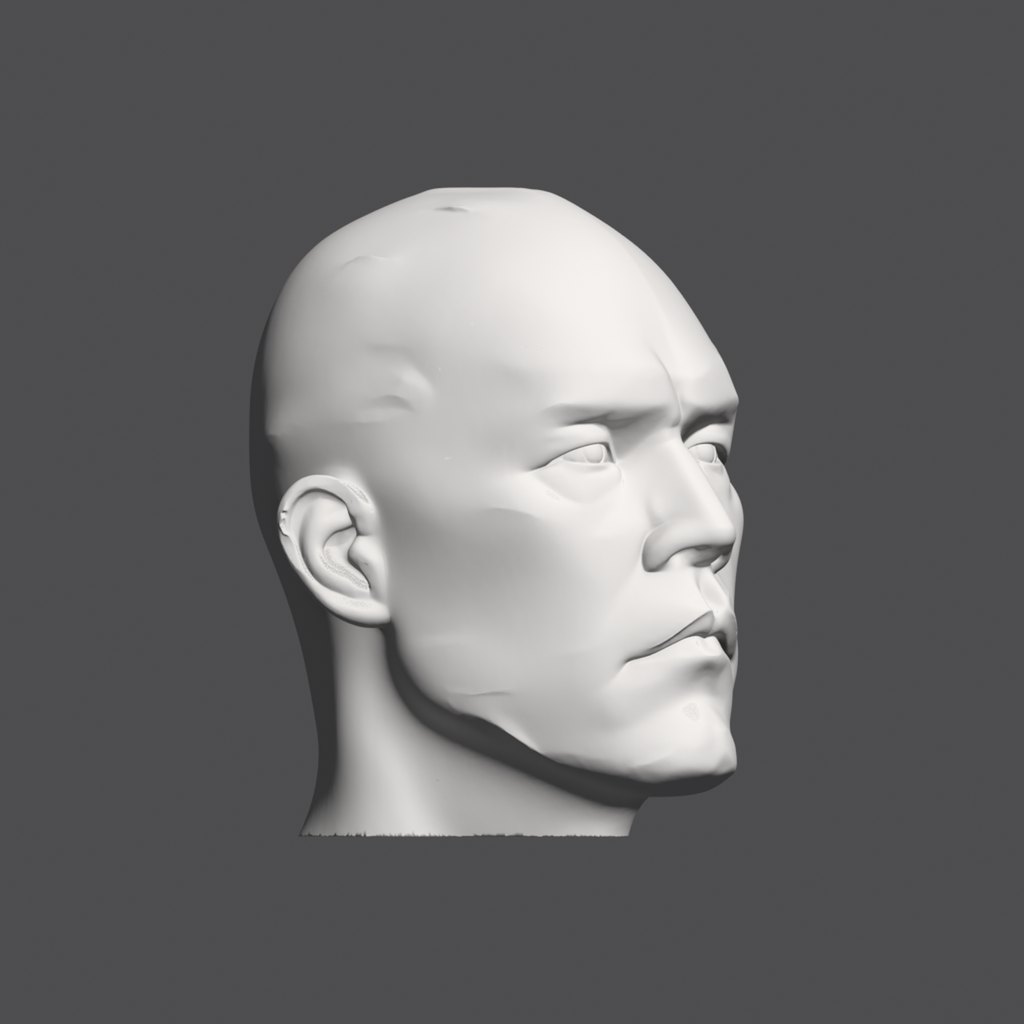
Light from the front and the ear side. The head is broadly lit. The shadows sit under the brow, beside the nose, under the lip and along the outer edge of the far cheek.
Head lighting reference, hard-plane head at a 45 degree turn, light from the front, a little toward the ear side
Light from the front, a little toward the ear side. The mirror of the first frame. The forehead, the cheekbone, the bridge of the nose and the chin are lit, and the shadows sit under the brow, the nose, the lower lip and the jaw. Compare the two: the light has crossed the front of the head, and every shadow has changed sides.

Using the frames

Squint at a frame until the details disappear and only two or three values remain. Copy those shapes first, as flat areas, before you add any half tones. The frames with the light behind the head are the hardest to draw, because the form is described almost entirely by the shadow side.

The same head appears without lighting changes, at every angle of the turn, in the head rotation reference, and the construction is drawn step by step in how to draw the head at any angle, step by step.

Keep drawing

The full set is in head lighting reference, volume 1: four heads under ten light directions at sixteen turns, with sheets, turning loops and light sweep loops.