Gaunt planes head rotation reference
The gaunt head makes the cheekbone and the hollow beneath it useful construction landmarks. Compare the width across the cheekbones with the narrower mouth and chin. A dark hollow can look like a contour in the tonal drawing; check the pencil view to see whether it actually changes the silhouette. Follow the jaw back toward the ear before placing the neck, keeping the lean face attached to the larger skull.
Pencil studies through the turn
The pencil studies omit 247.5, 270 degrees. Those cells show the tonal drawing instead, labelled below.
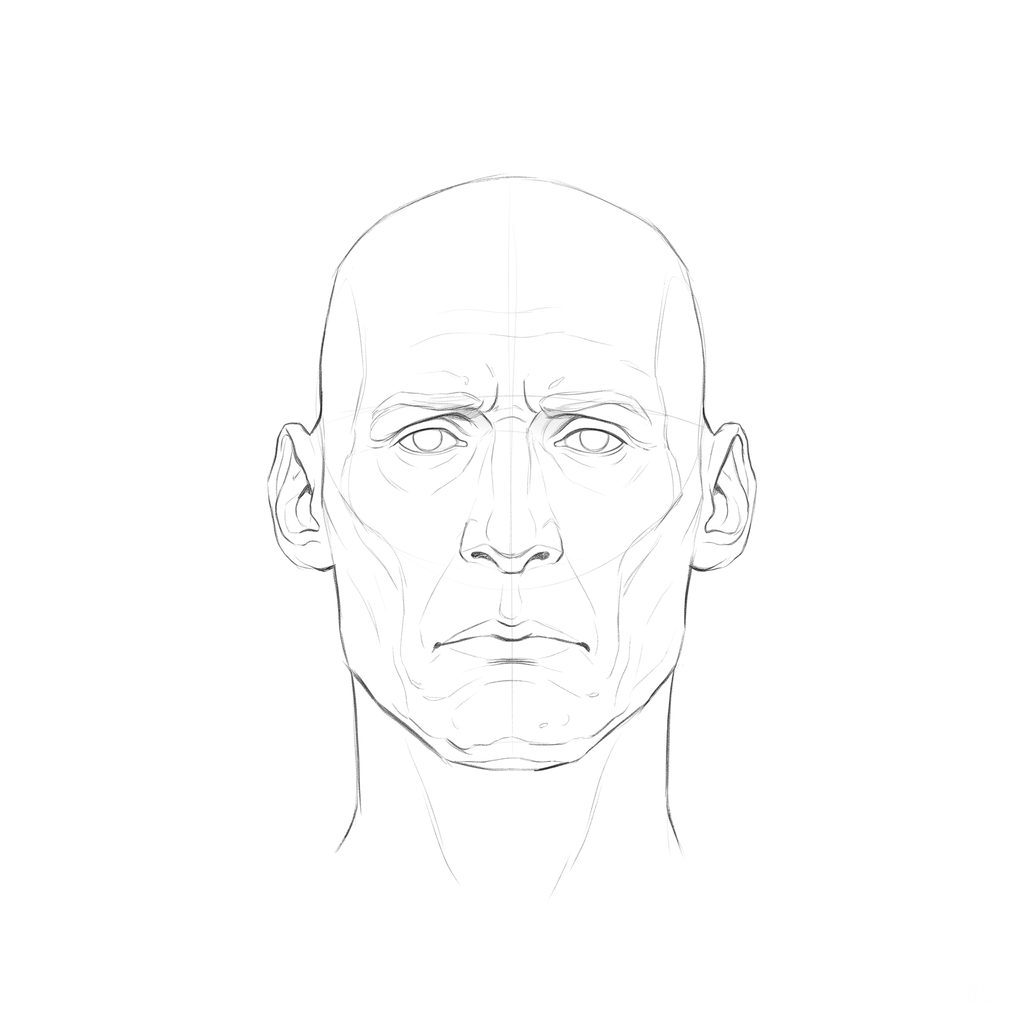
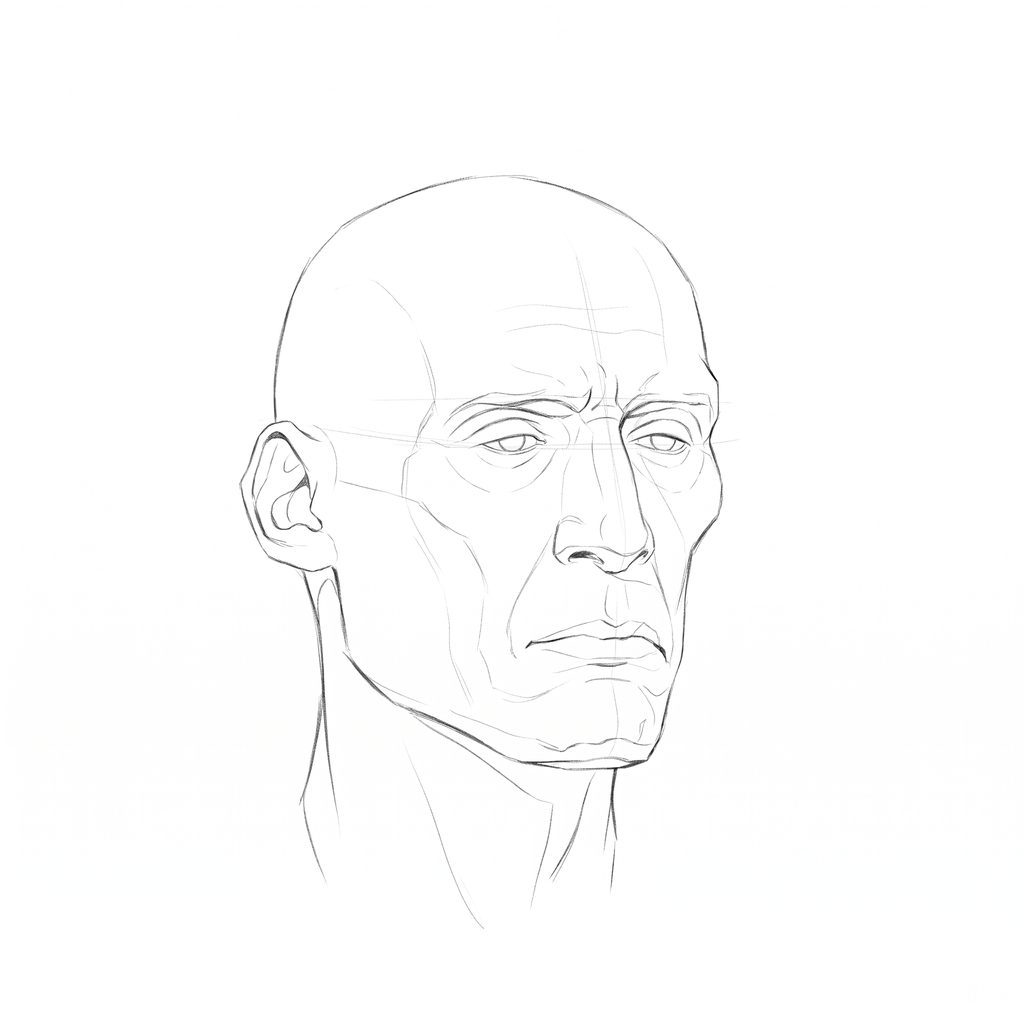
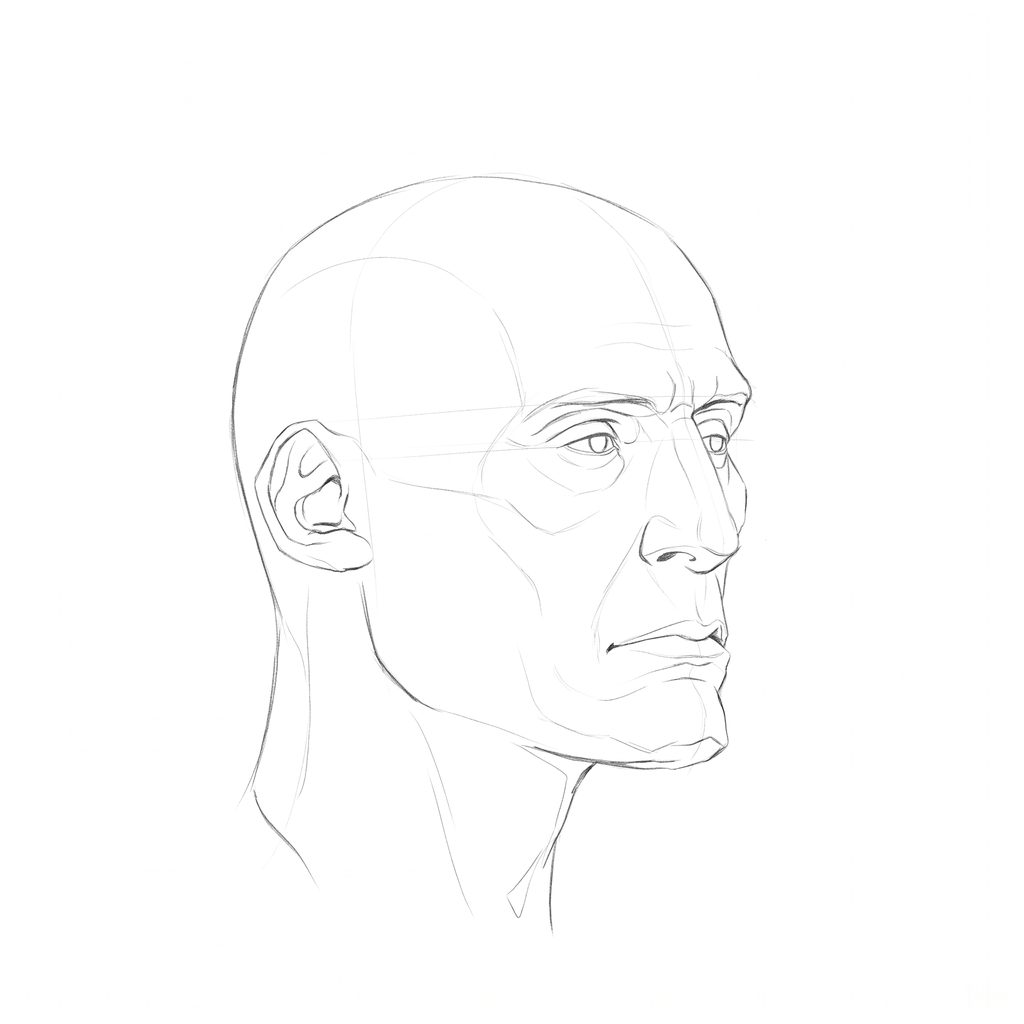
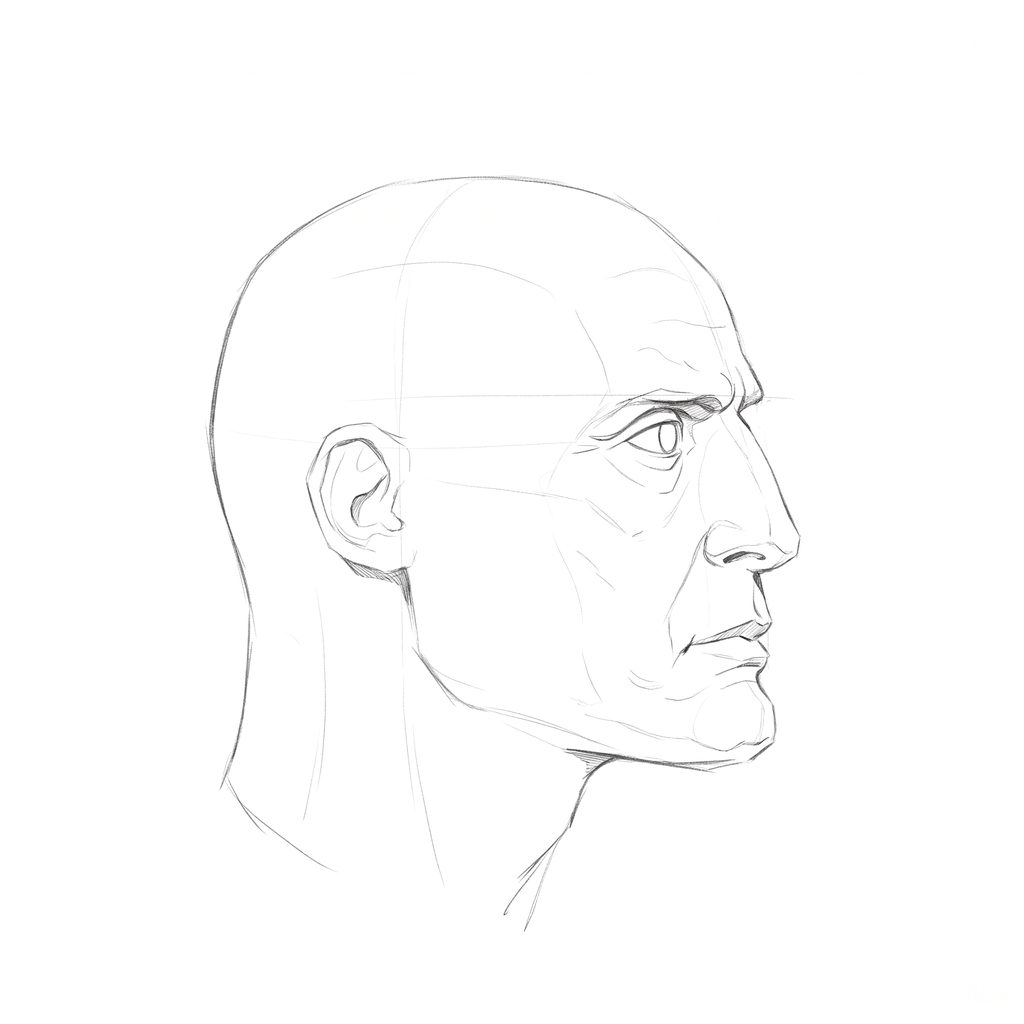
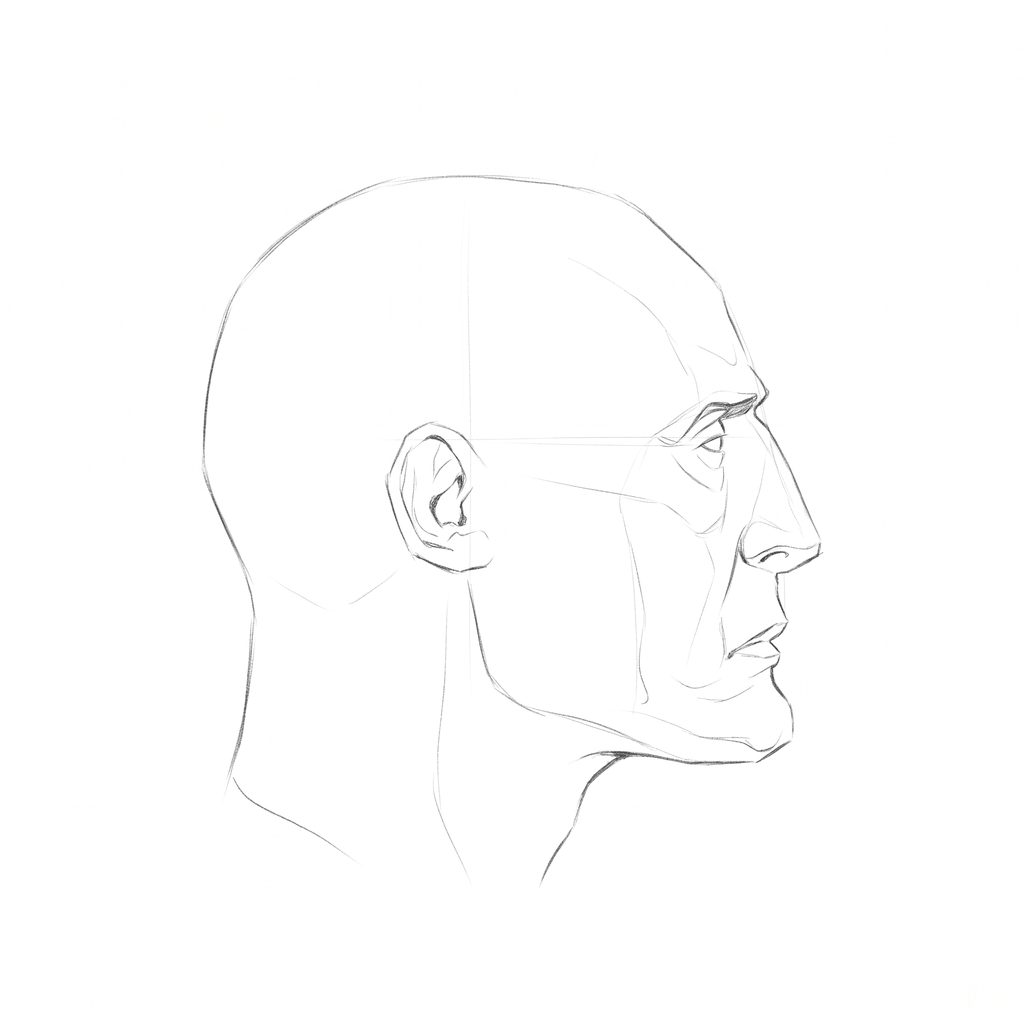
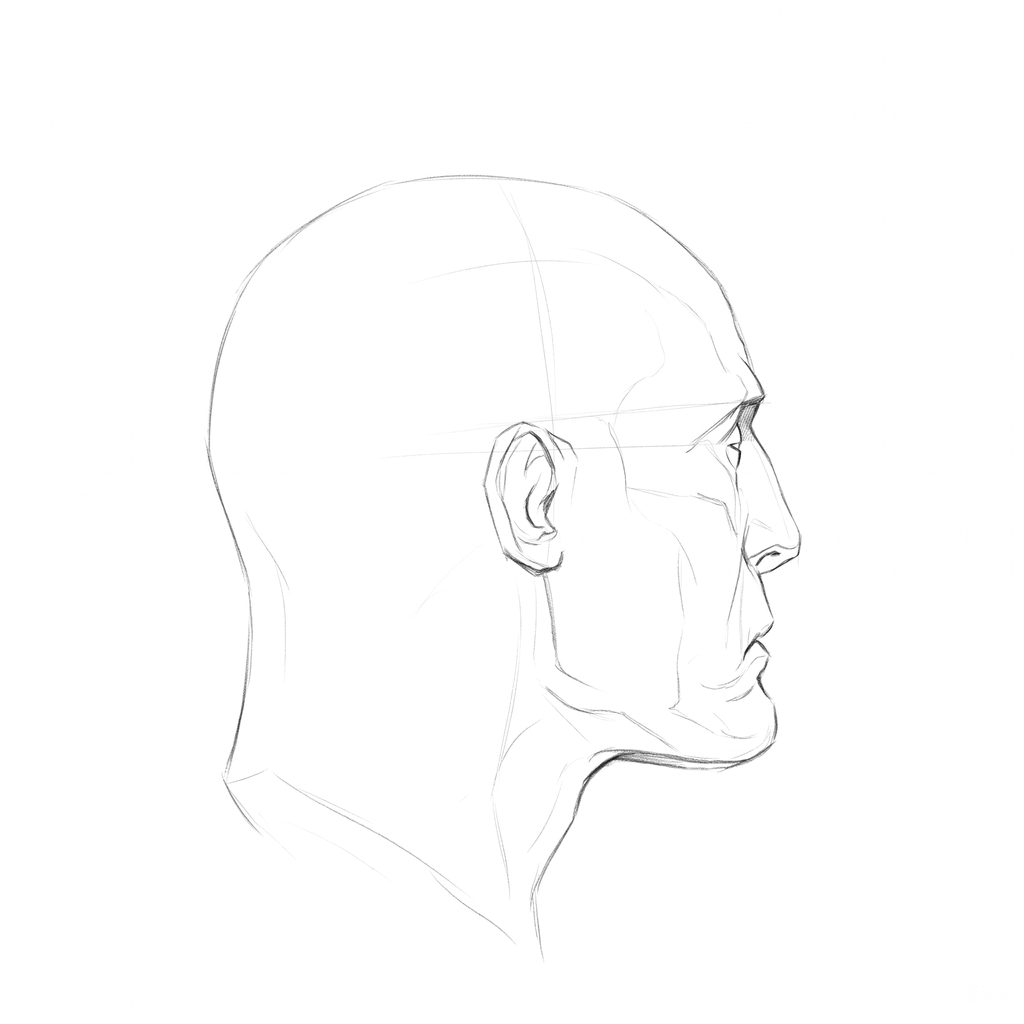
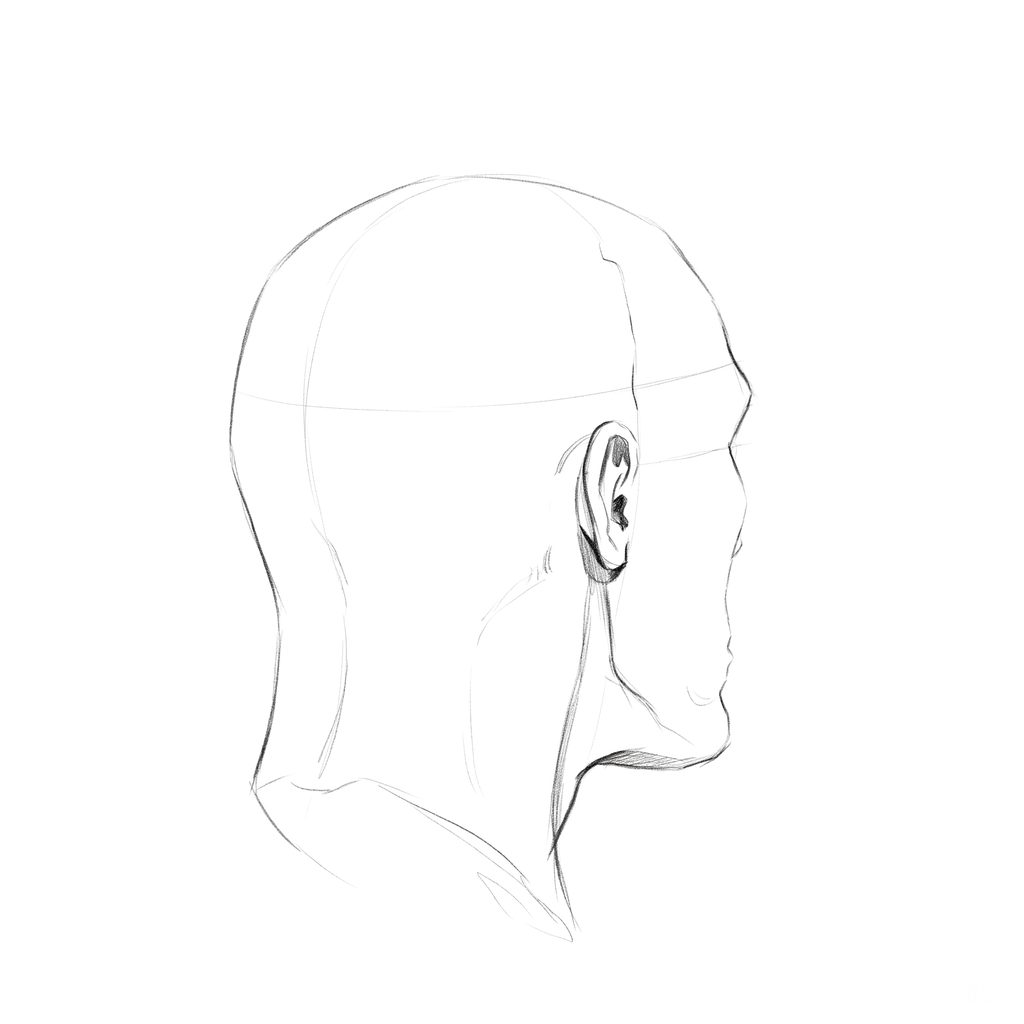
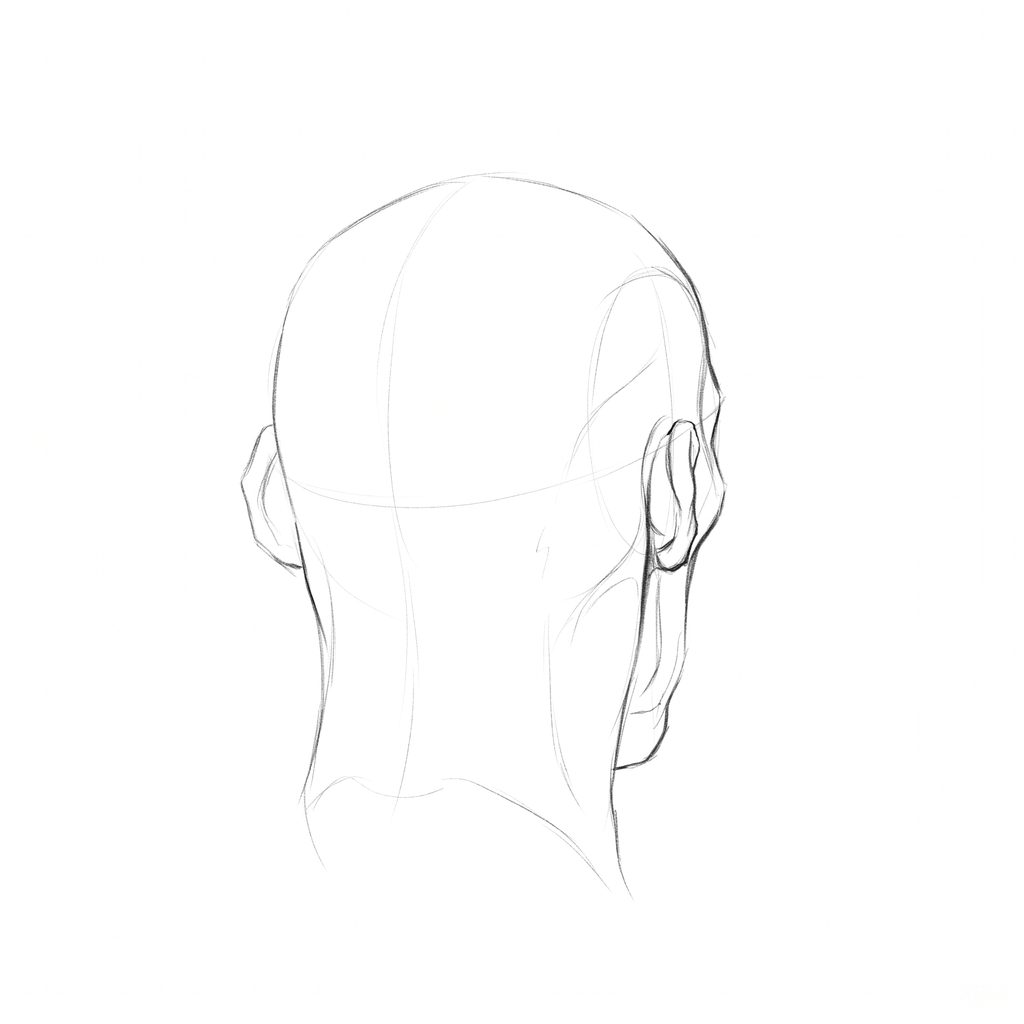
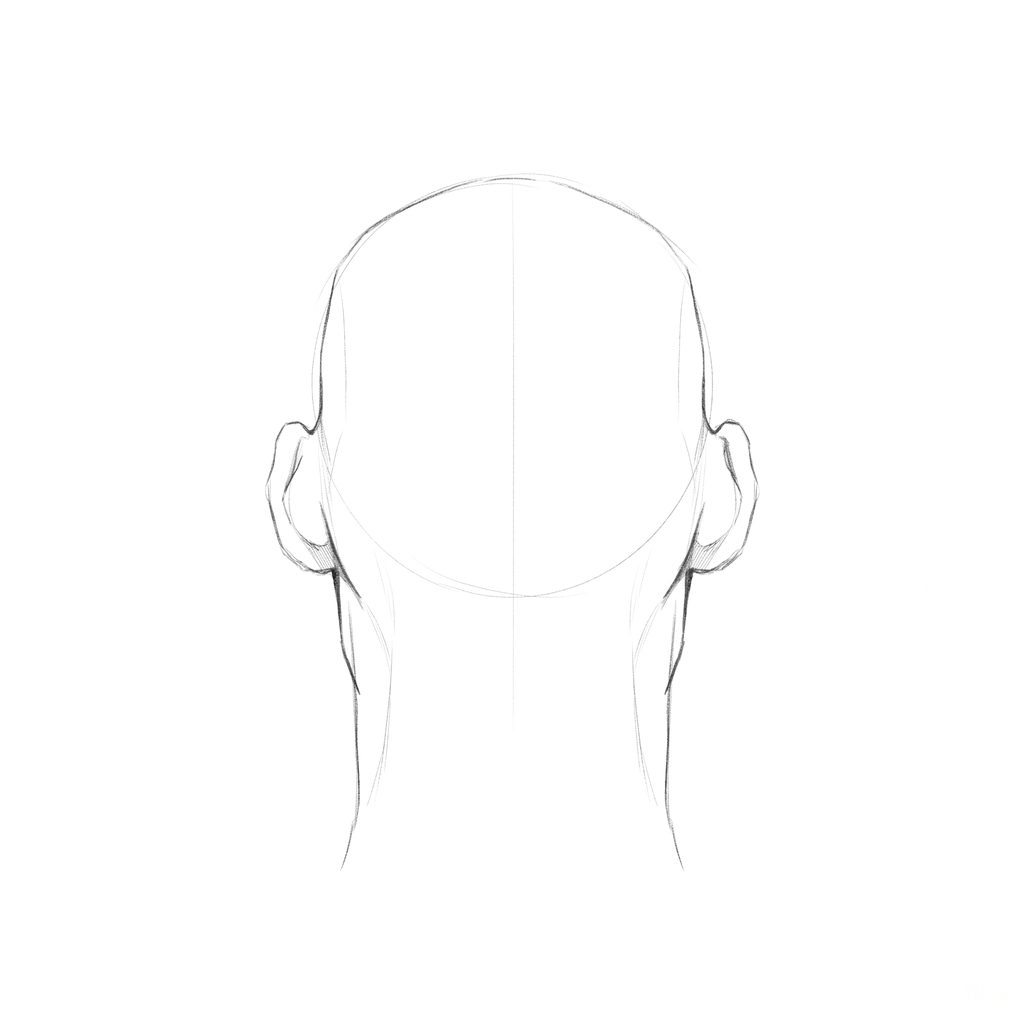
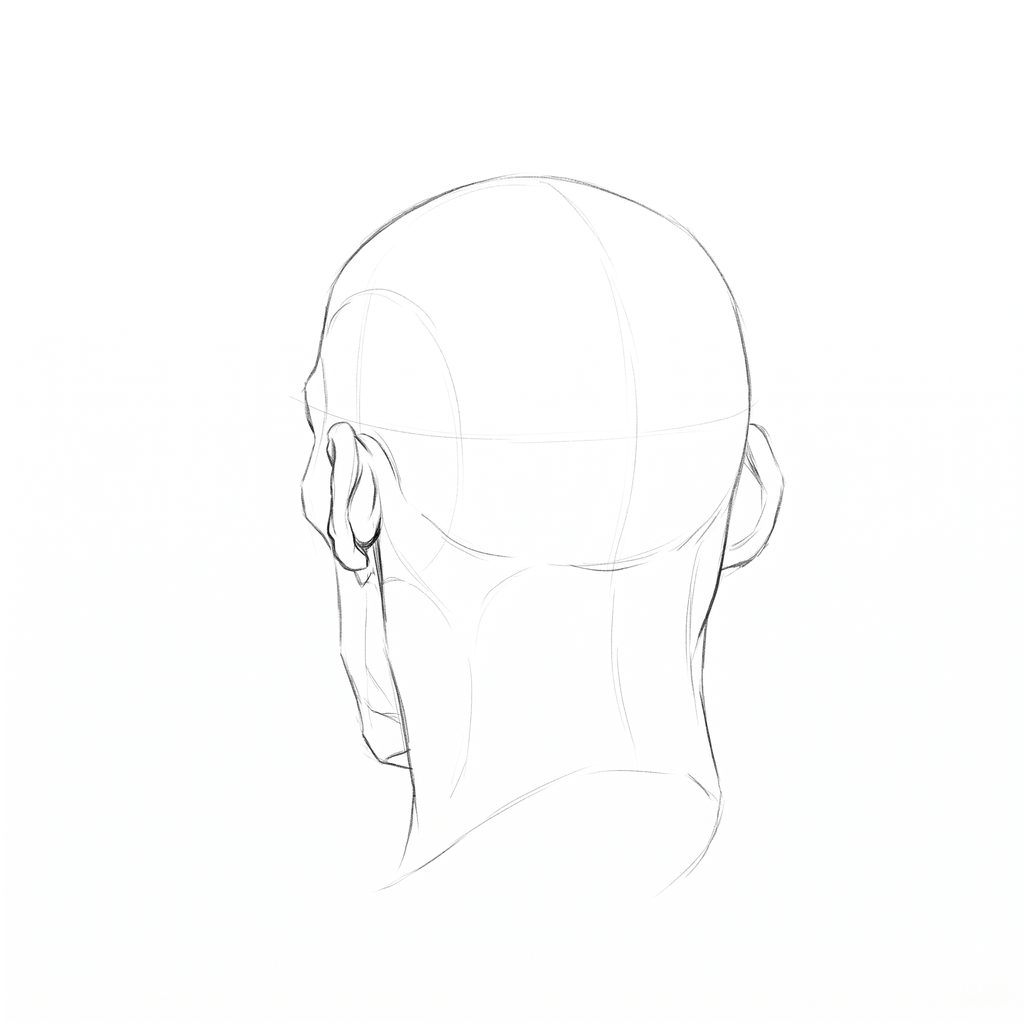
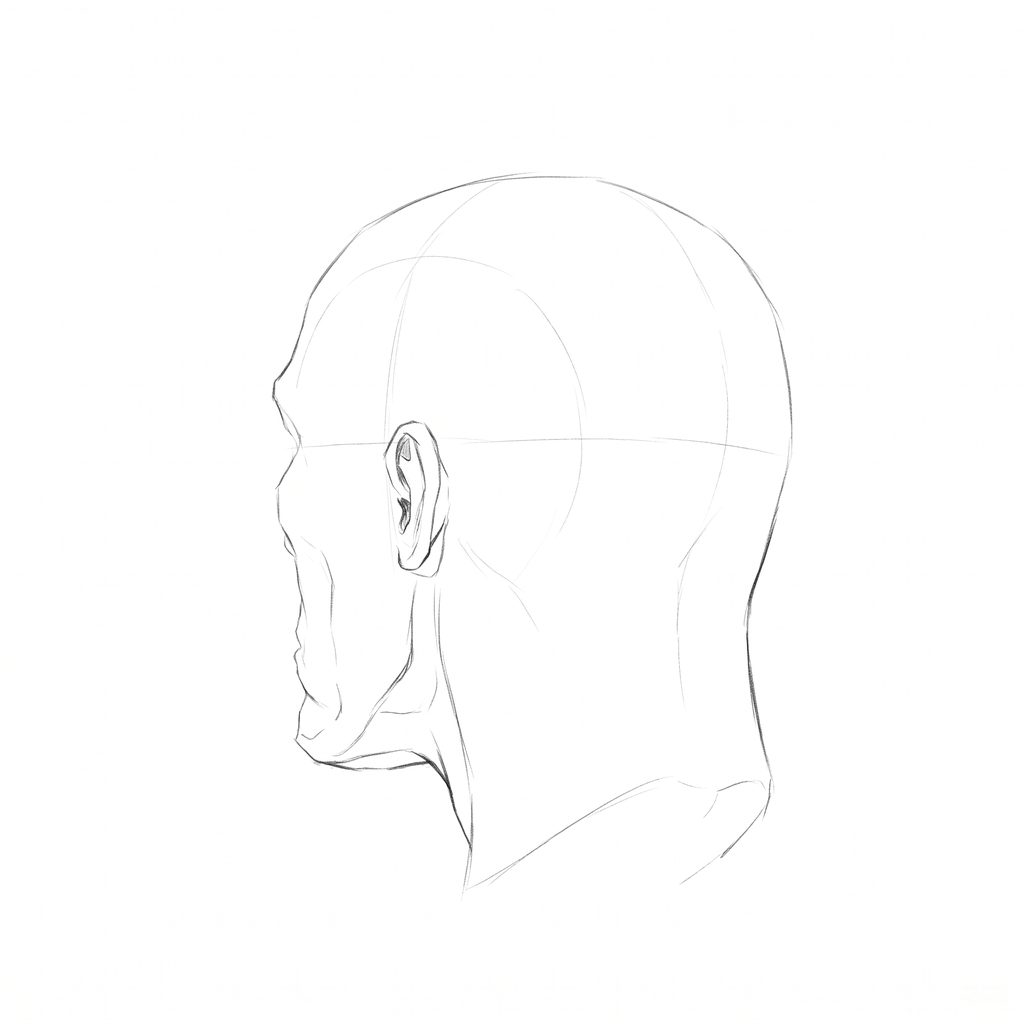
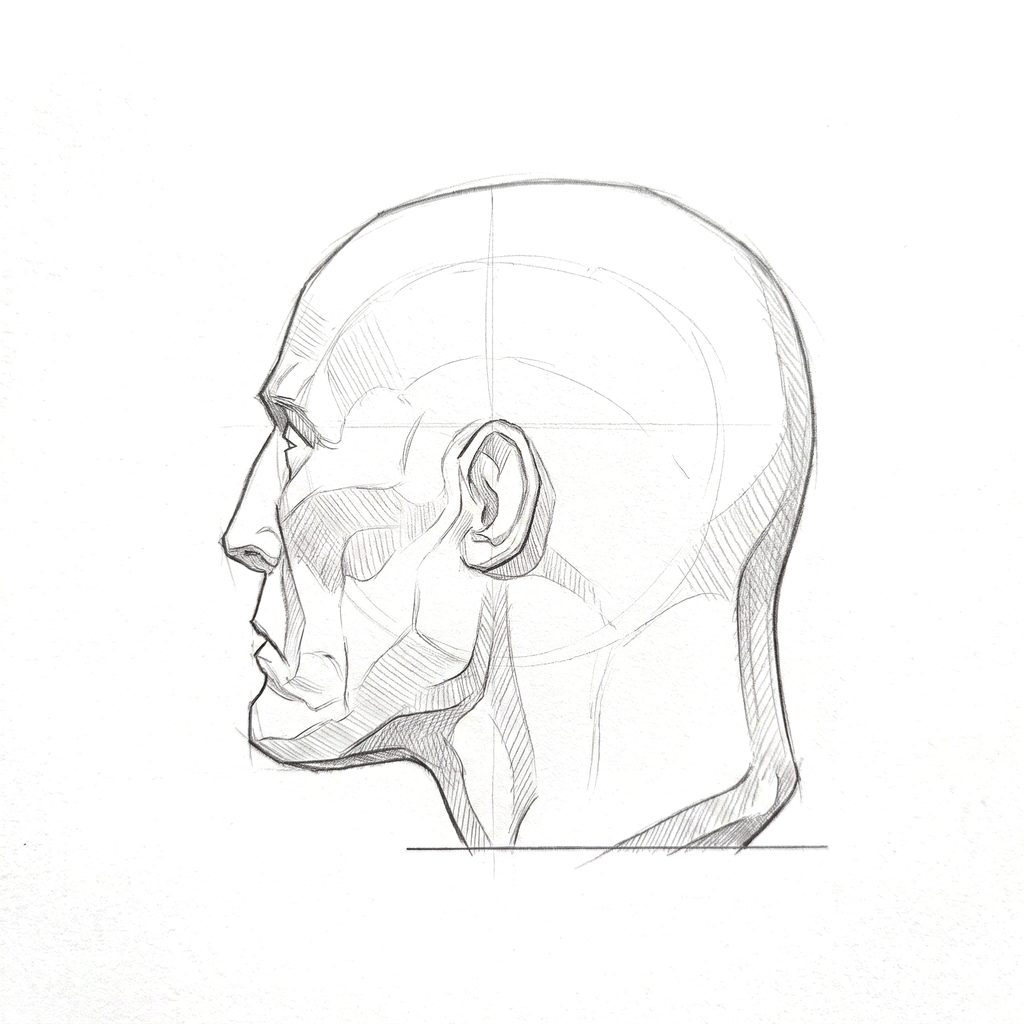
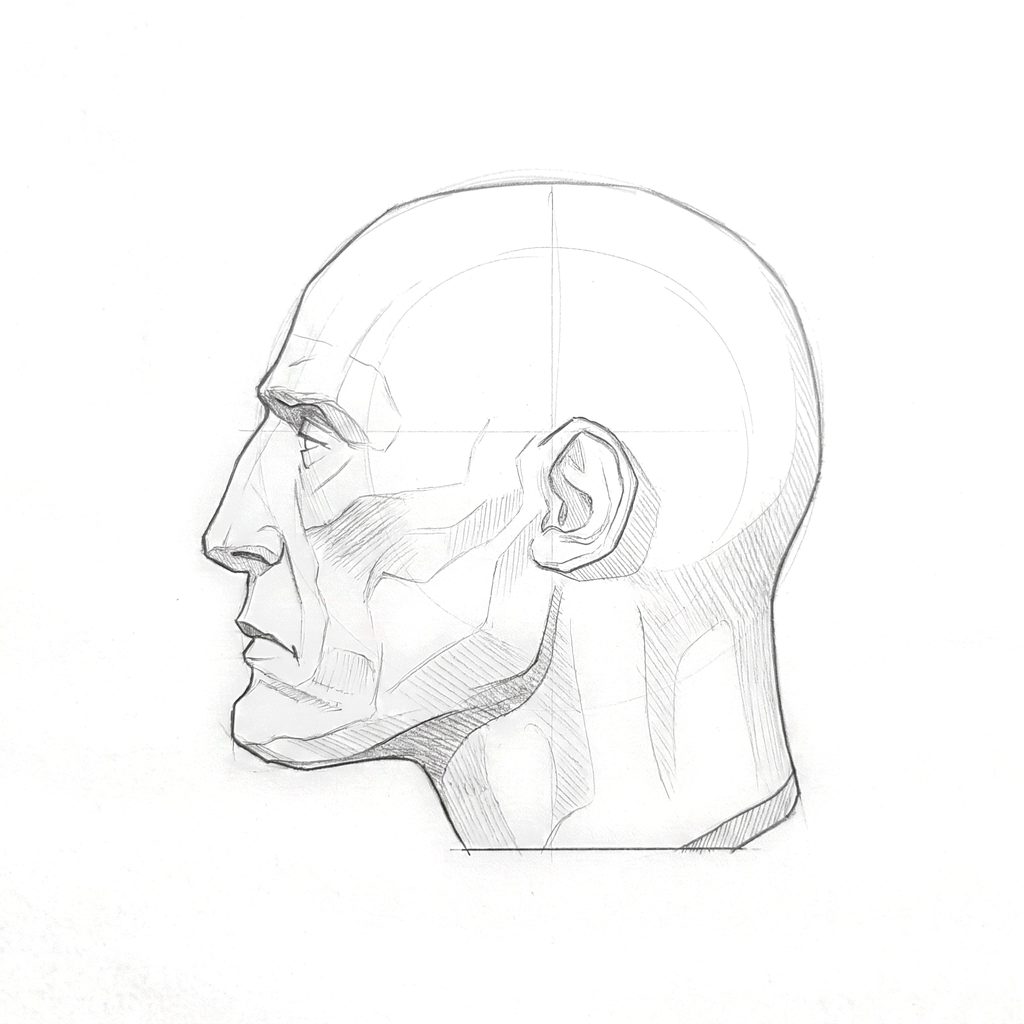
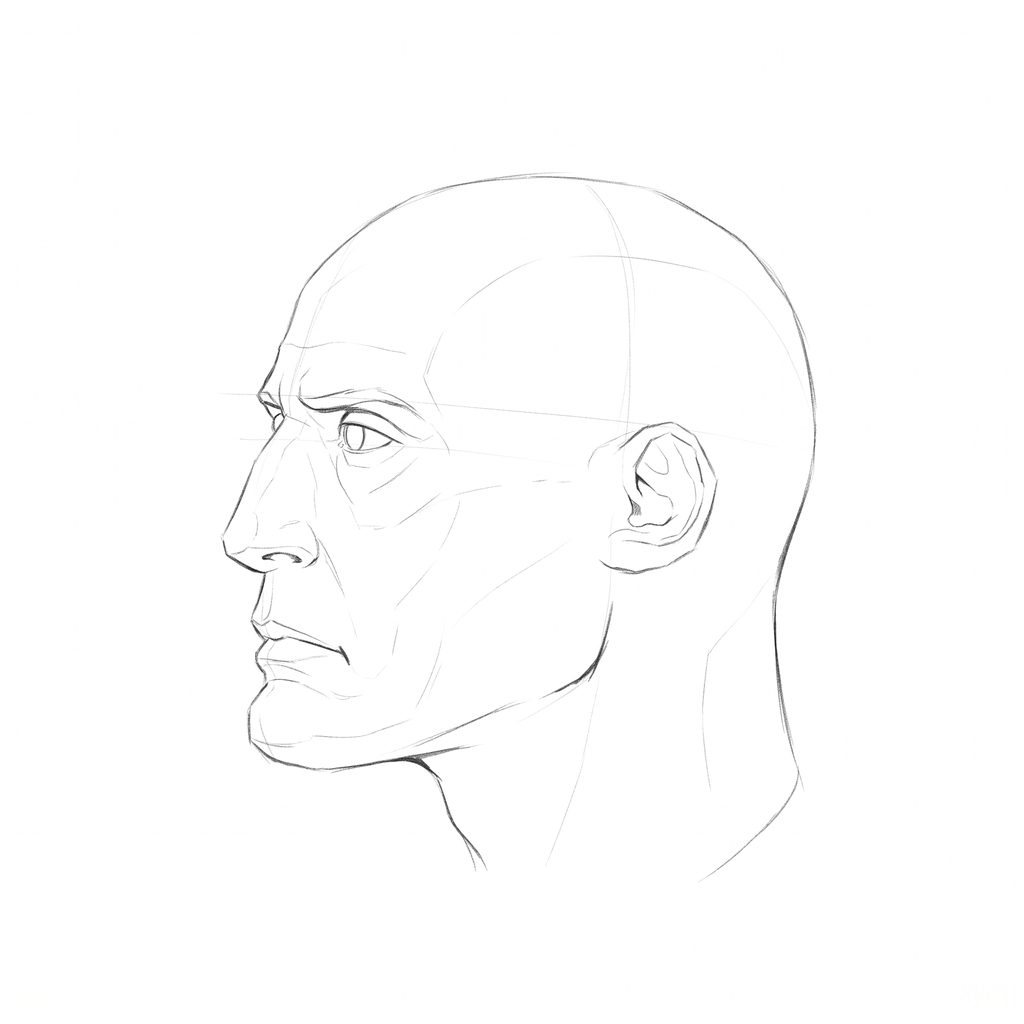
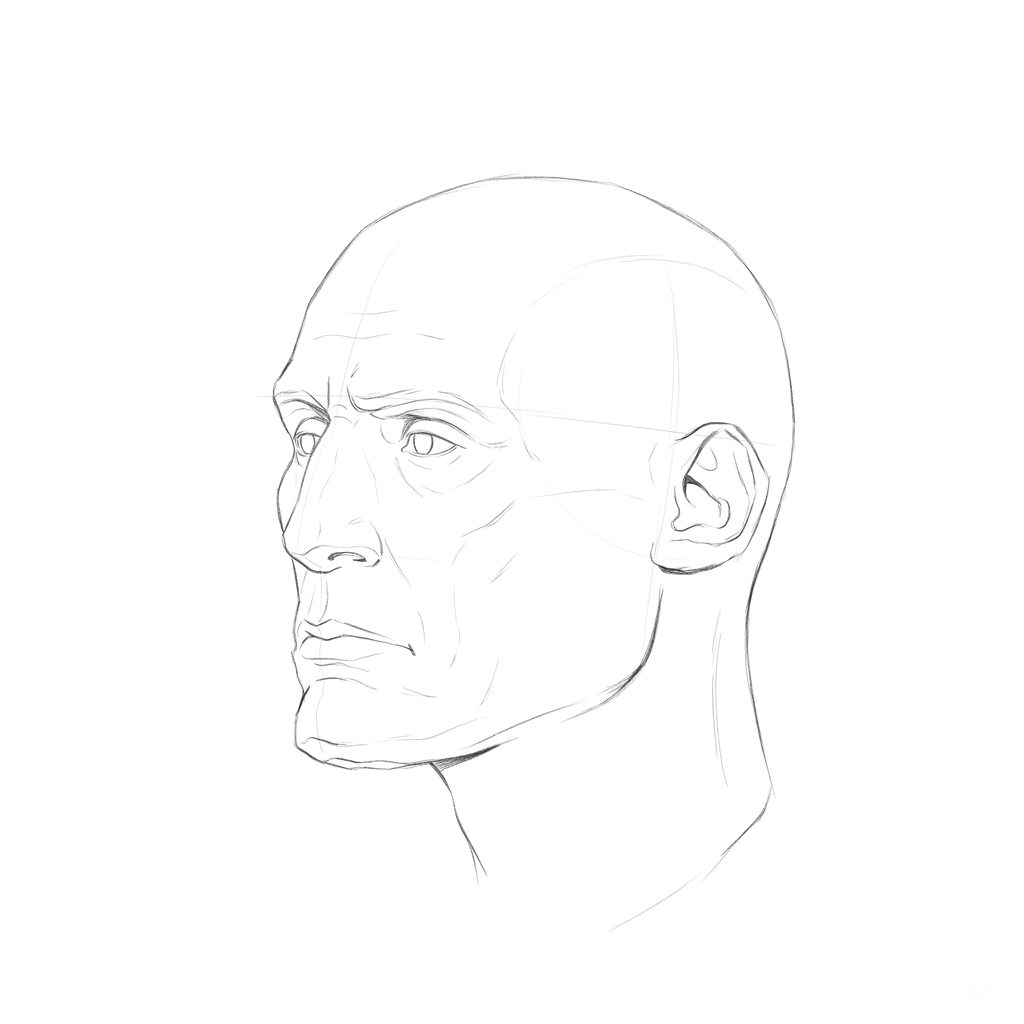
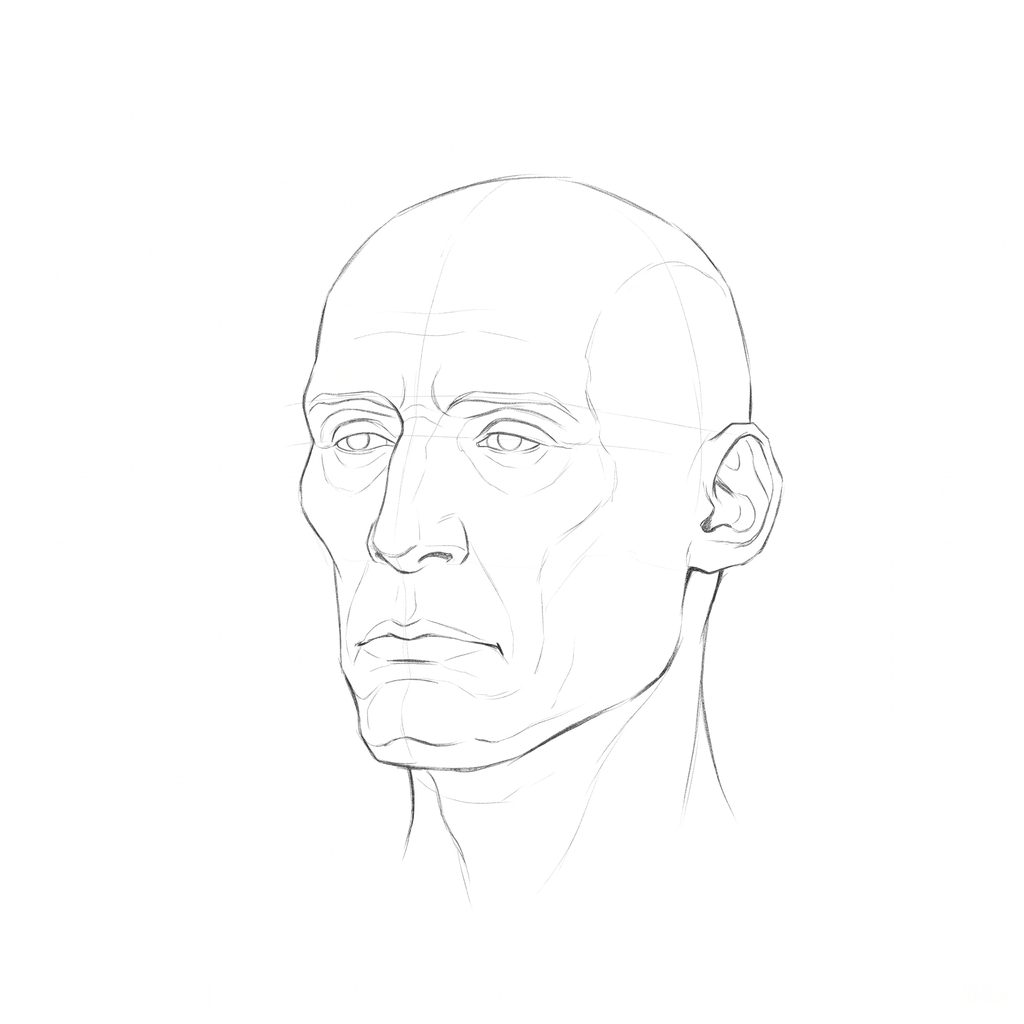
Turn this head yourself, one angle at a time: head turnaround reference.
Front, three-quarter and profile in tone
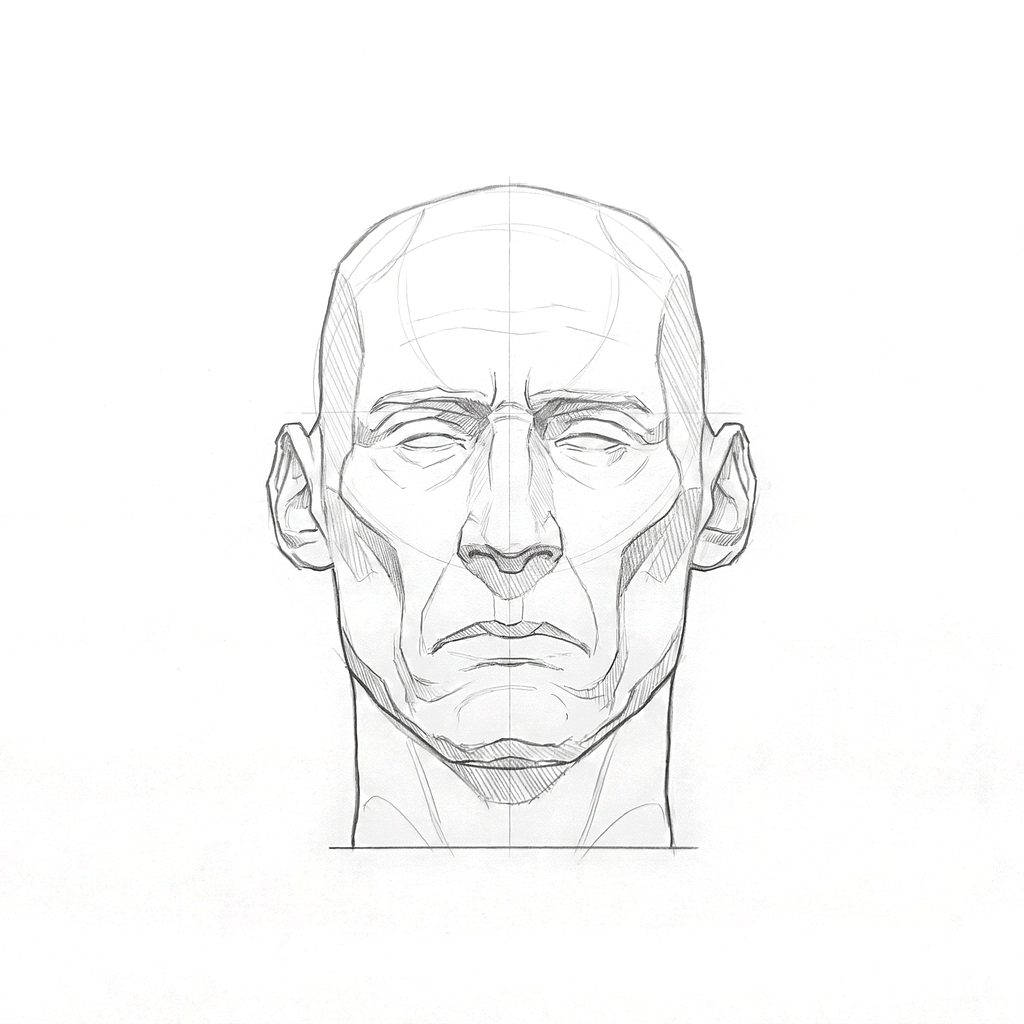
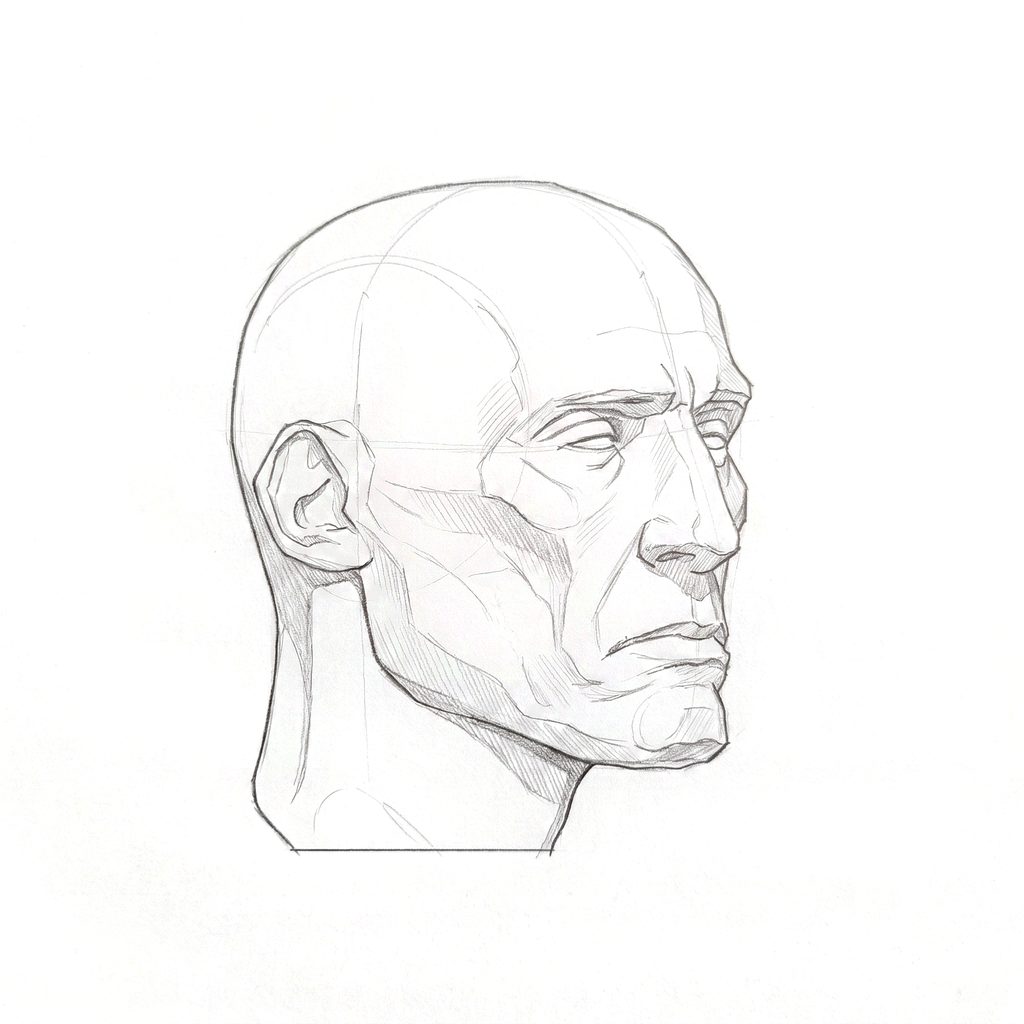
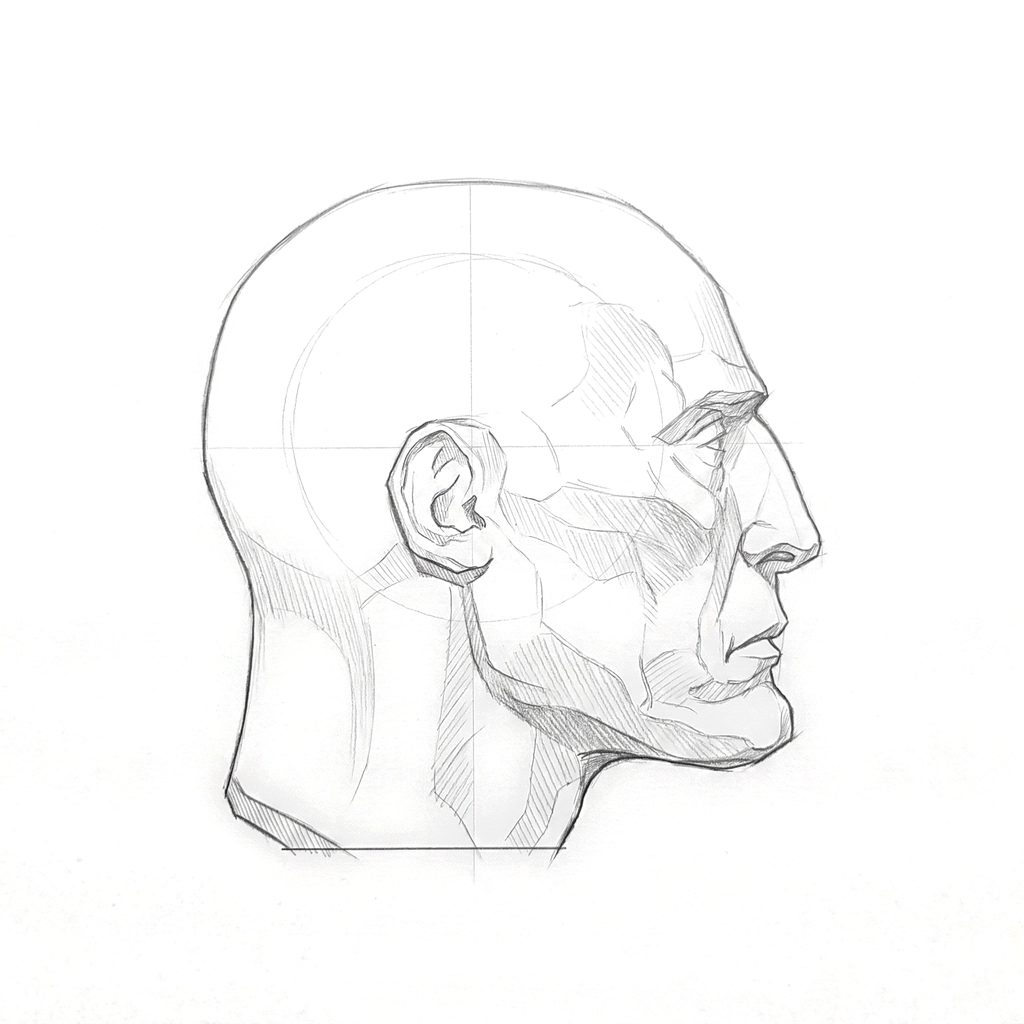
Guides that draw this head
- How to draw cheekbones: front, three-quarter and profile
- Face proportions for drawing, checked on four measured heads
- How to draw a bald head: the outline from the front and the side
- How to draw a forehead: the slope, the brow step and where it turns
- How to draw a long face: raise the features, keep the jaw
- How to draw a round face: one curve from the ear to the chin
- How to draw a thin face: the shading inside the outline
- How to draw different nose shapes
- How to draw ears from the front: height, flare and rim
- How to draw eyes in three-quarter view: the far eye
- How to draw lips from the side: where the corner goes
- How to draw the philtrum and cupid's bow
- How to hatch a face: which way the strokes run
The head guides in order use the same construction for every head.
Keep drawing
The gaunt planes head at all sixteen angles, full size, with its turnaround loops and a practice sheet, is in study pack 02 and in head rotation volume 1.