
How to draw the head in three-quarter view: 315° reference
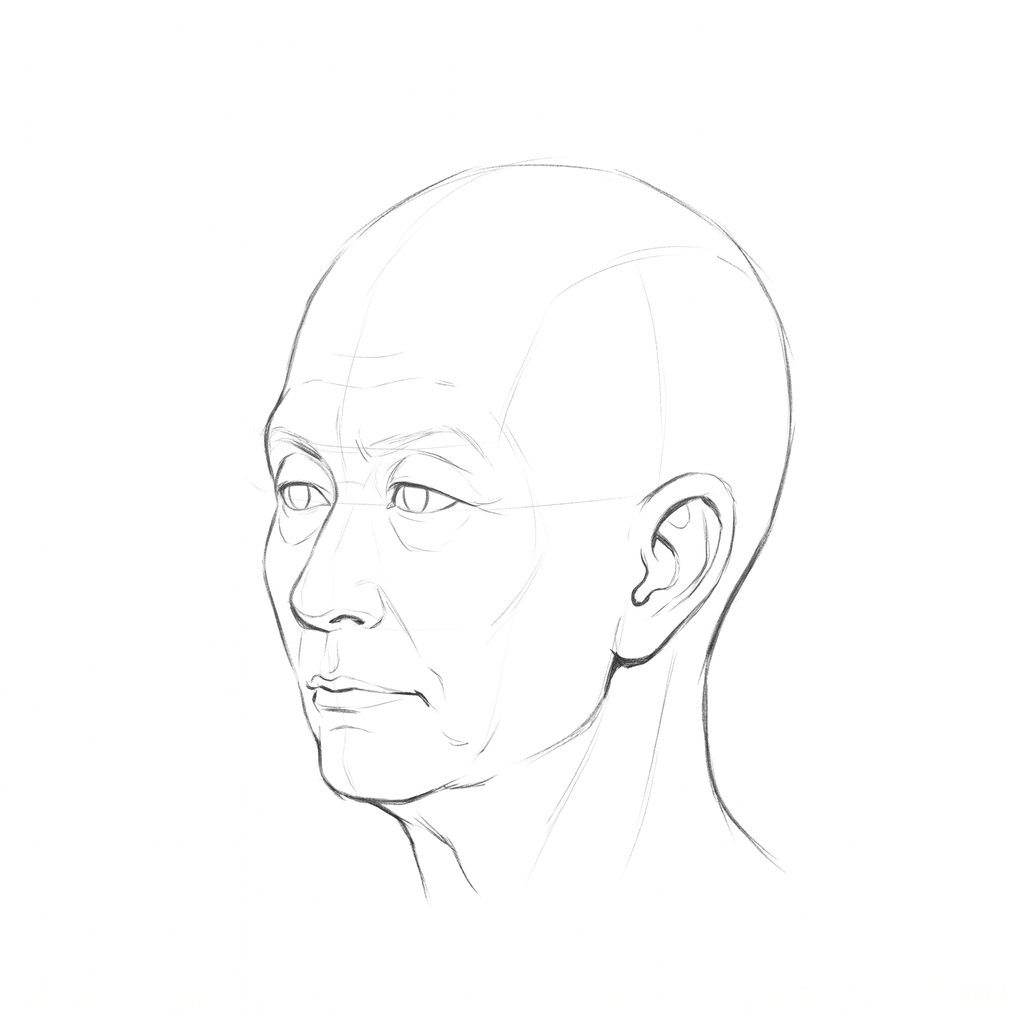
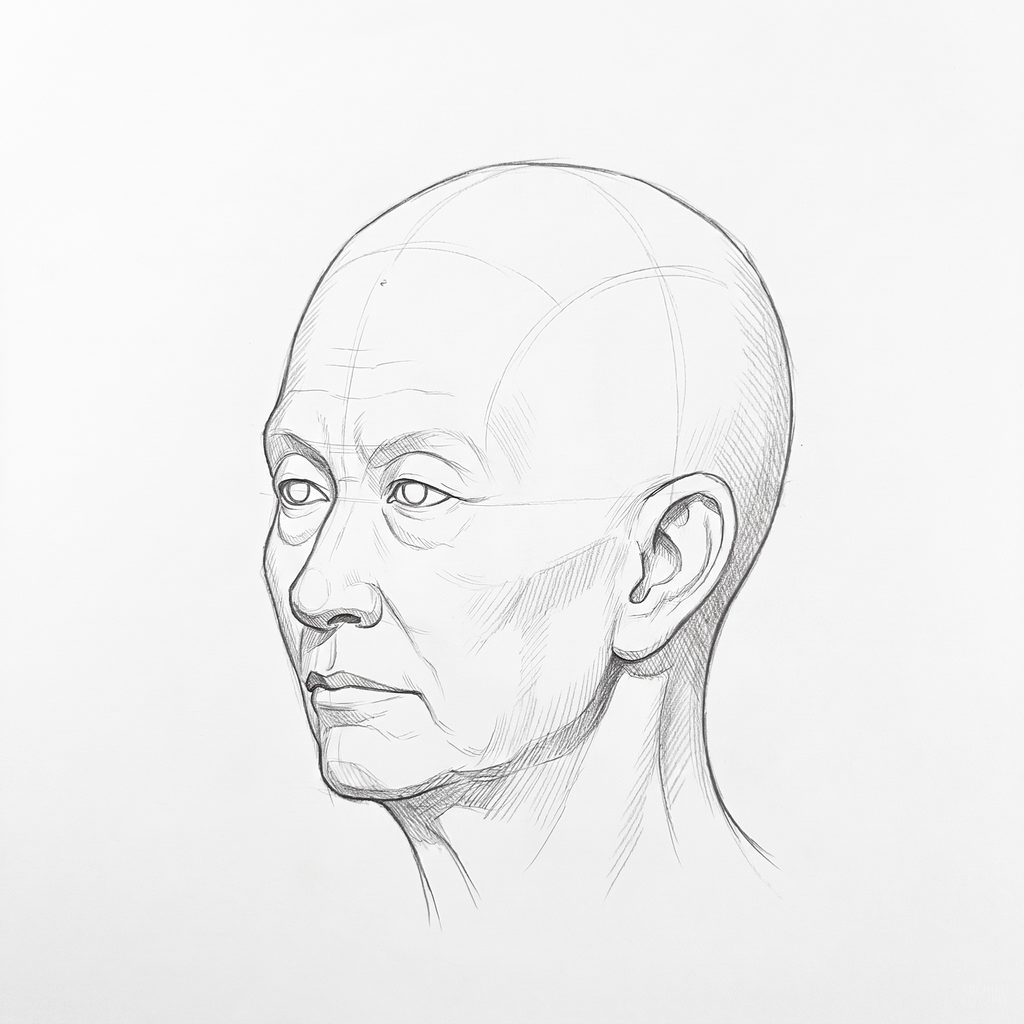
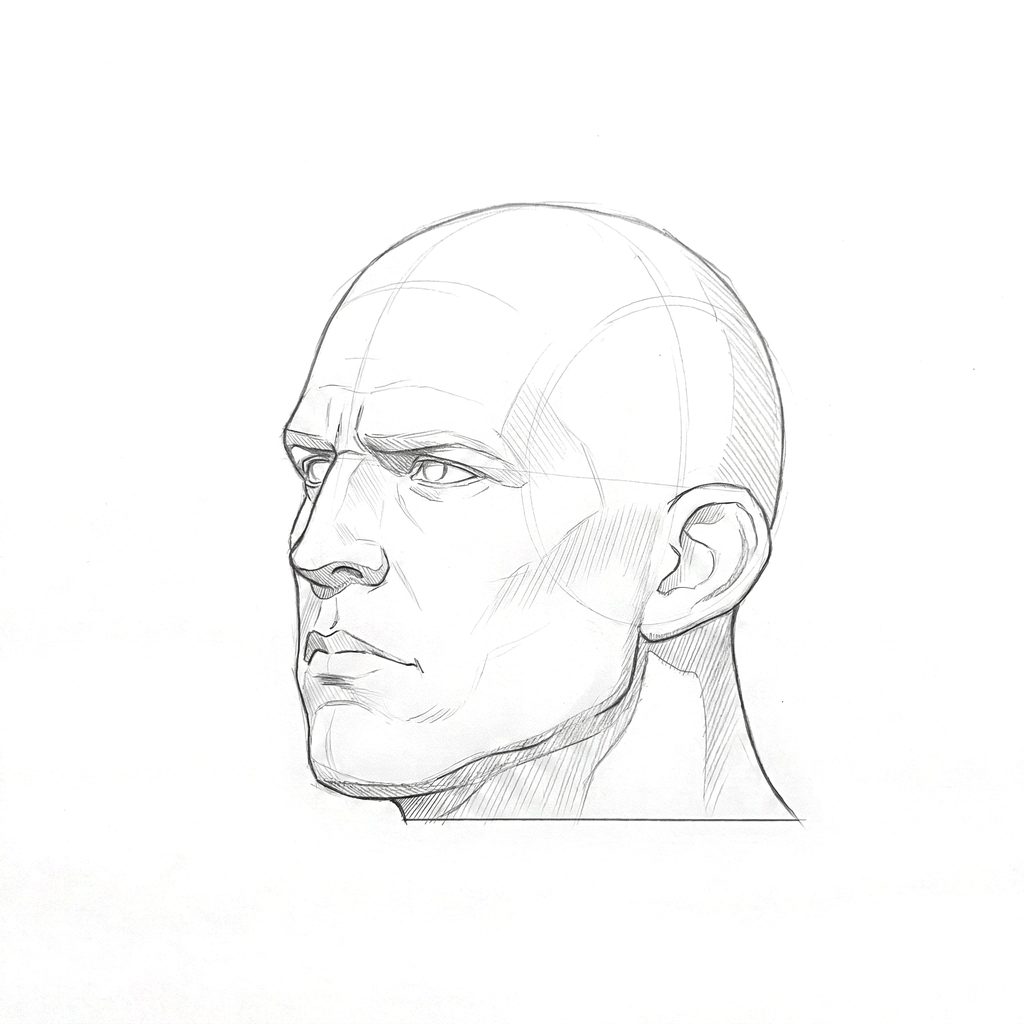
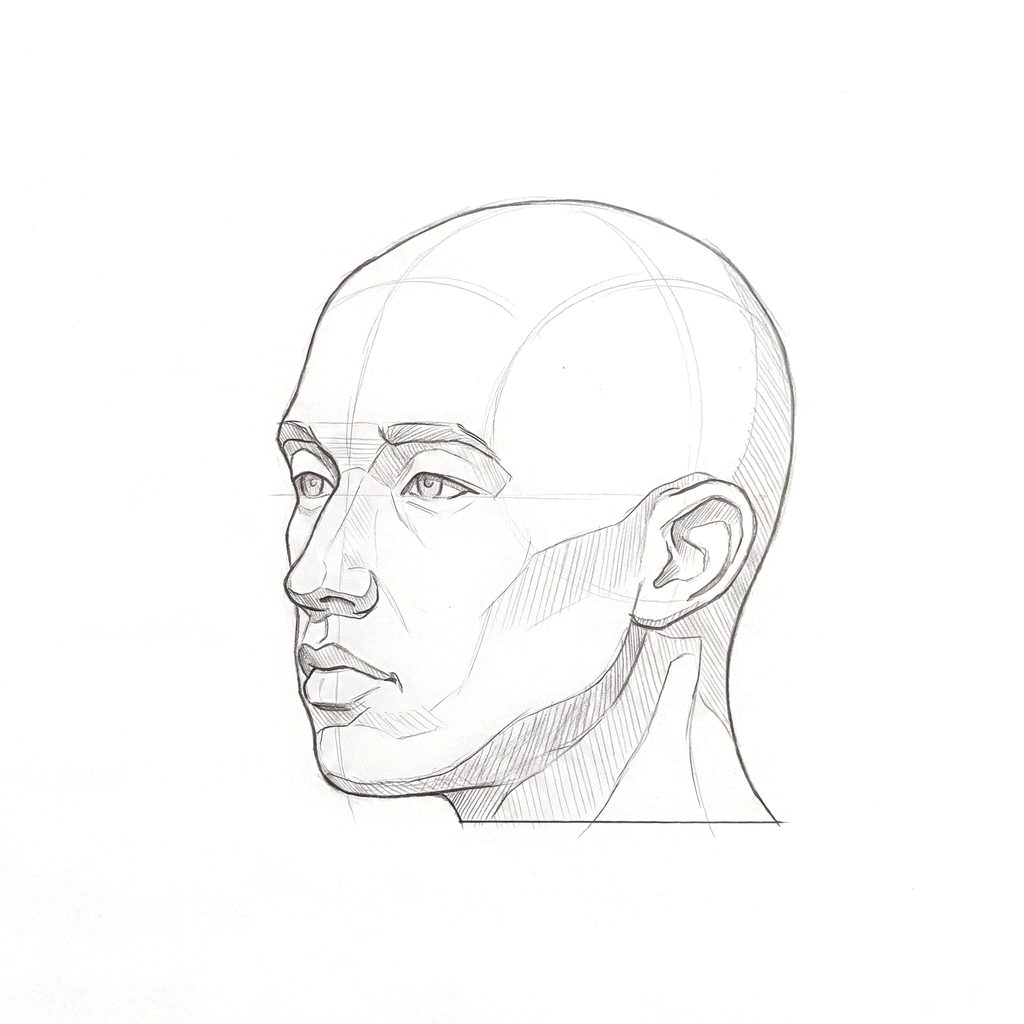
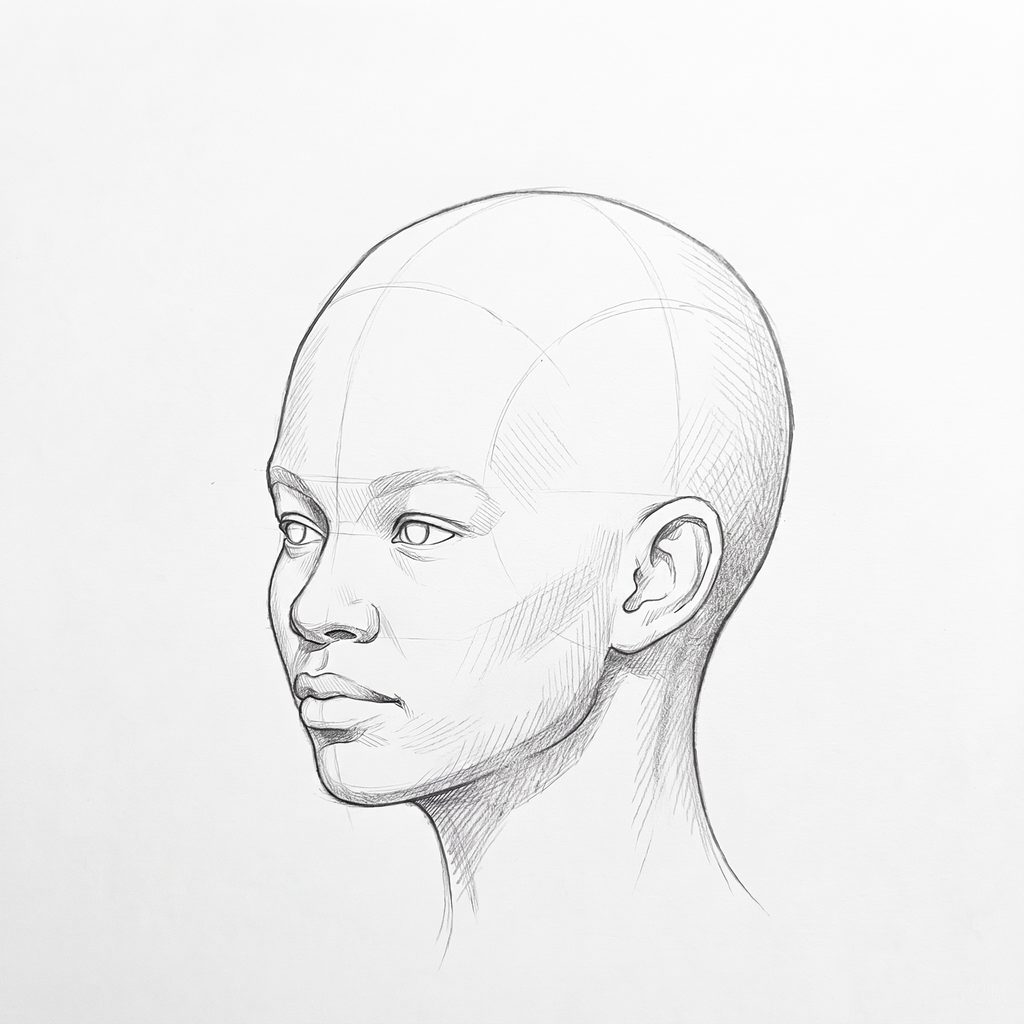
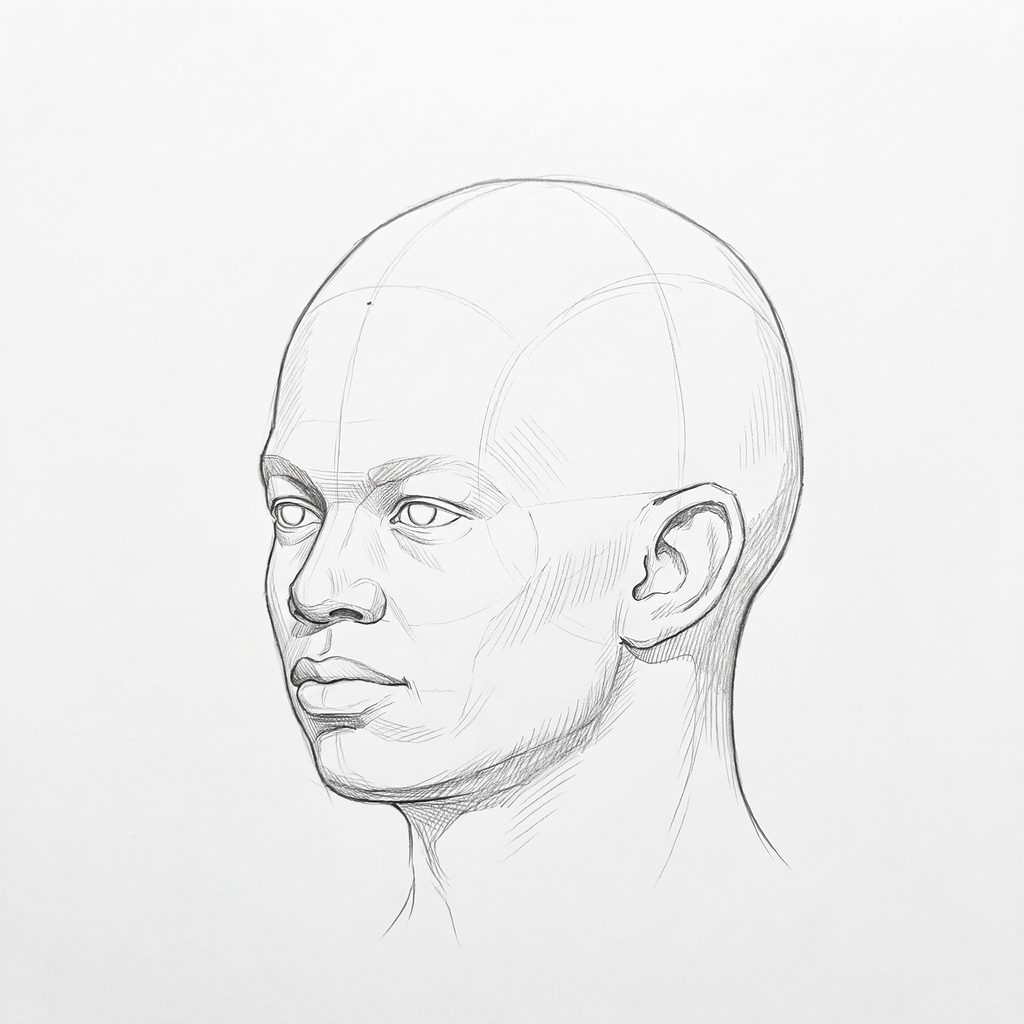
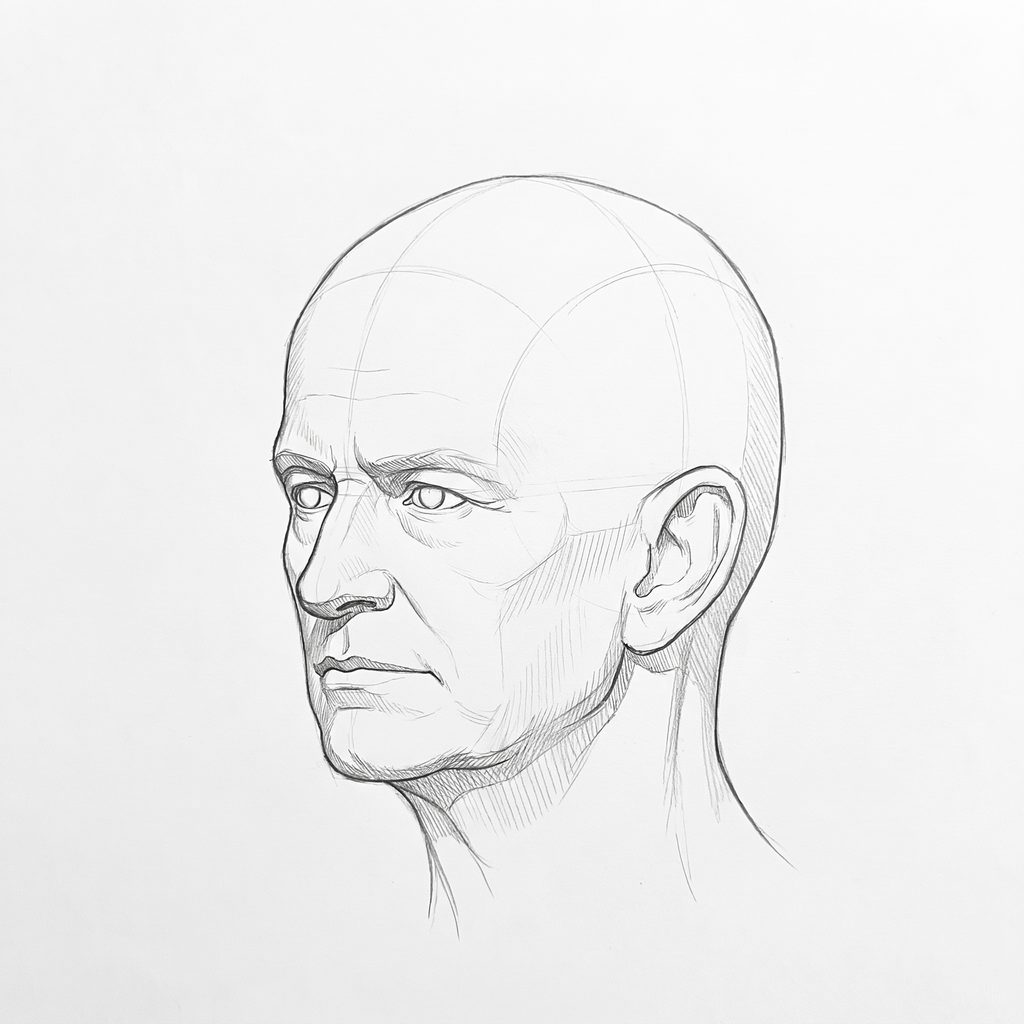
Deep folds at 315 degrees. Compare the pencil drawing with the tonal study.
Drawing this angle
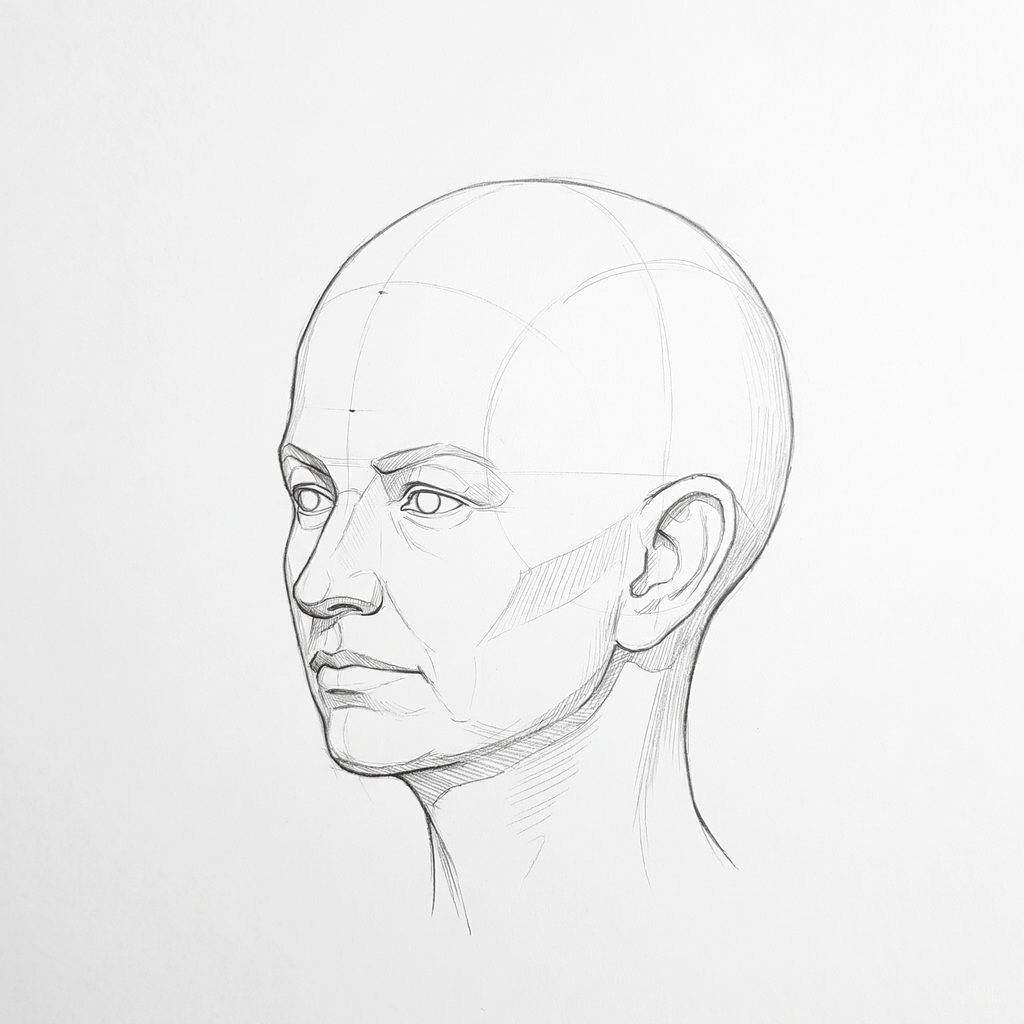
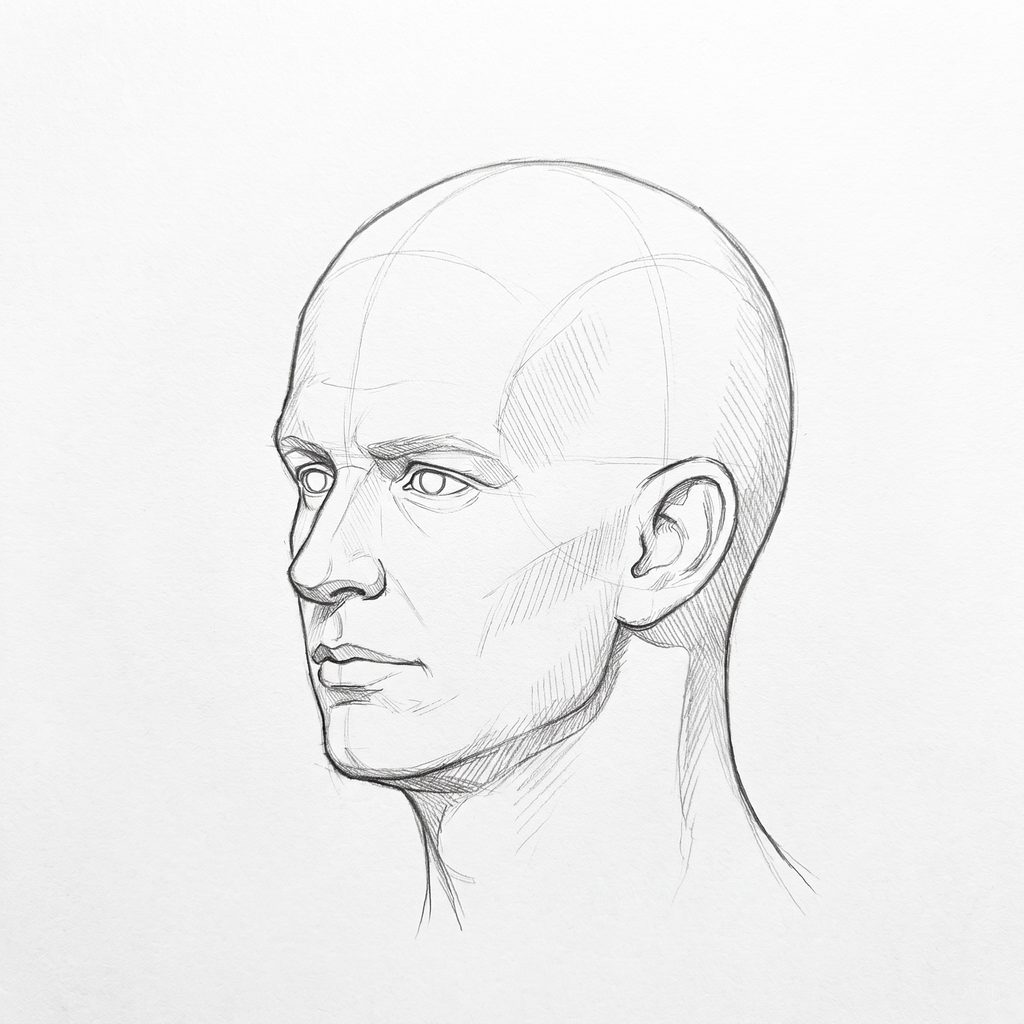
At 315 degrees, study the second three-quarter view as its own drawing. The face has a broad near side and a narrower far side, but each feature occupies a different depth. Compare the widths at the eyes, cheeks and mouth separately. Place the center line through the brow, nose and chin with the turn of the surface in mind.
Watch where the far cheek meets or disappears behind the nose. Then follow the near cheek toward the ear and down into the jaw corner. These connected relationships usually explain the pose more clearly than detailed eyes. Compare the ear-to-eye line with the plate instead of assuming a fixed slope. In the tonal view, decide where the front plane turns to the side before shading. For practice, draw this angle alongside 45 degrees using only the skull mass, face wedge and jaw. Let the reference guide any differences between the two sides.
Step by step: How to draw the head in three-quarter view, one of the head guides in order.
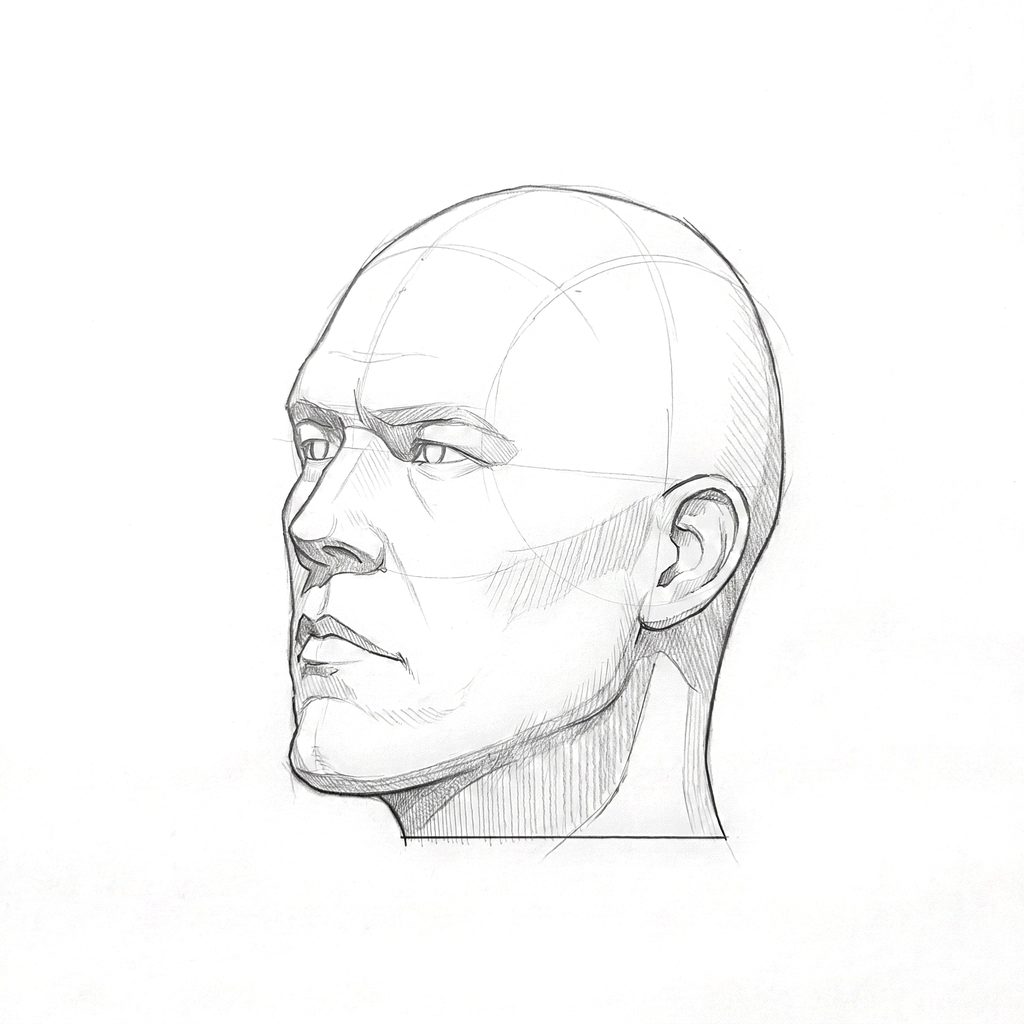
Compare all ten heads
Keep drawing
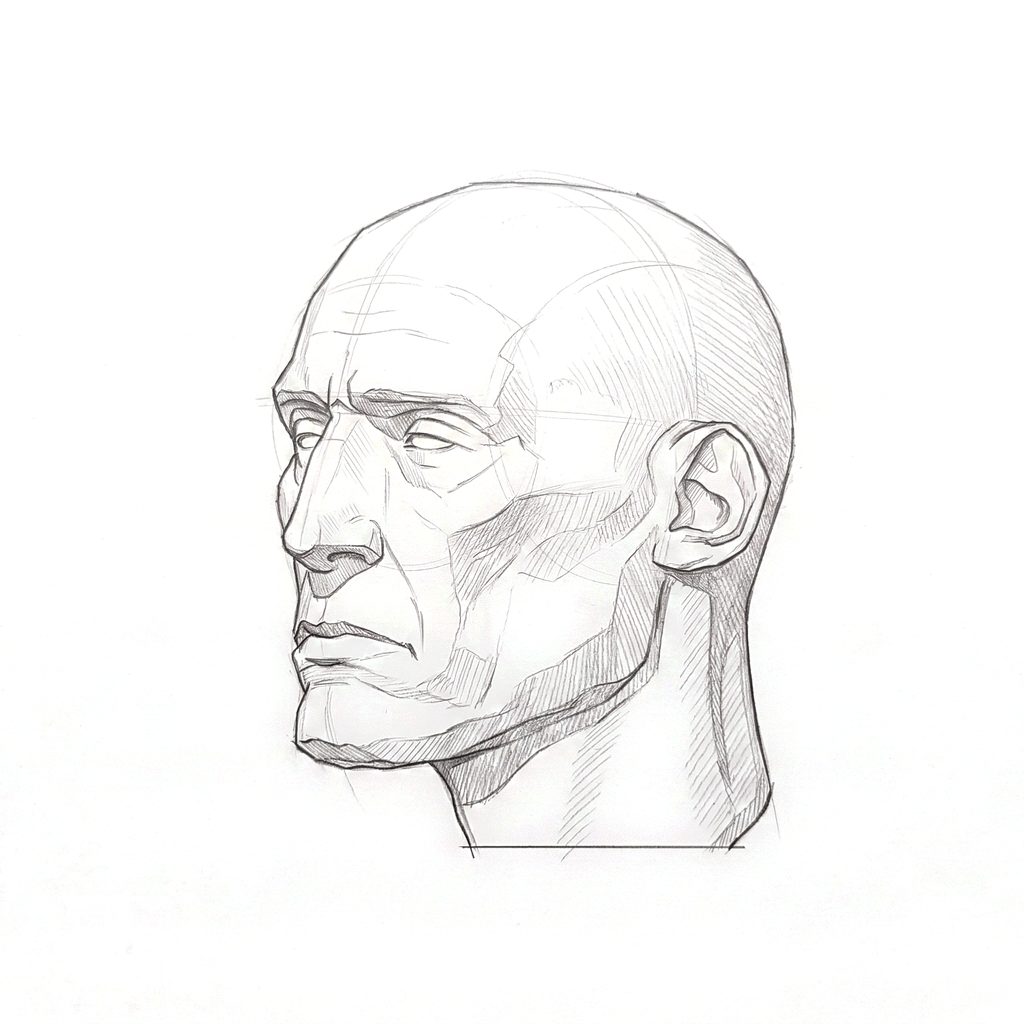
The deep folds head at all sixteen angles, full size, with its turnaround loops and a practice sheet, is in study pack 05 and in head rotation volume 2.