
Hard plane head rotation reference
The hard-plane head gives the brow, cheek and jaw distinct changes of direction. Start with the broad forehead and the wedge of the lower face, then compare where the cheek turns toward the ear. Keep the side of the skull large enough to hold the face. In the tonal views, look for a change of value across each plane before deciding whether it needs a drawn edge.
Pencil studies through the turn
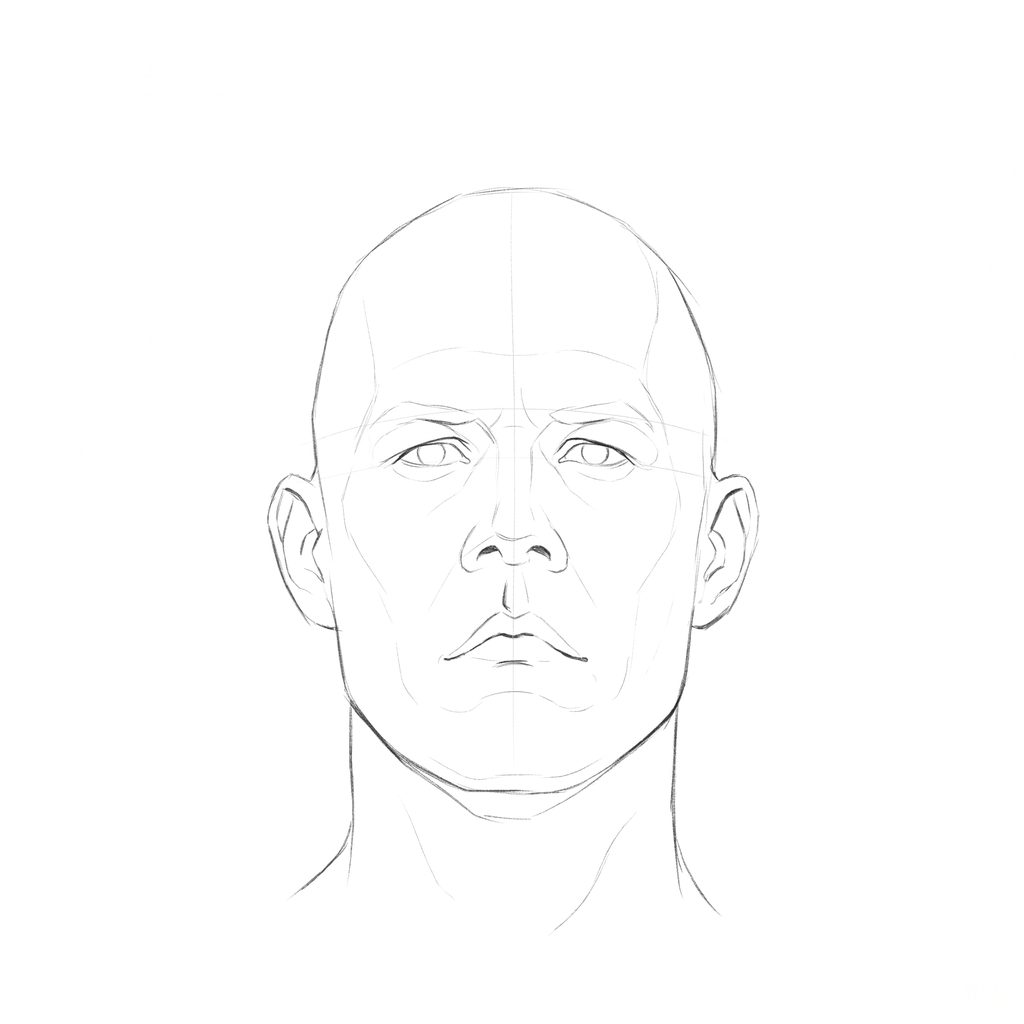
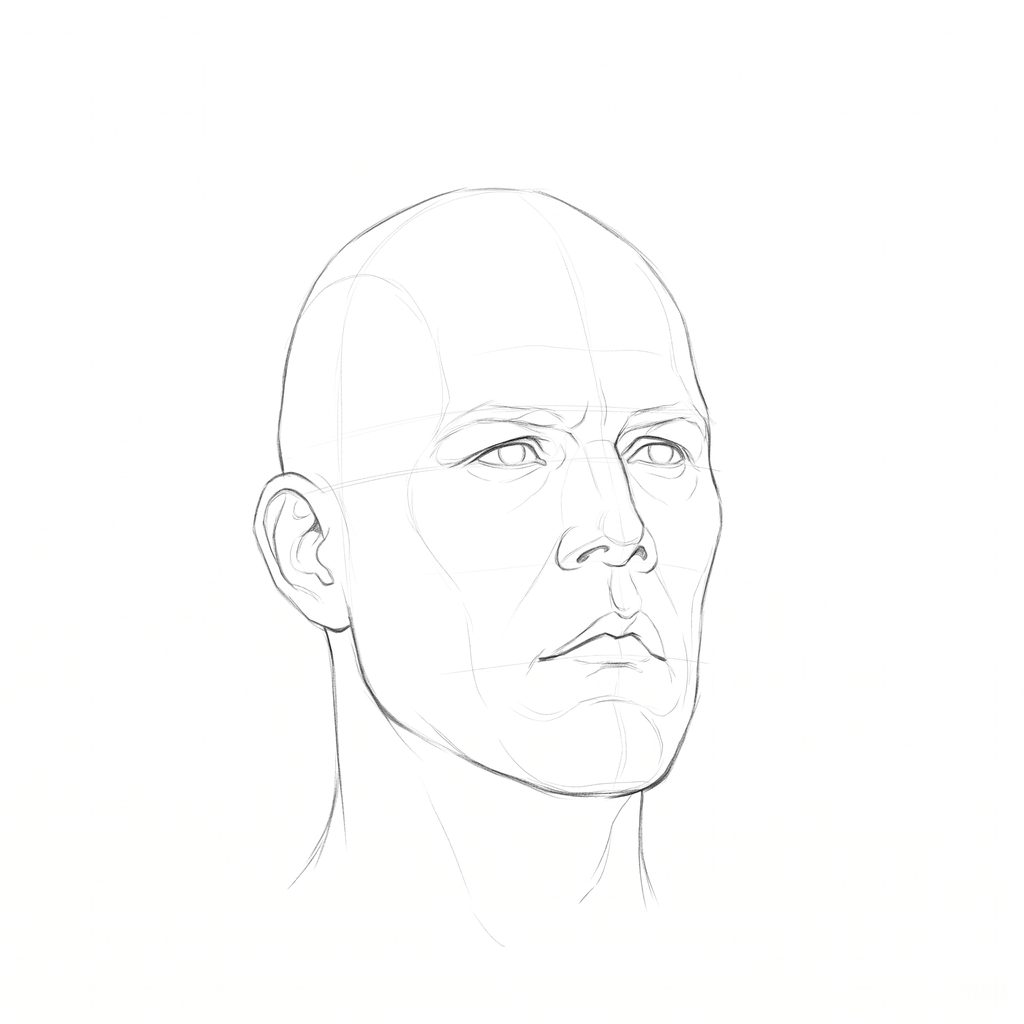
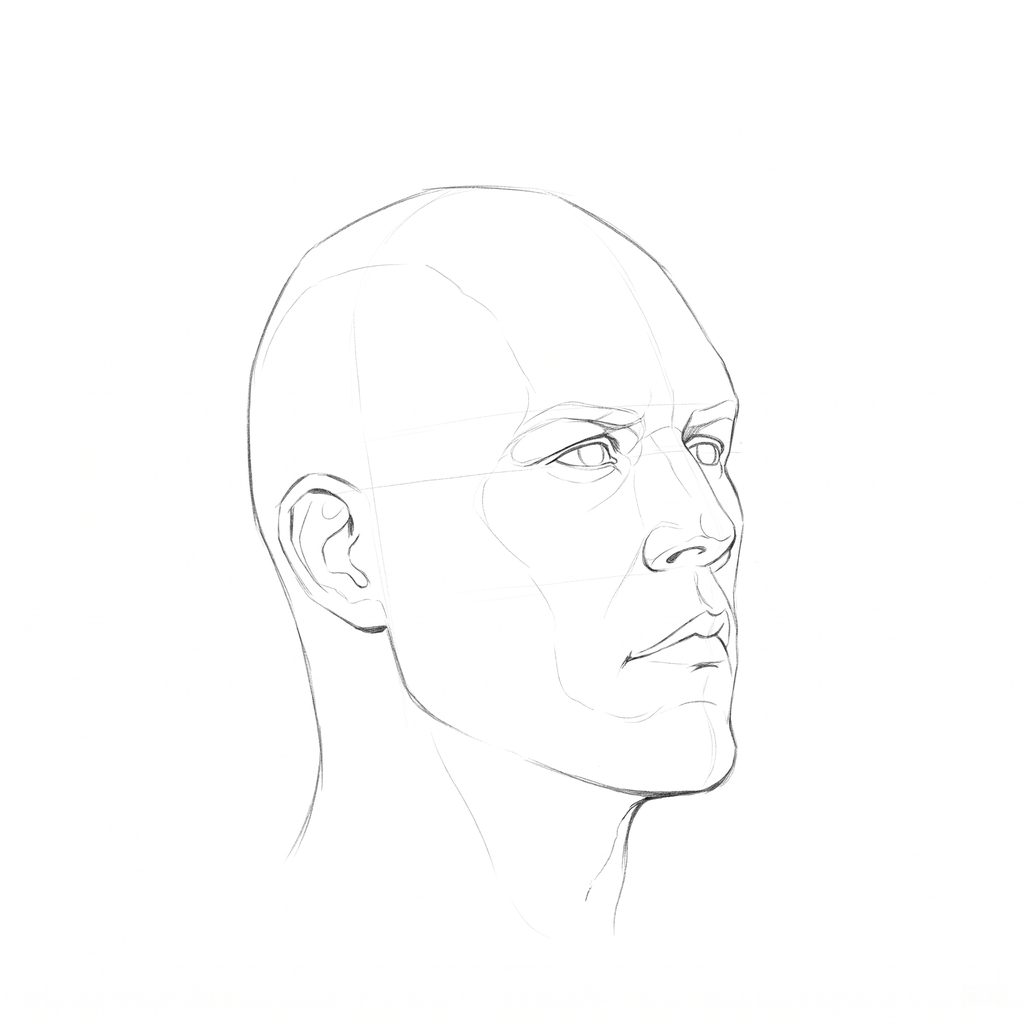
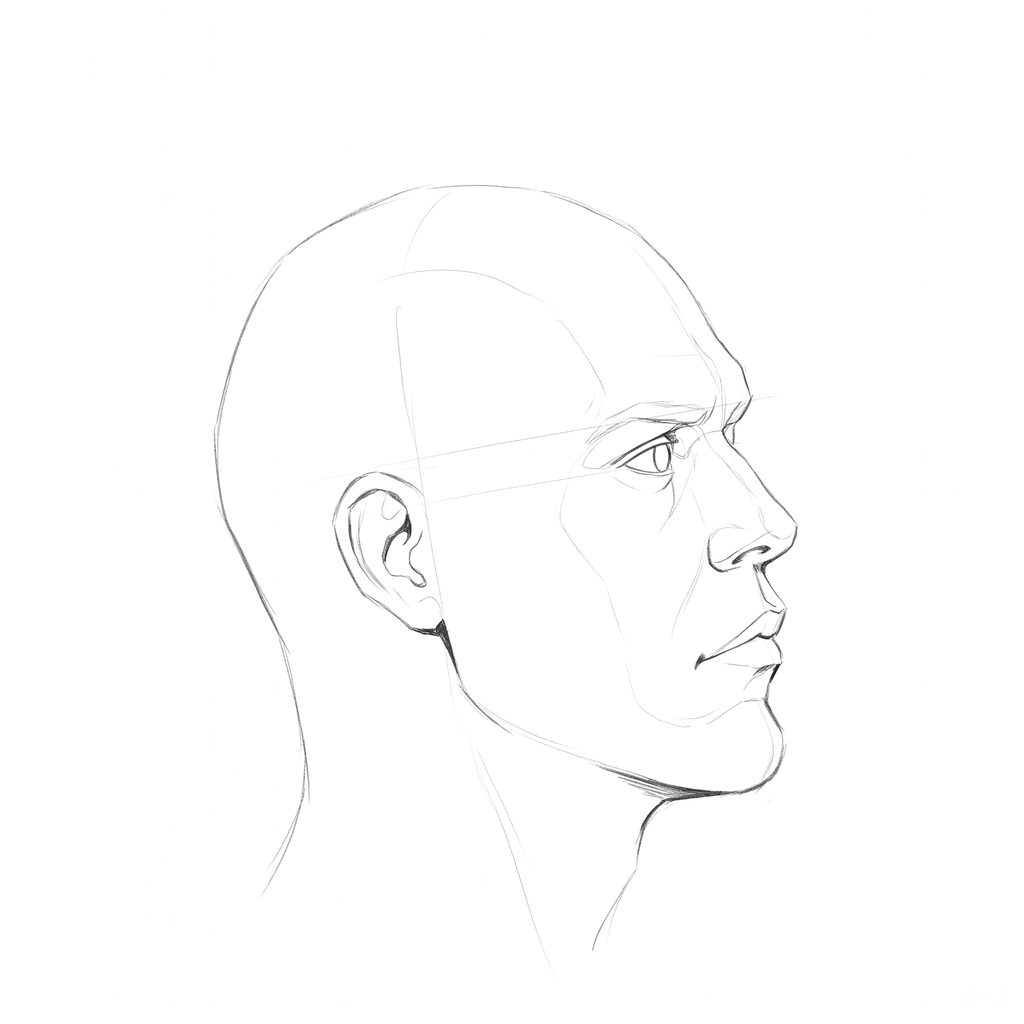
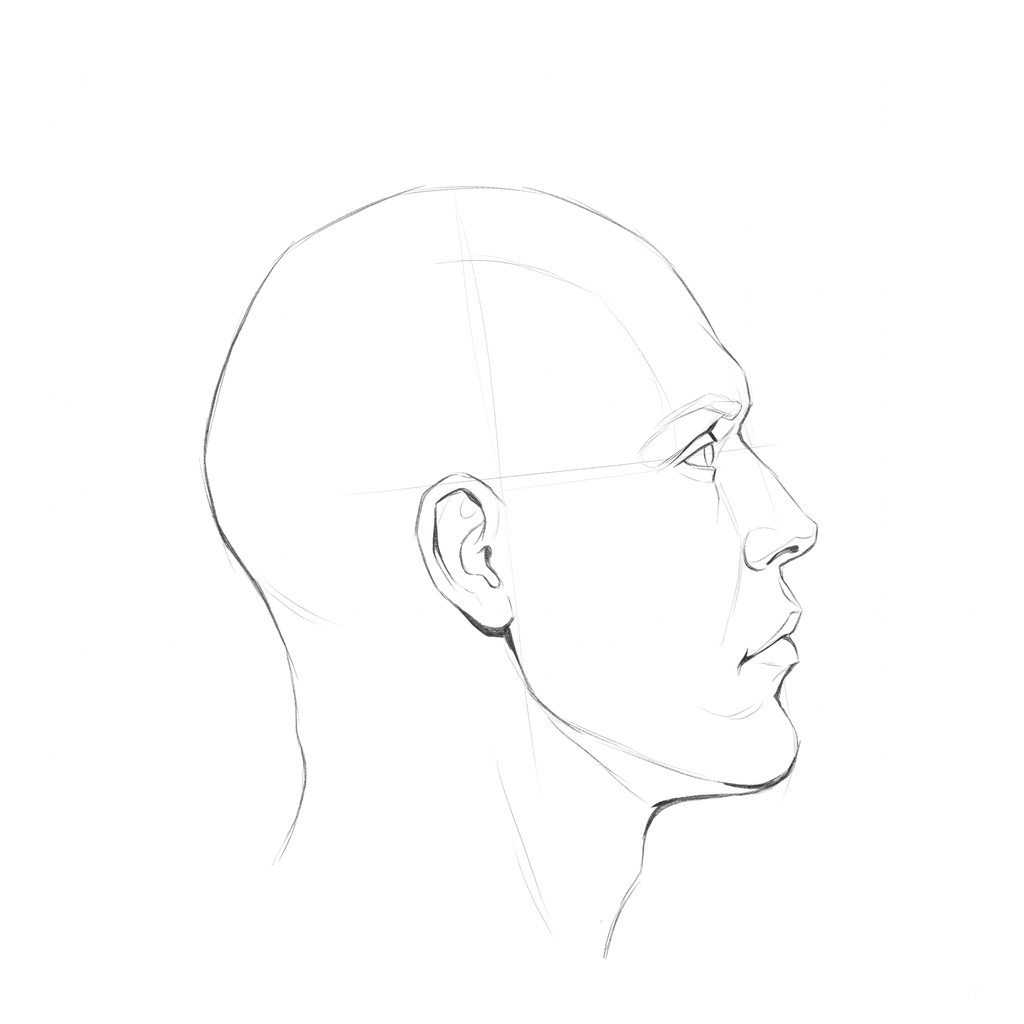
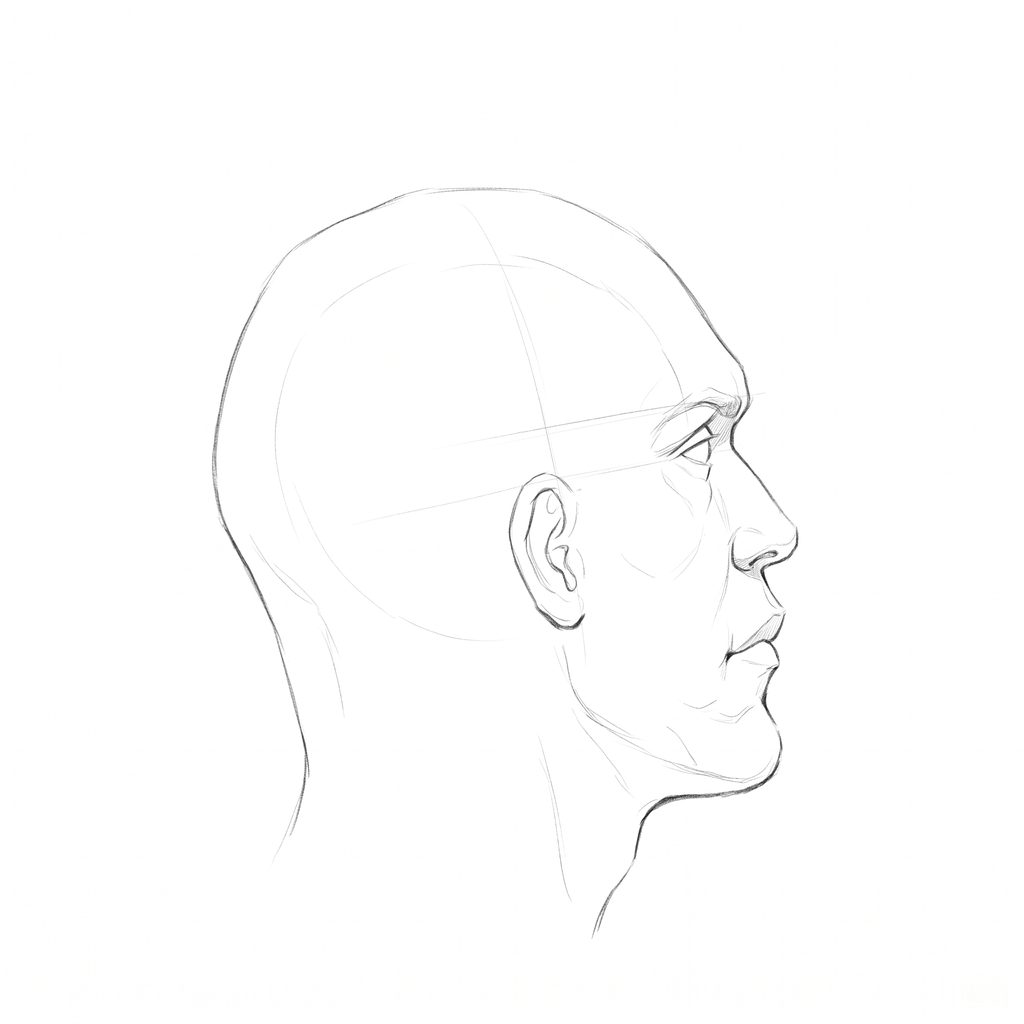
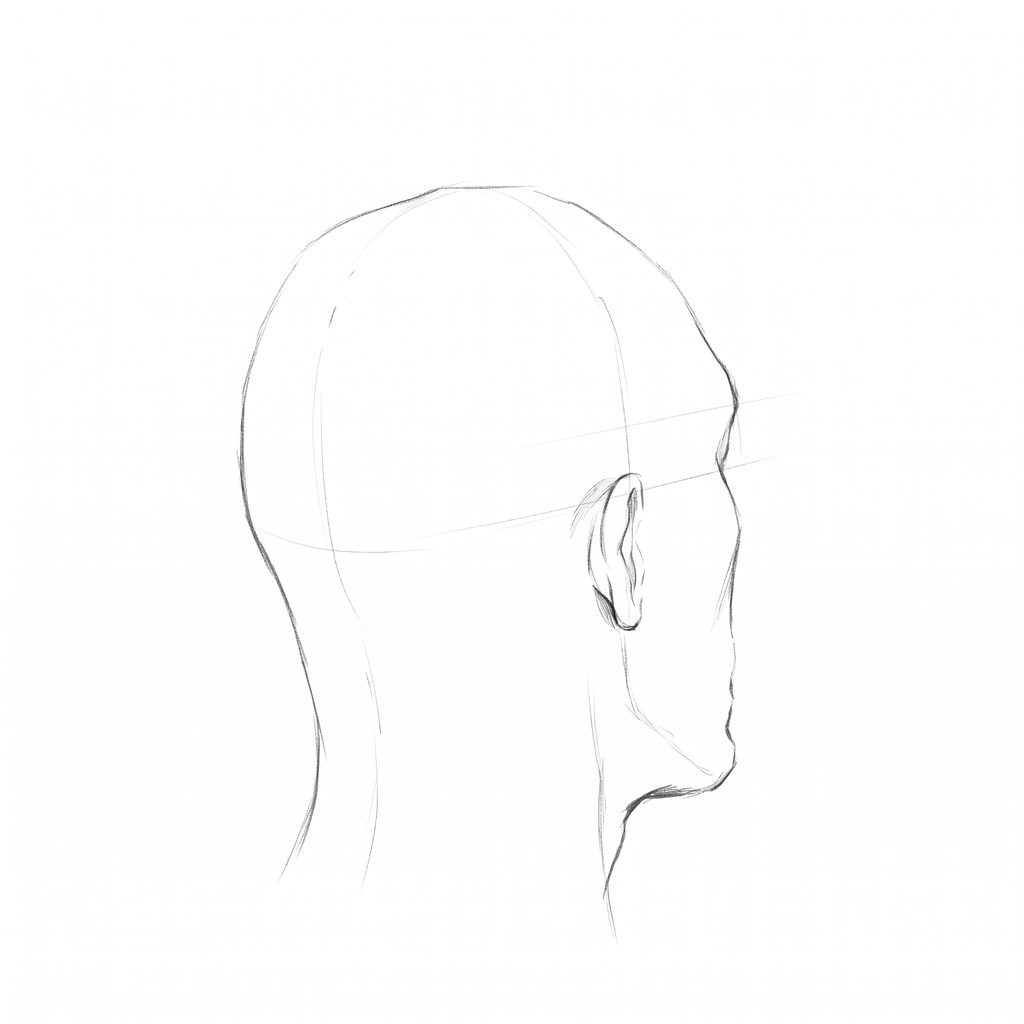
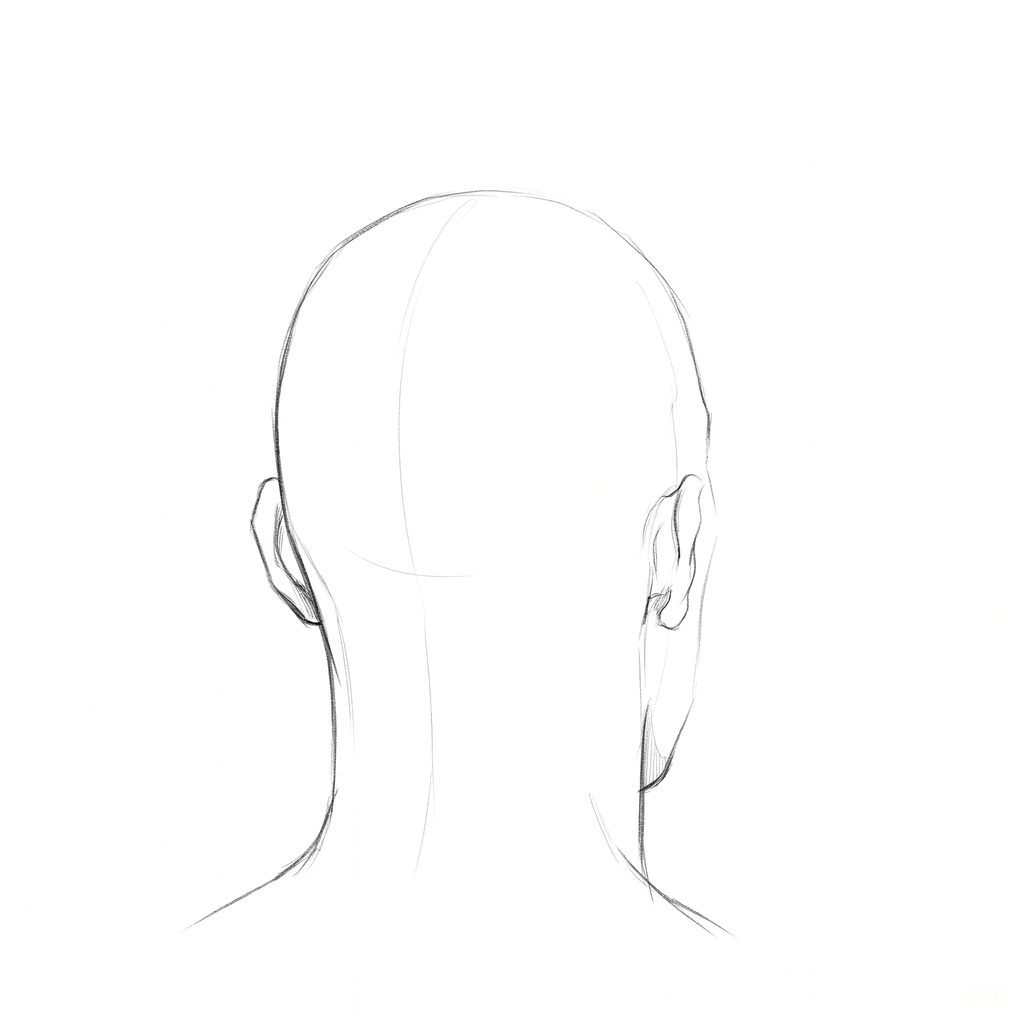
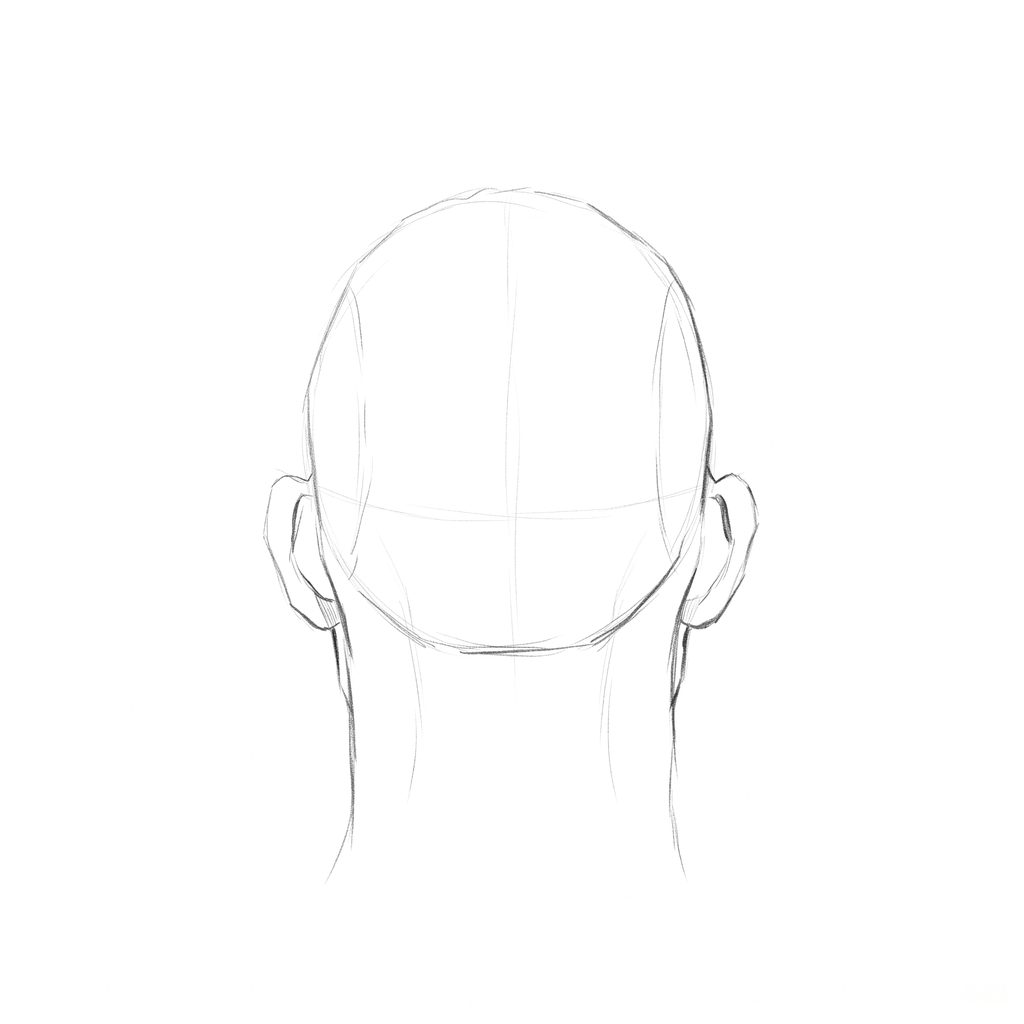
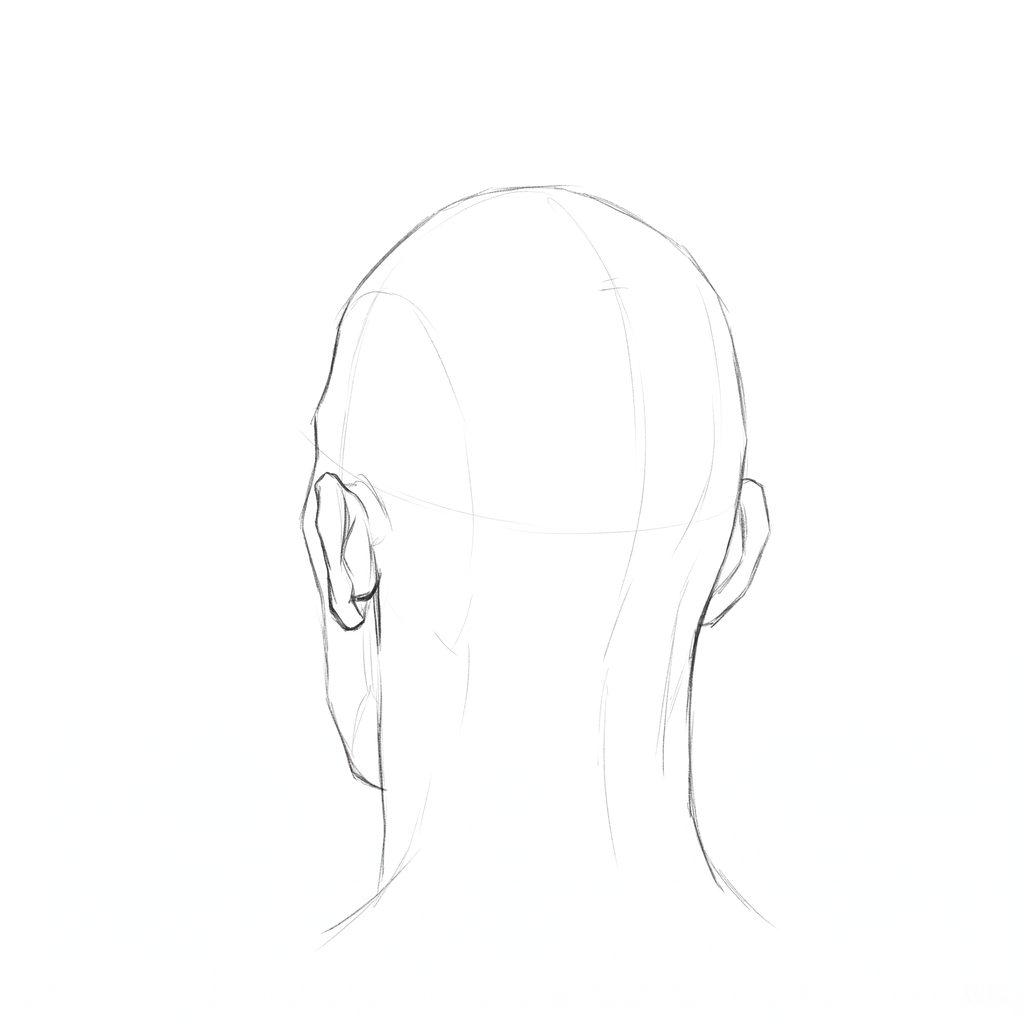
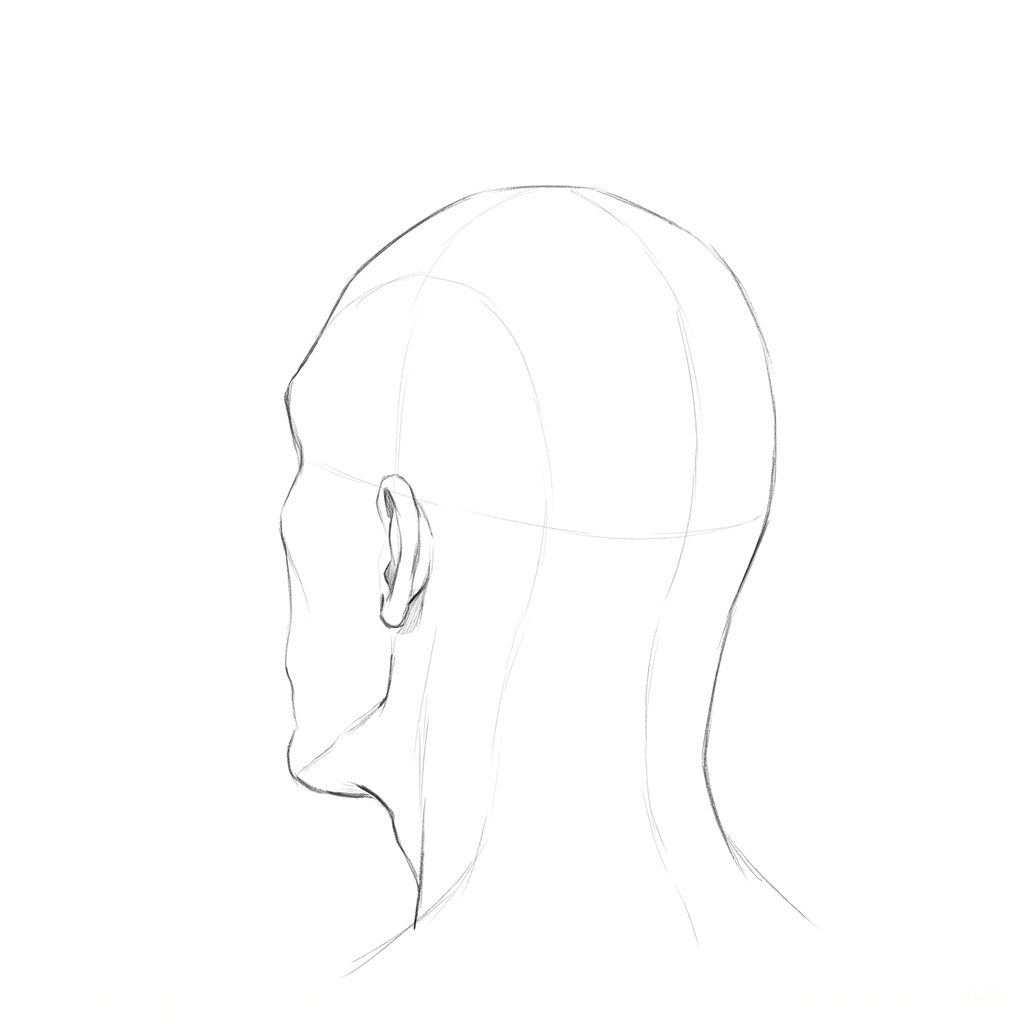
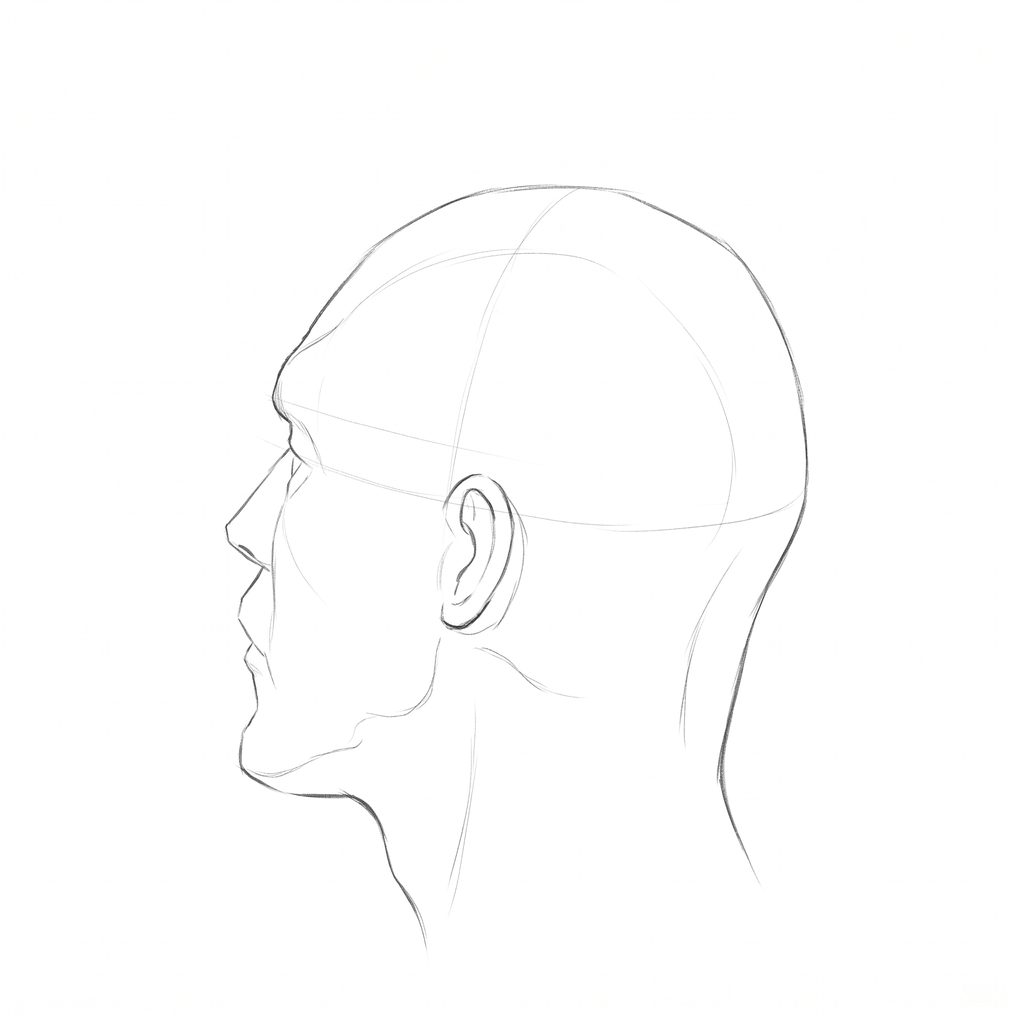
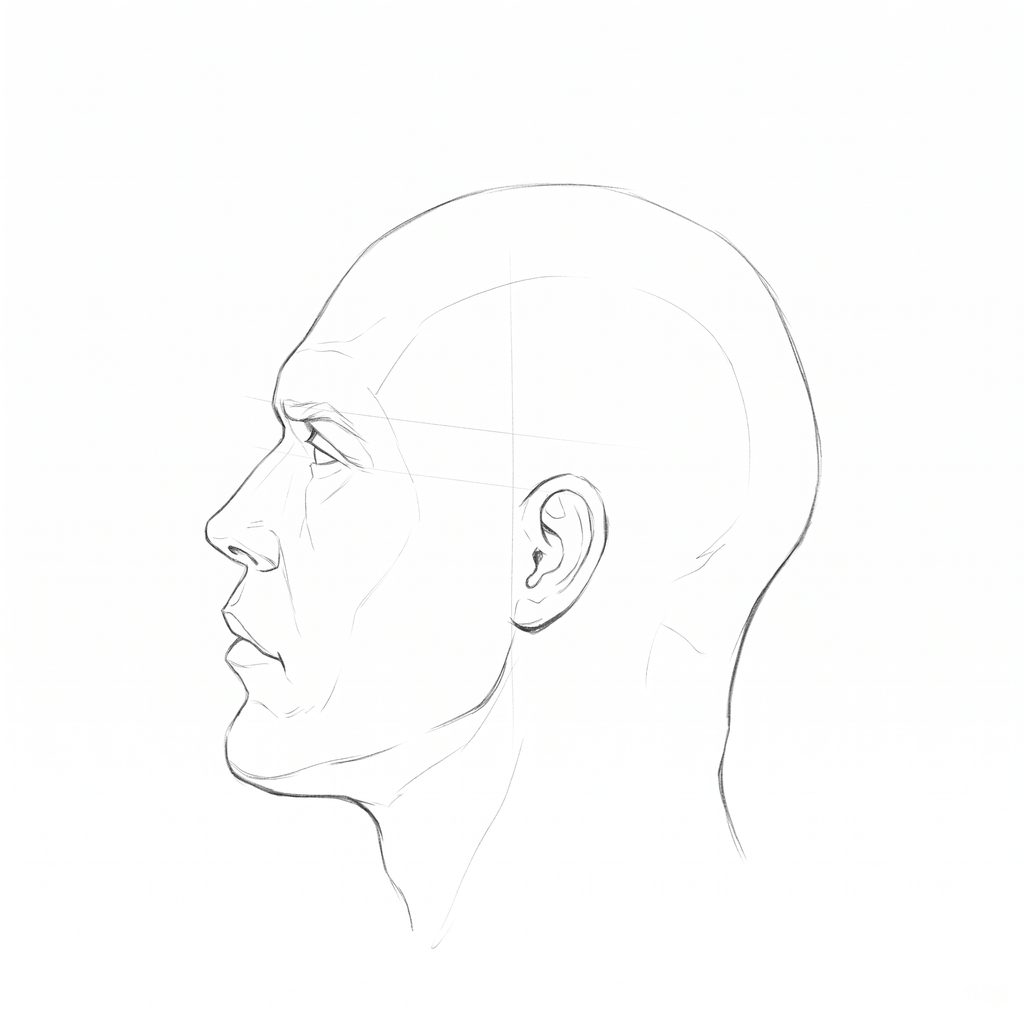
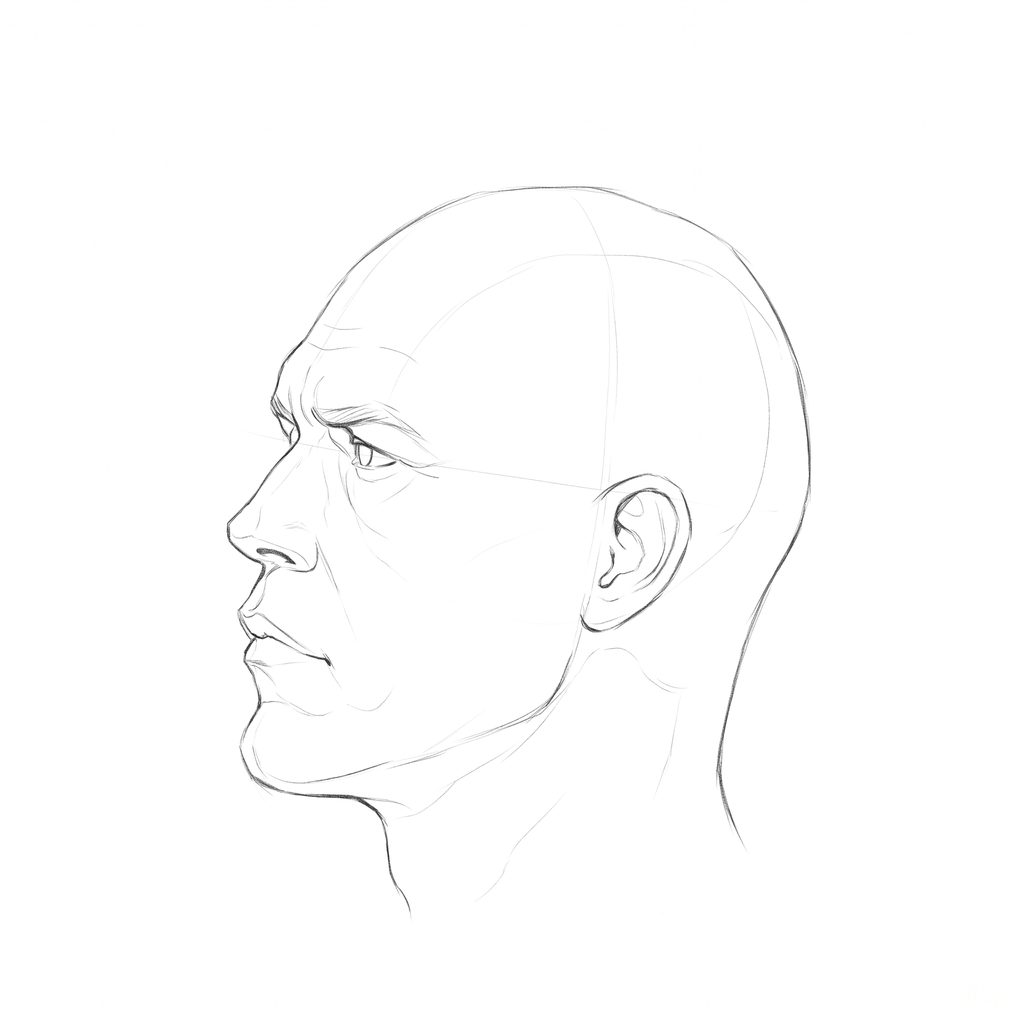
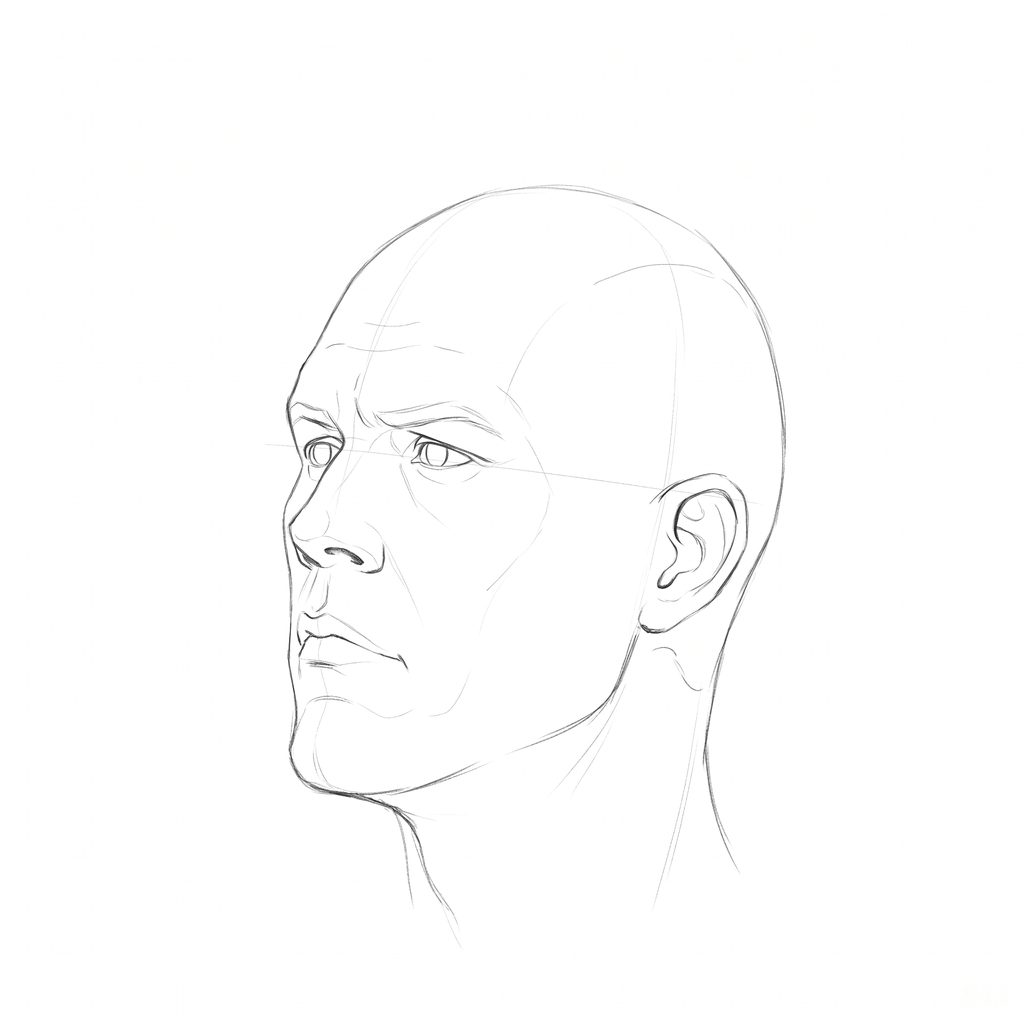
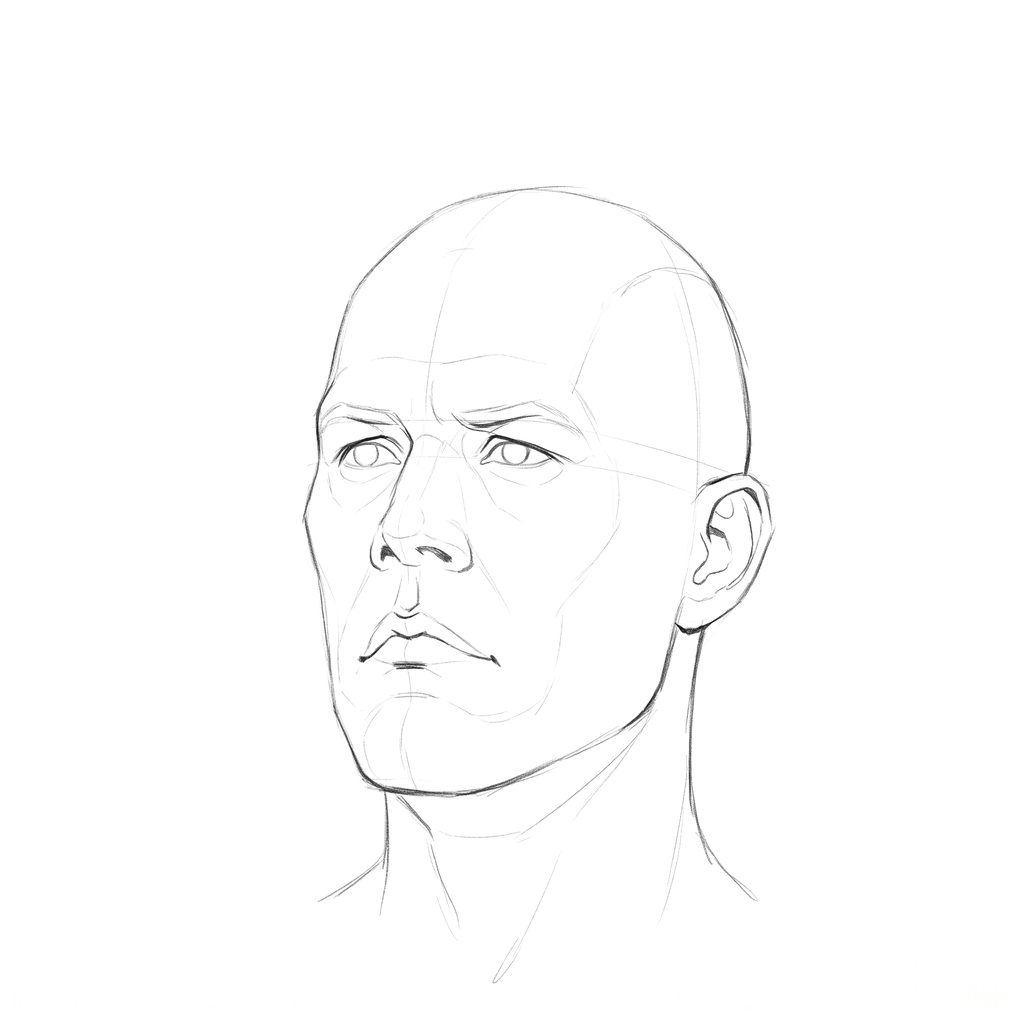
Turn this head yourself, one angle at a time: head turnaround reference.
Front, three-quarter and profile in tone
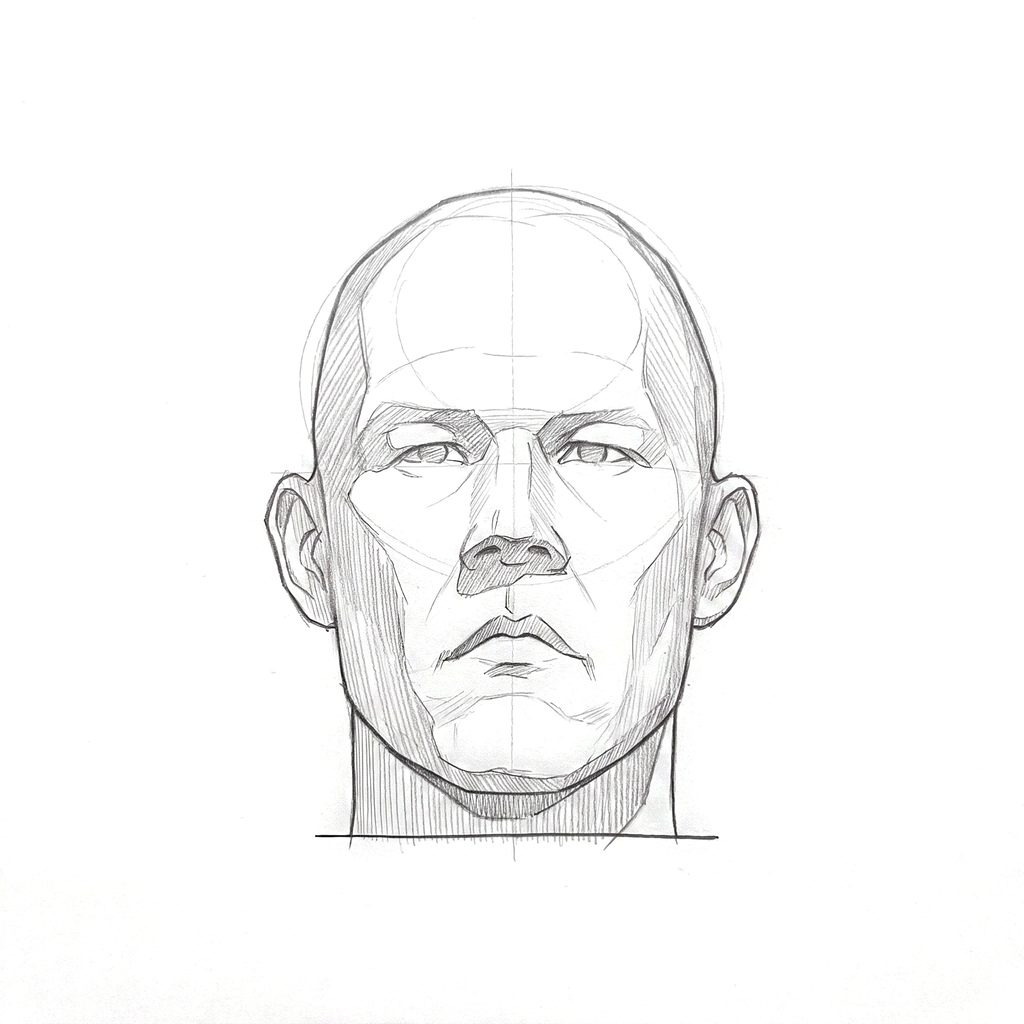
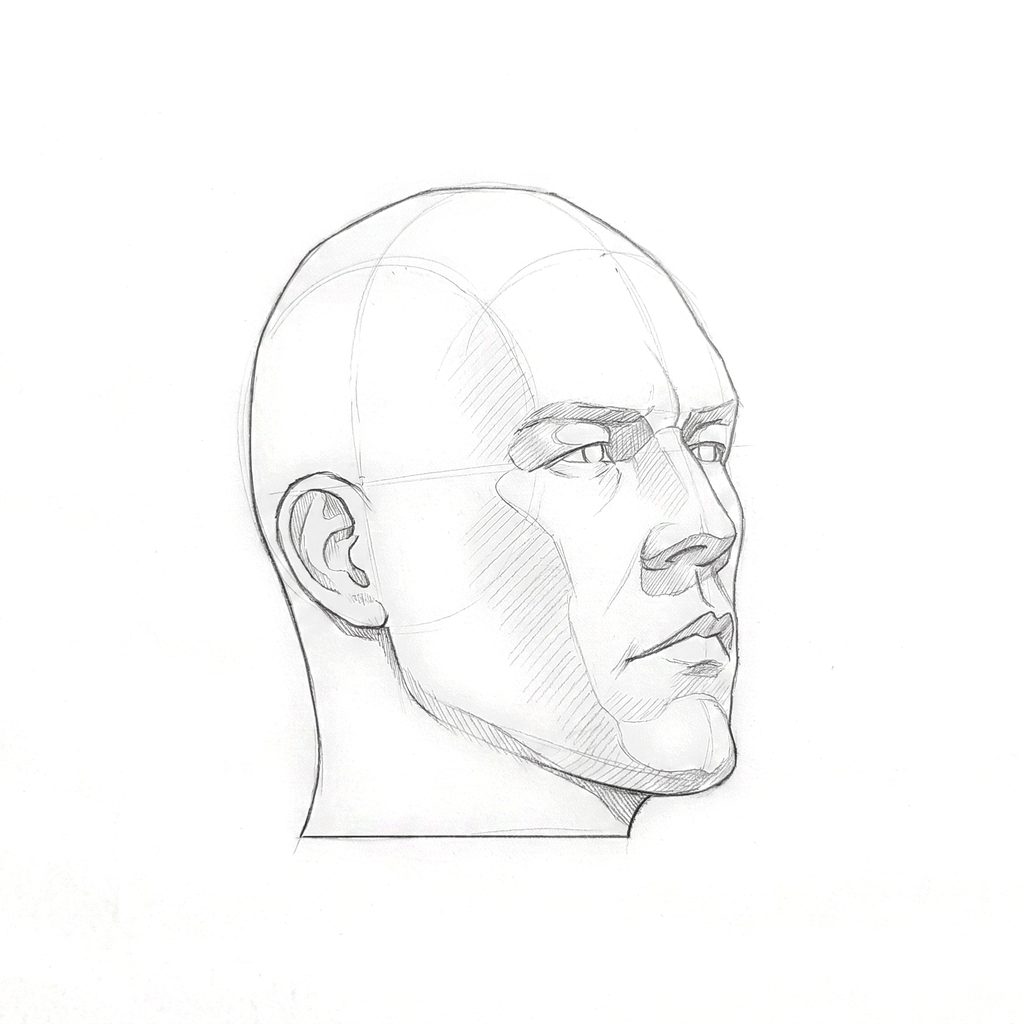
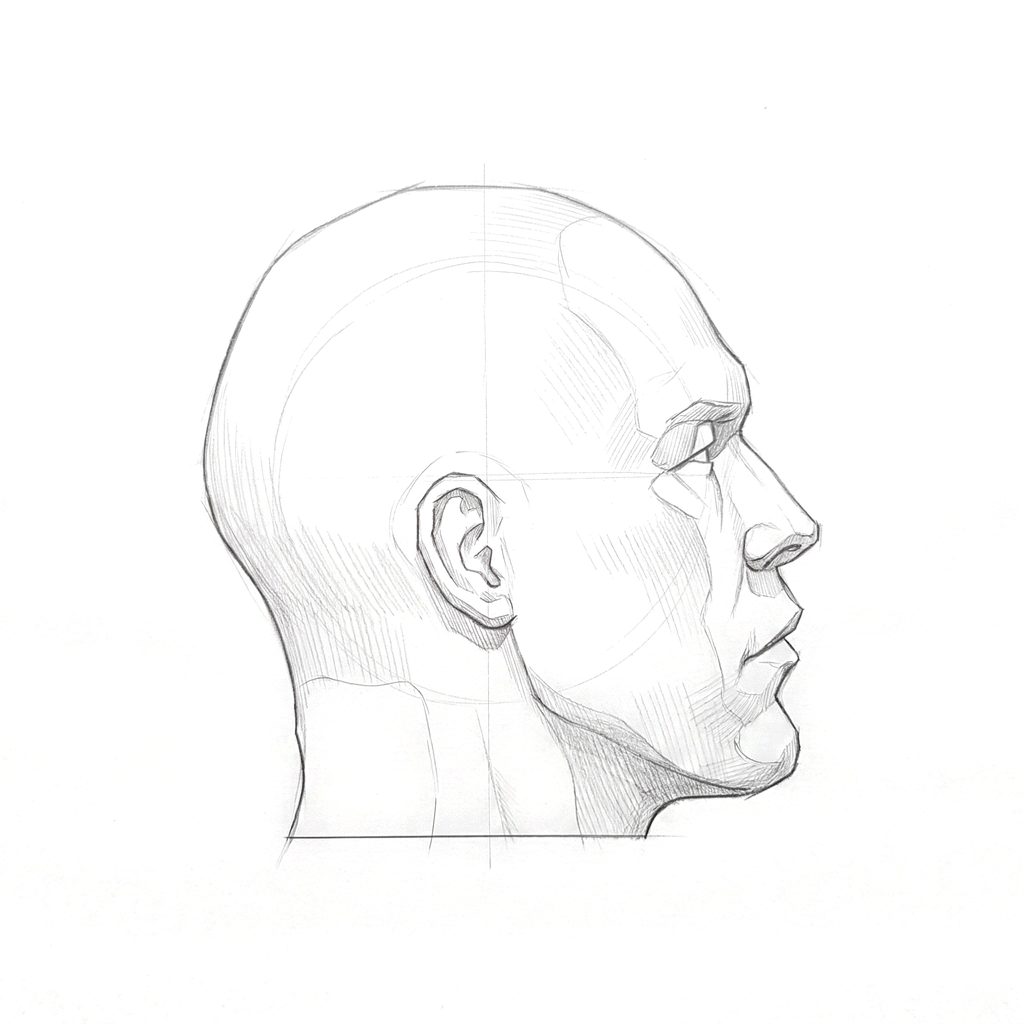
Guides that draw this head
- A 20-minute rotation drill with sixteen angles
- Three-quarter back: the angle every reference skips
- Why construction lines drift when you turn the head, and what fixes it
- Parts of the head for drawing: the landmarks to place first
- The planes of the head and how light falls on them
- The Loomis method for drawing the head, step by step
- Face proportions for drawing, checked on four measured heads
- How to draw a forehead: the slope, the brow step and where it turns
- How to draw an angular face: where the tone turns a corner
- How to draw eye sockets: the hollow the eye sits in
- How to draw nasolabial folds: where the smile lines start and stop
- Loomis, box or planes: which head construction to use
- How to draw a jawline from the side: where the corner goes
- How to draw ears in three-quarter view: width and placement
- How to draw eyes from the front, step by step
- How to hatch a face: which way the strokes run
The head guides in order use the same construction for every head.
Keep drawing
The hard plane head at all sixteen angles, full size, with its turnaround loops and a practice sheet, is in study pack 01 and in head rotation volume 1.