
Heavy jaw head rotation reference
The broad-jawed head asks you to keep track of the lower face as a solid mass. Block in the width between the jaw corners and compare it with the cheekbones above. As the head turns, the far corner moves inward on the page while the near side becomes longer. Carry that change through the chin and mouth rather than leaving a front-facing lower face beneath a turned nose.
Pencil studies through the turn
The pencil studies omit 157.5 degrees. Those cells show the tonal drawing instead, labelled below.
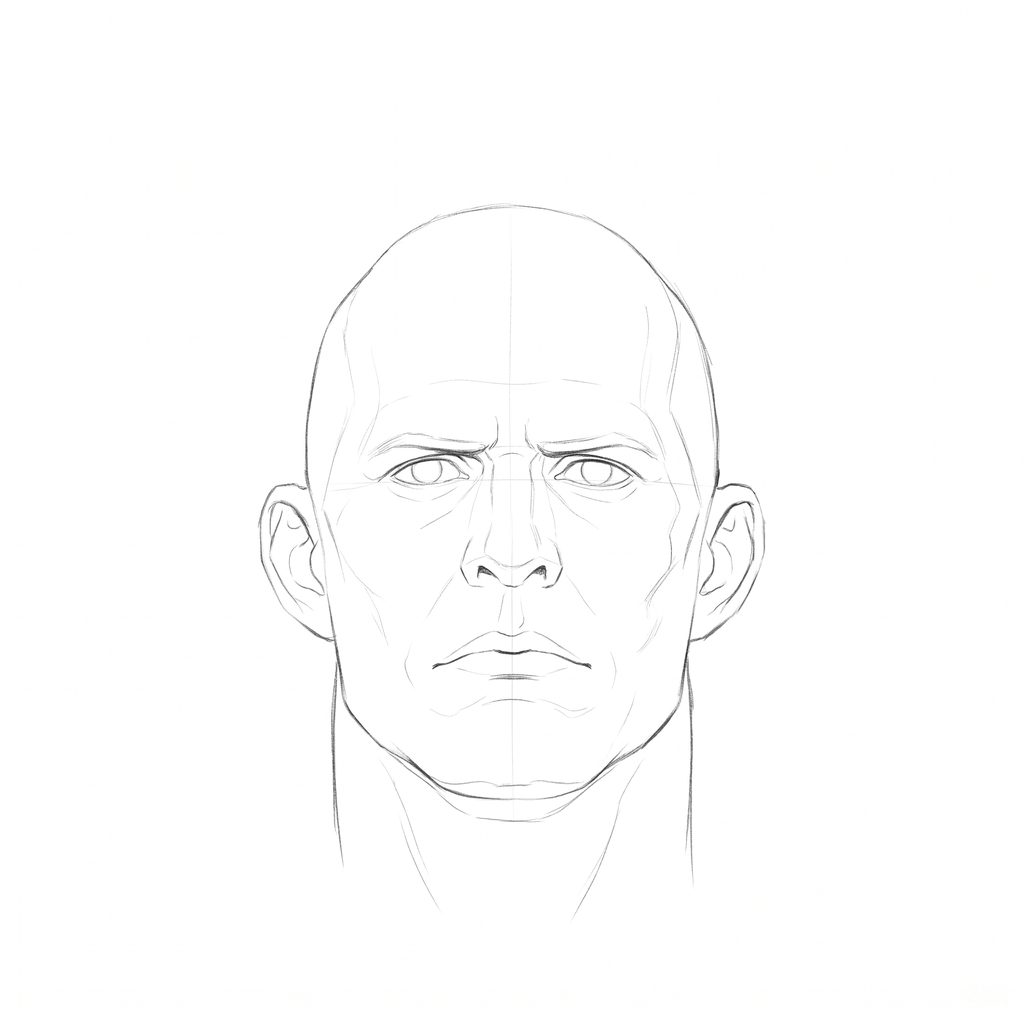
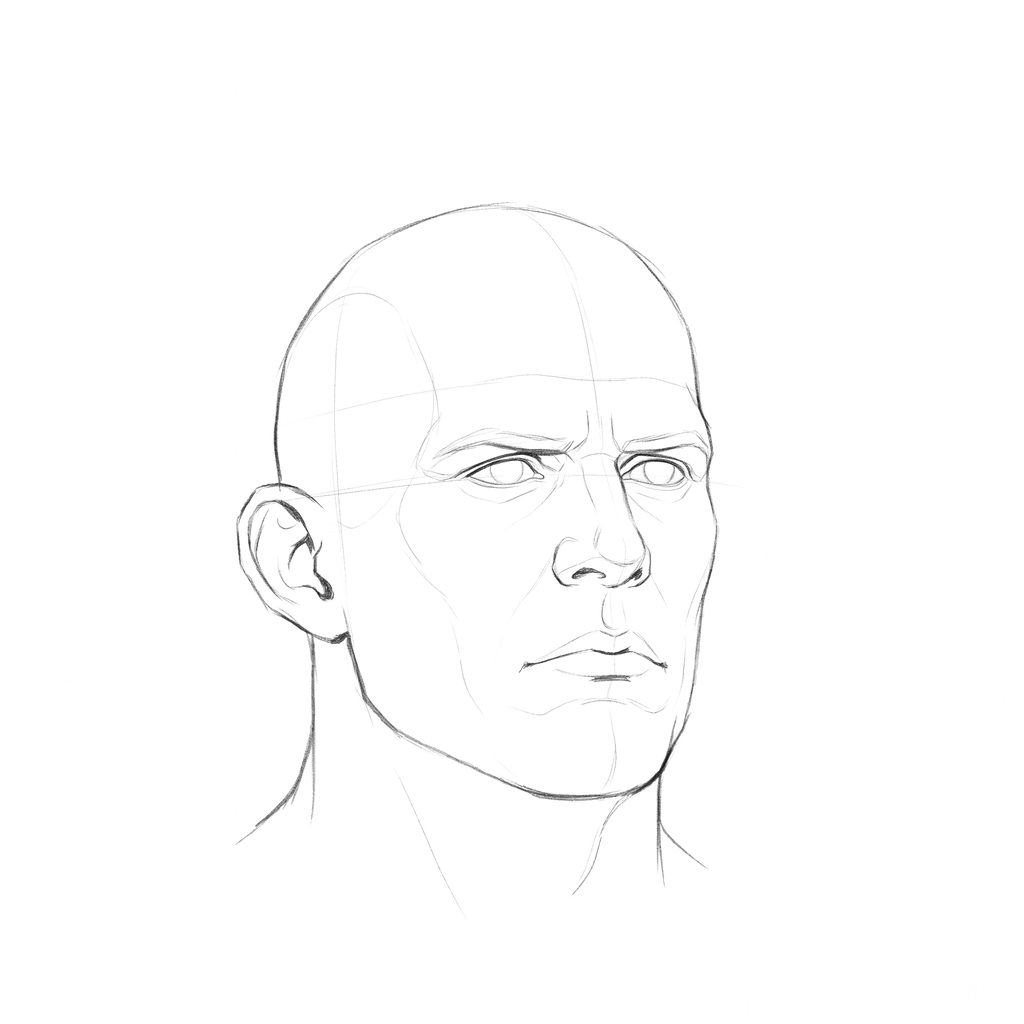
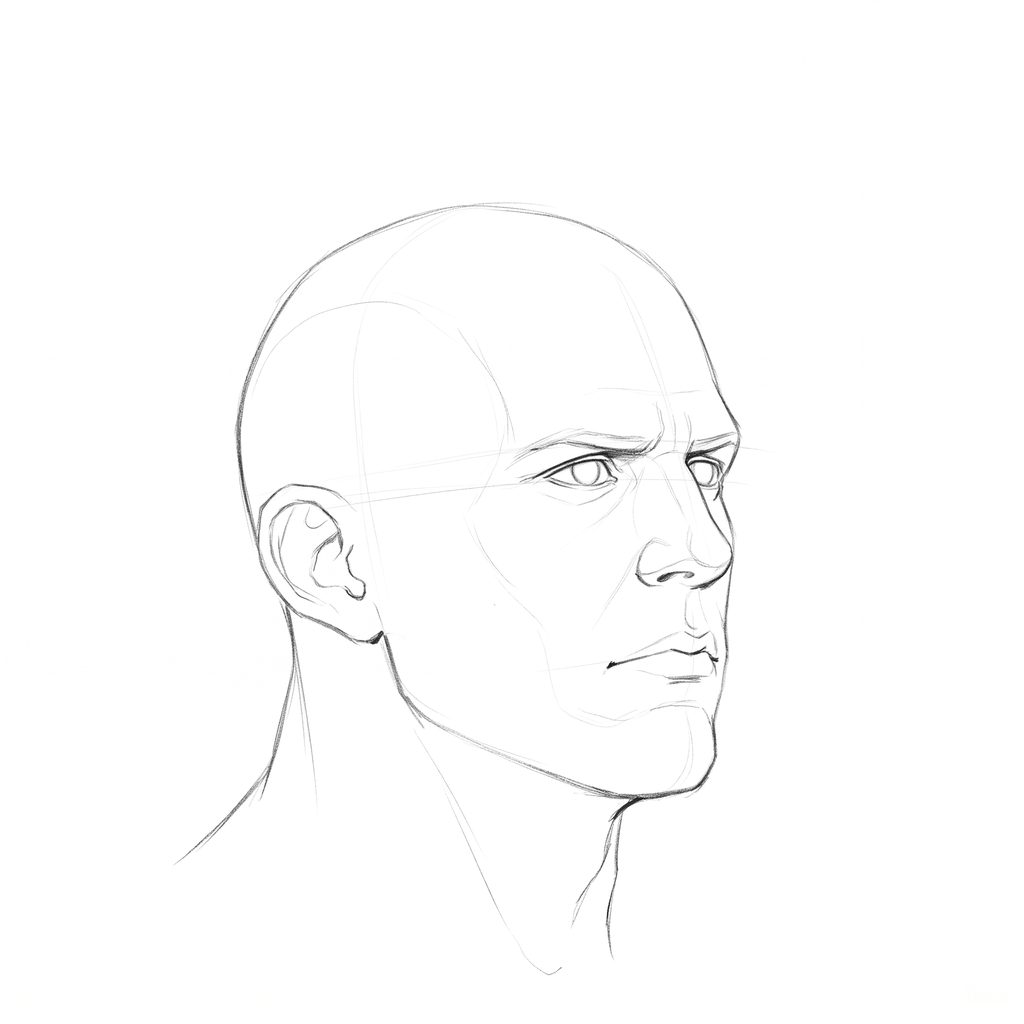
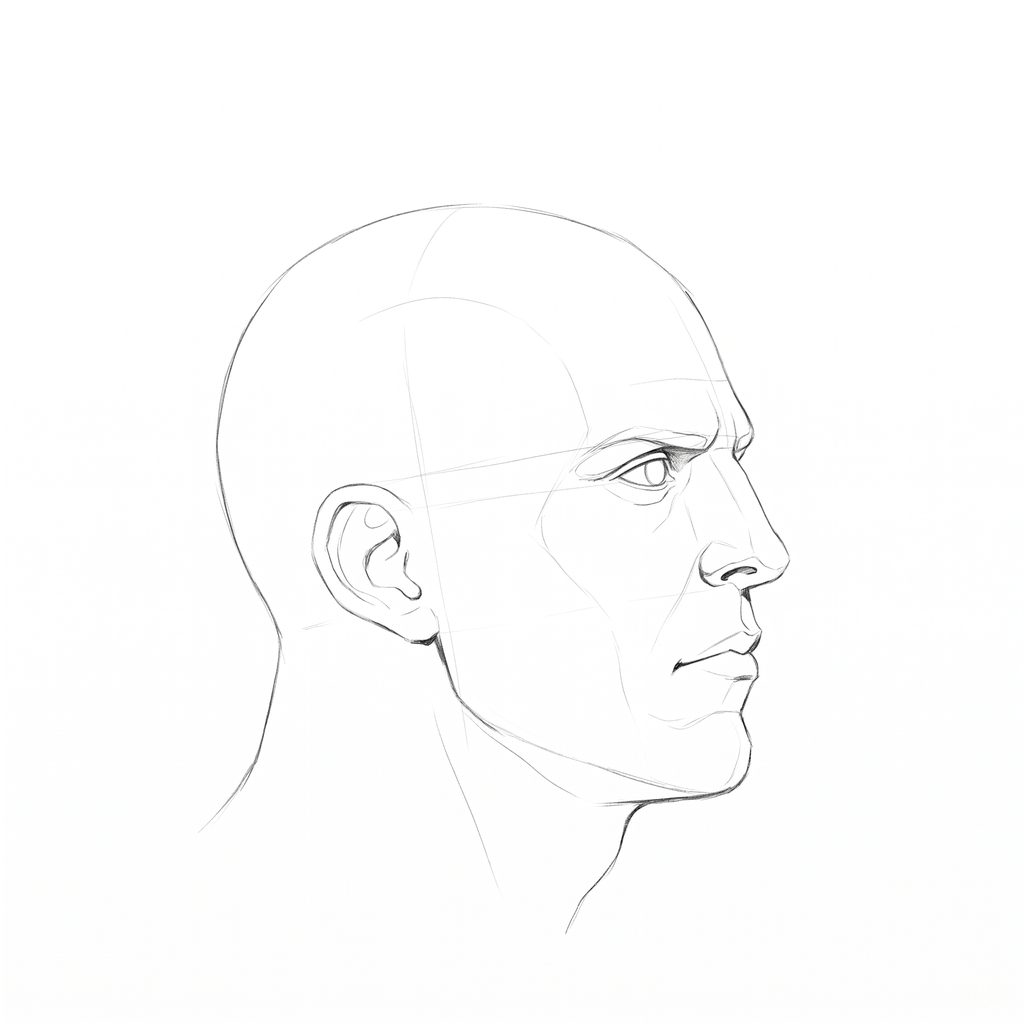
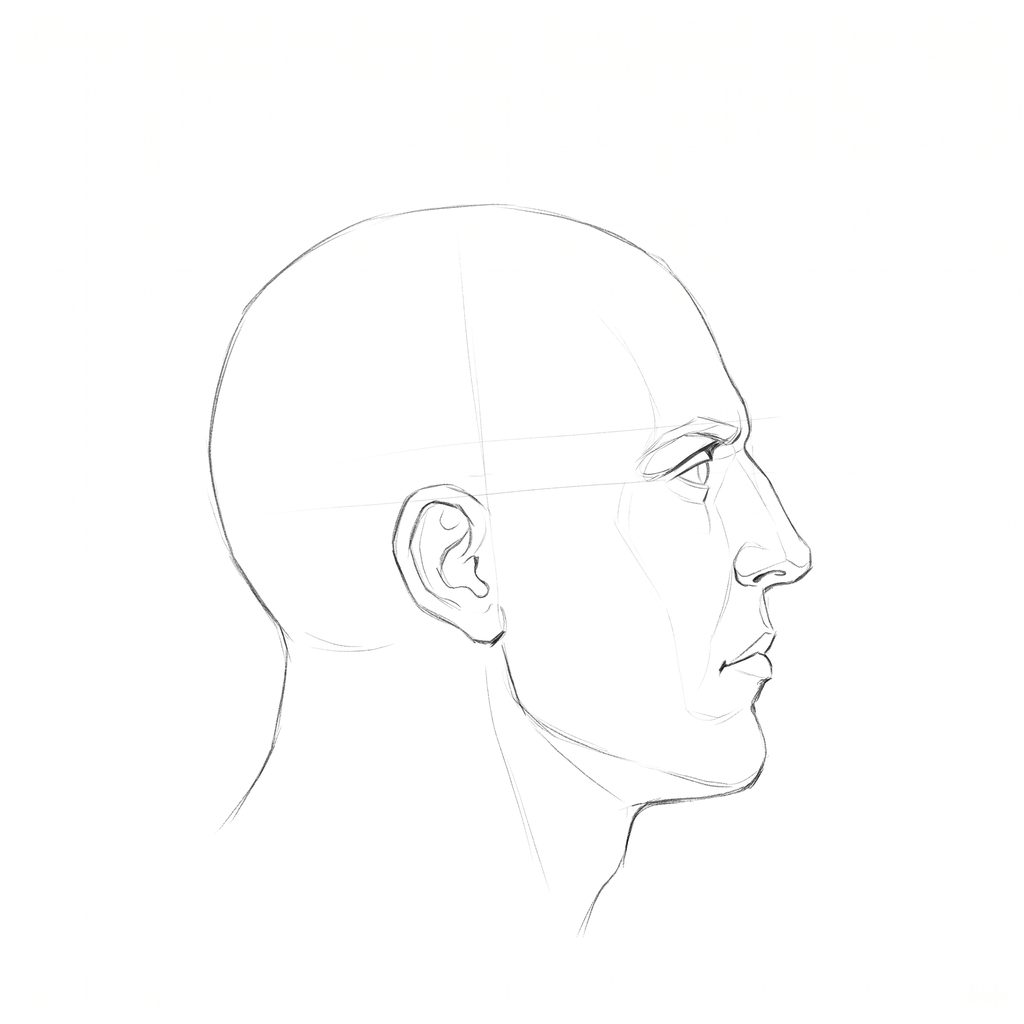
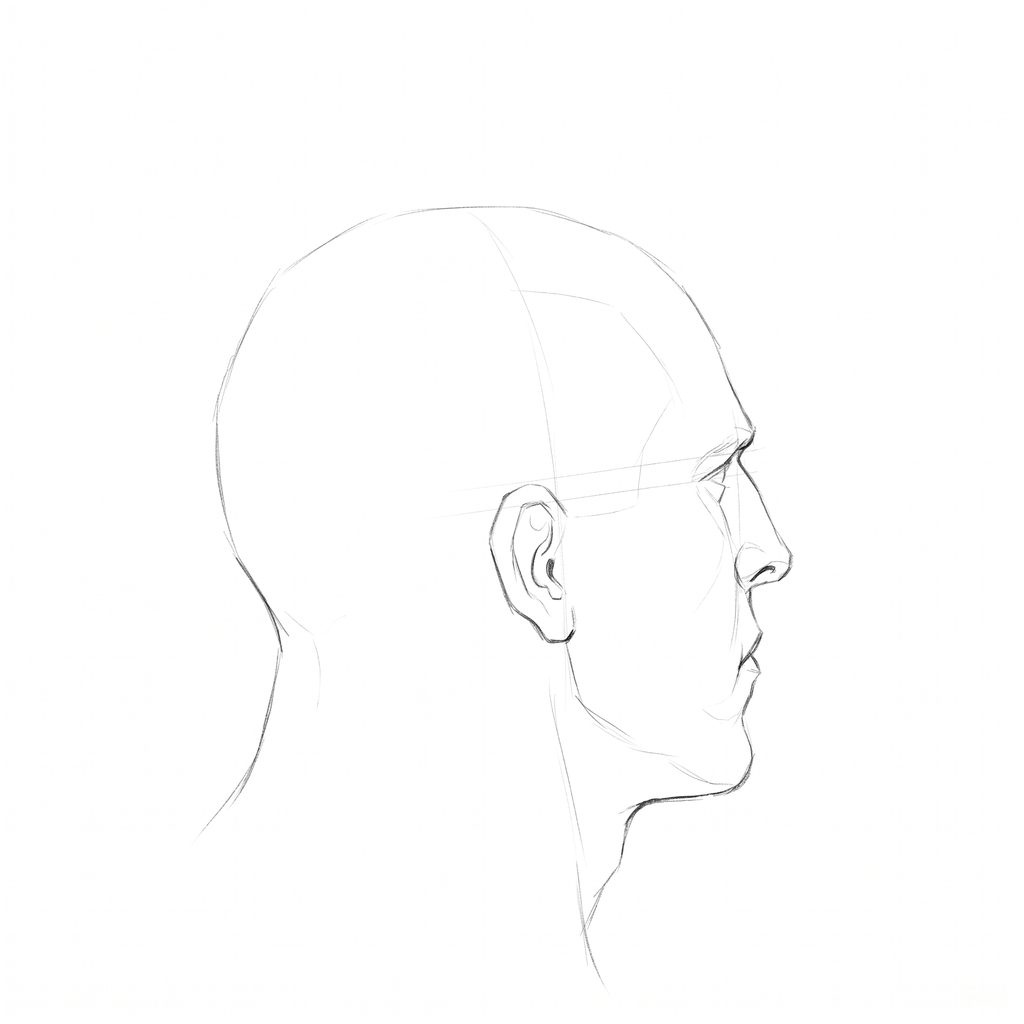
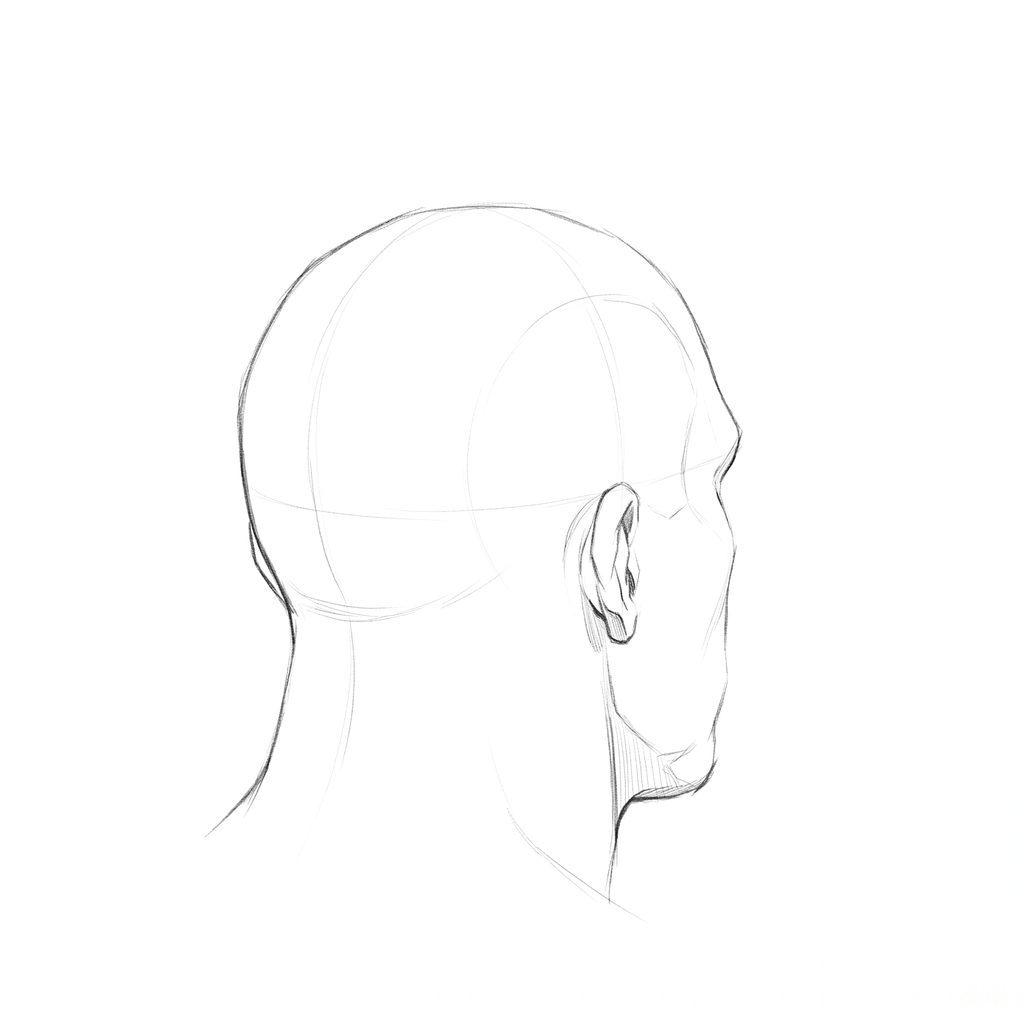
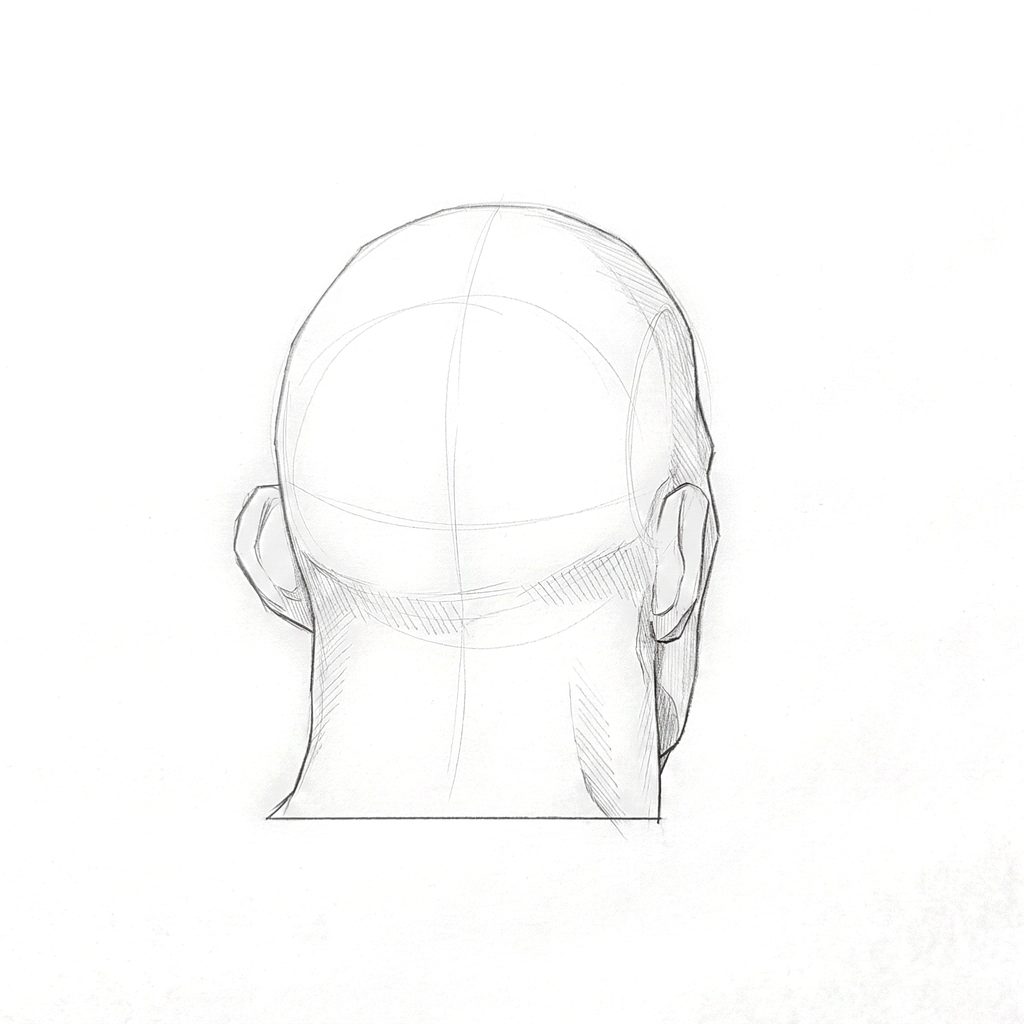
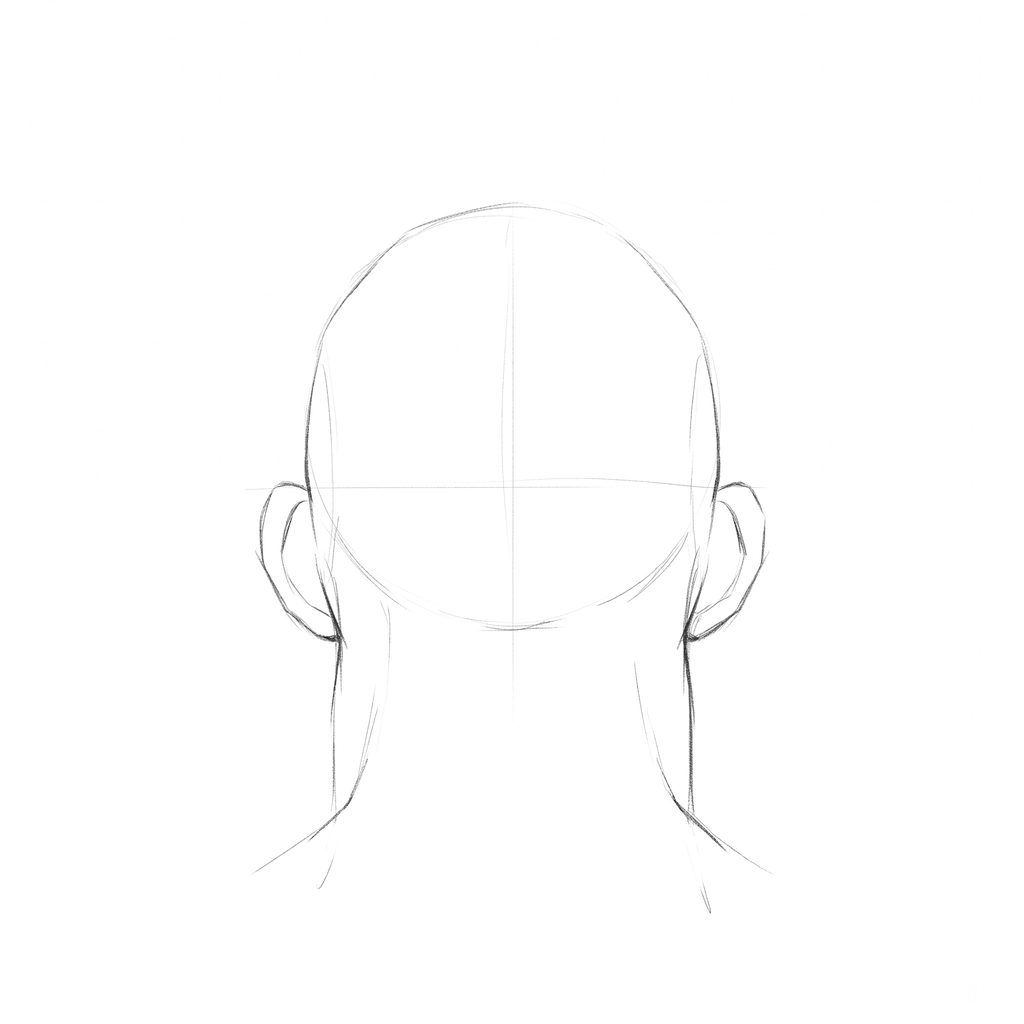
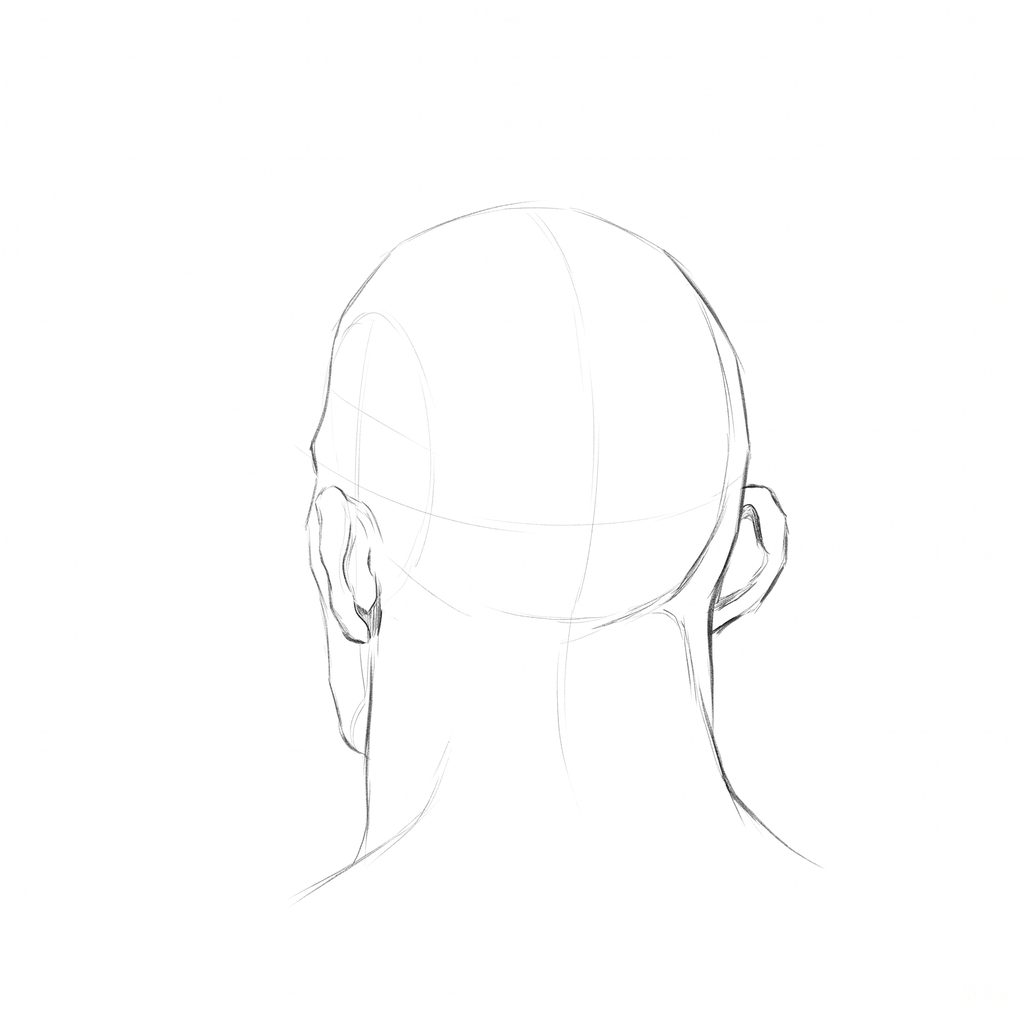
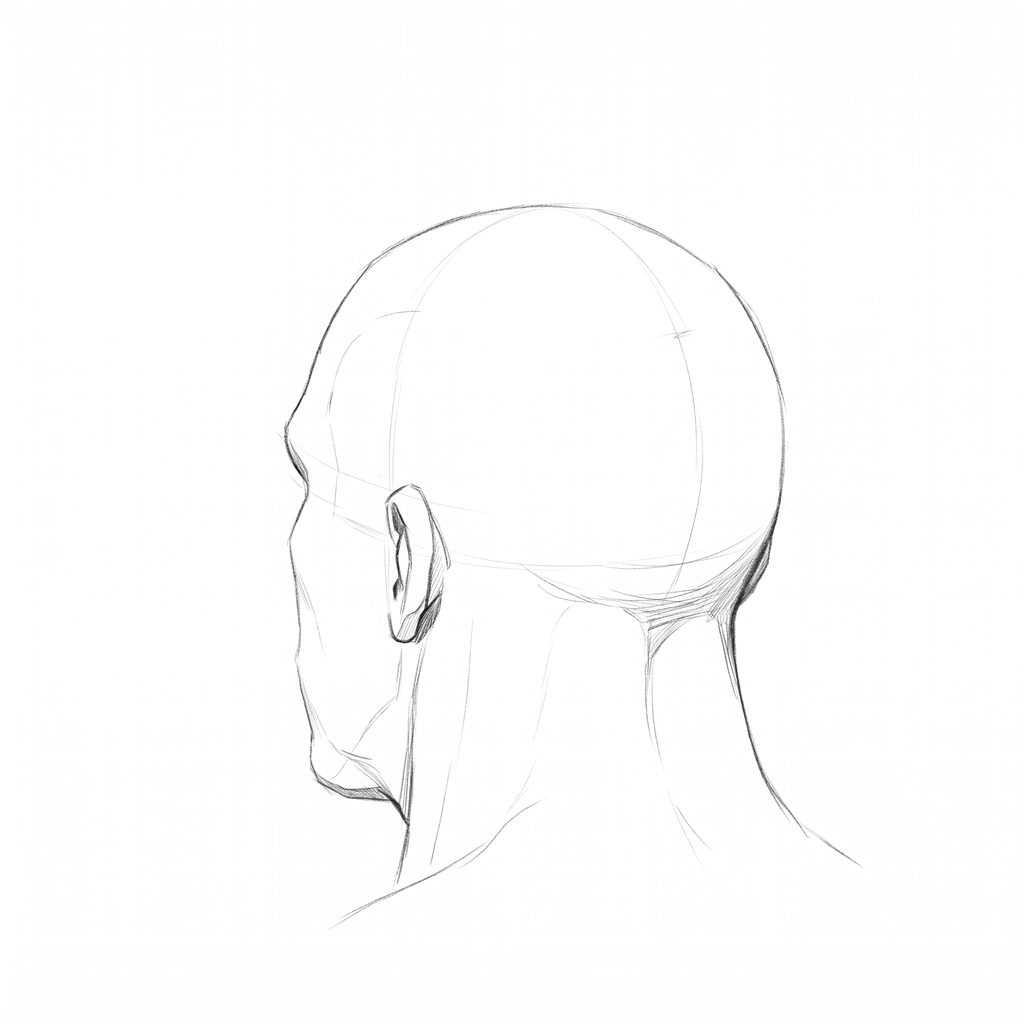
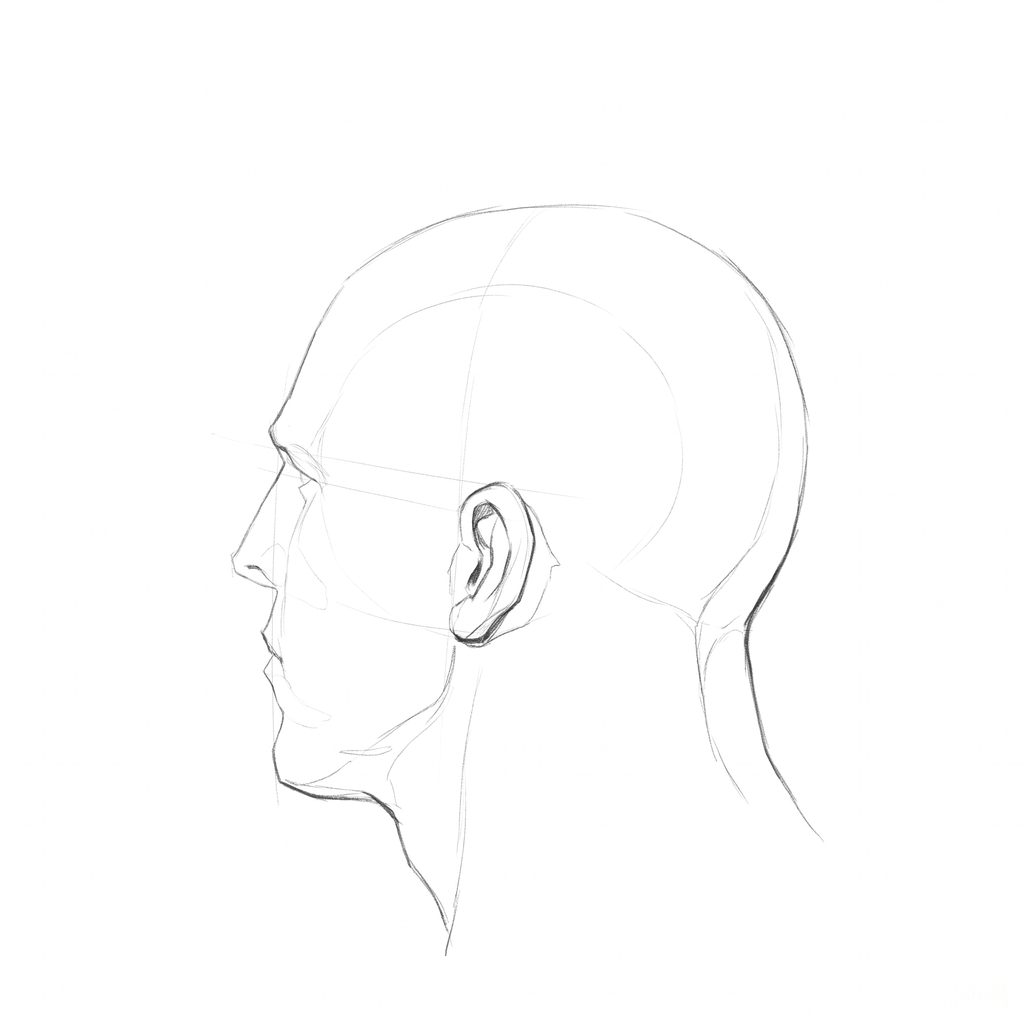
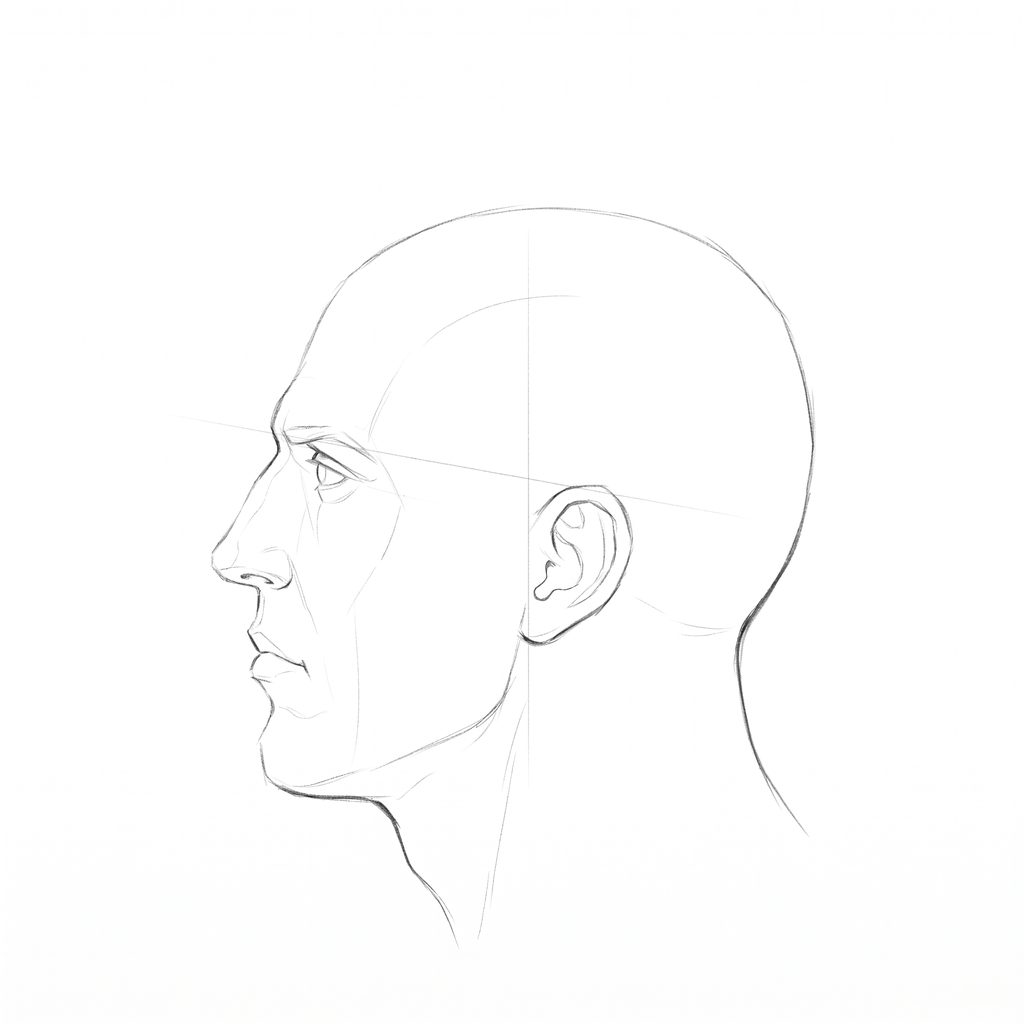
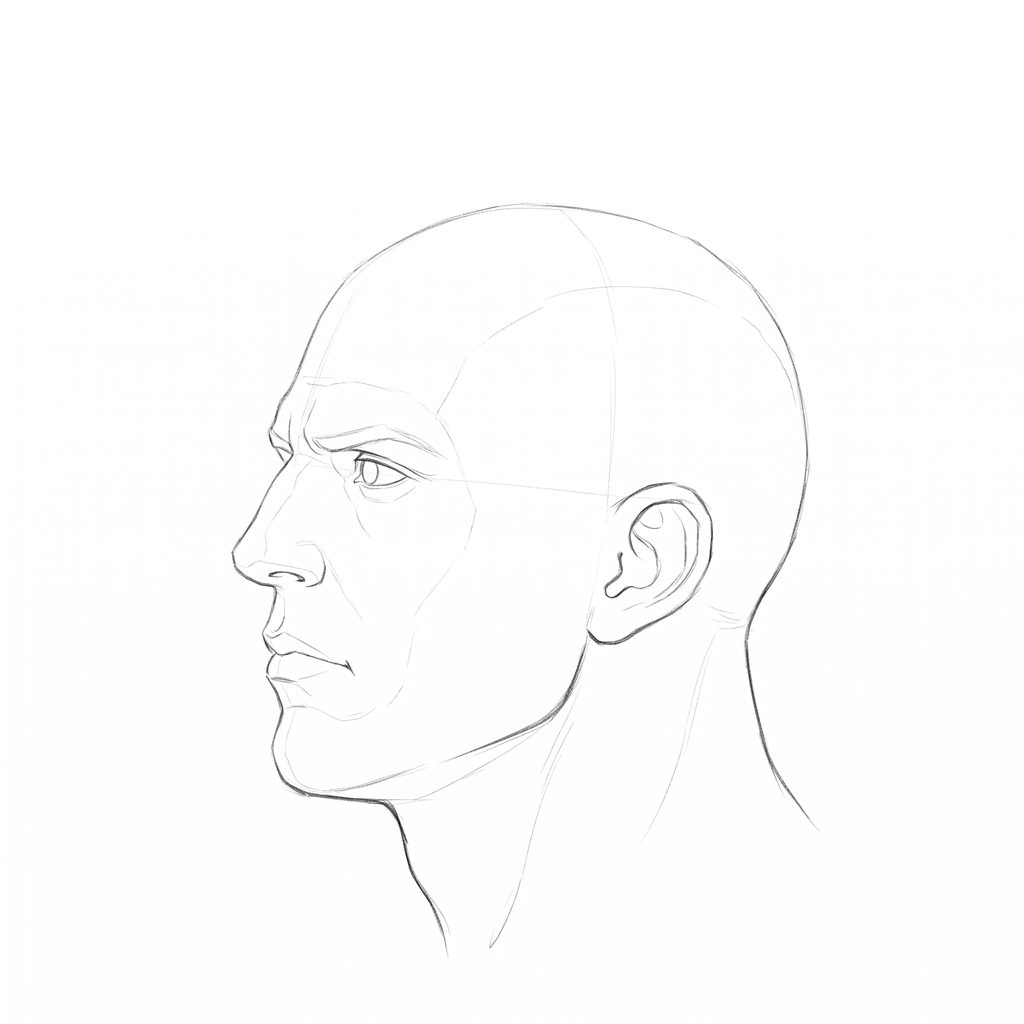
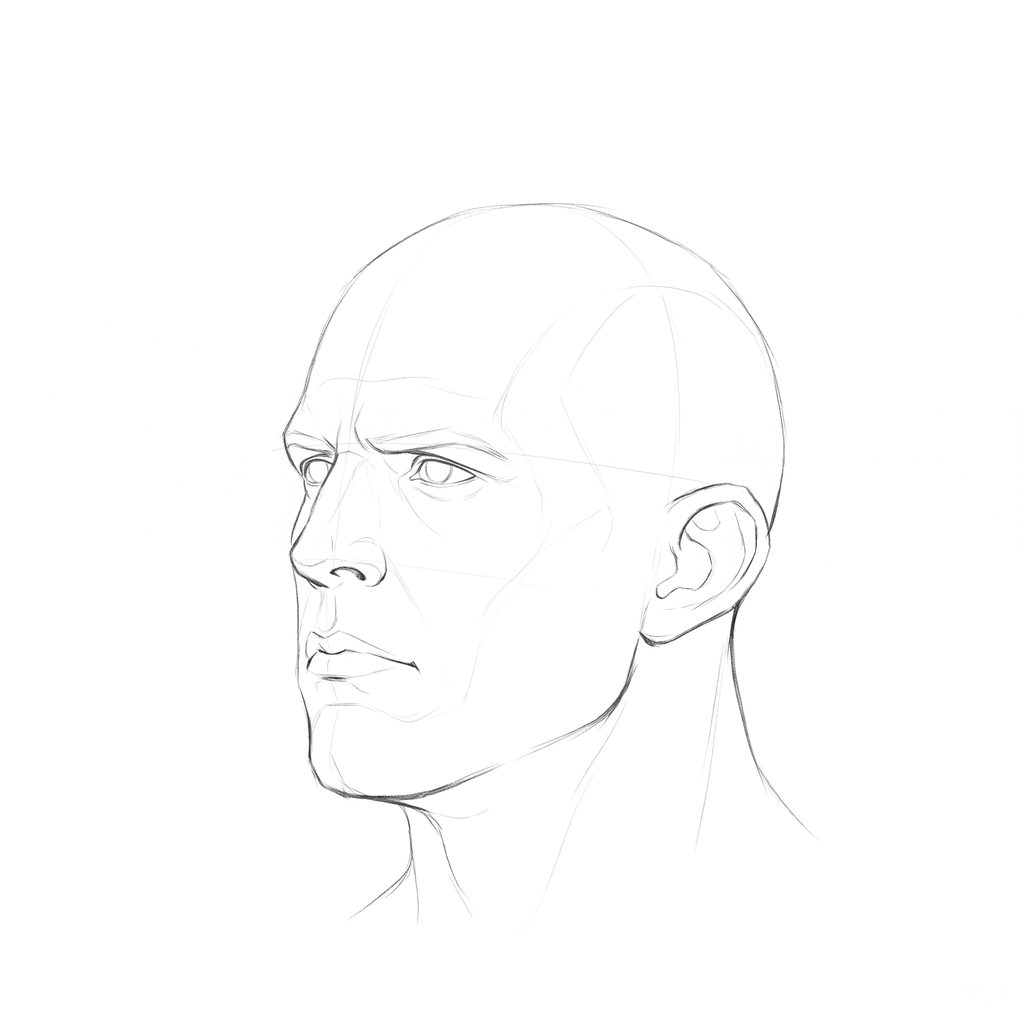
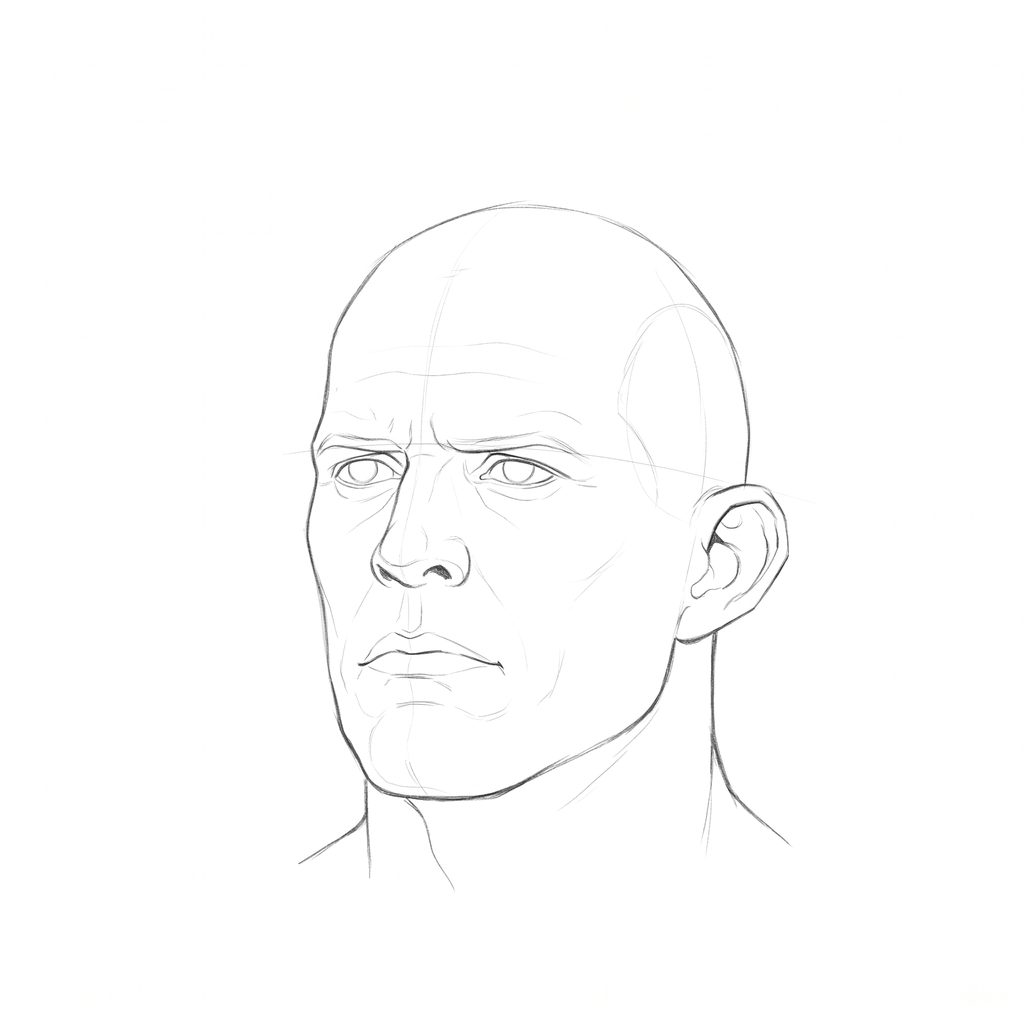
Turn this head yourself, one angle at a time: head turnaround reference.
Front, three-quarter and profile in tone
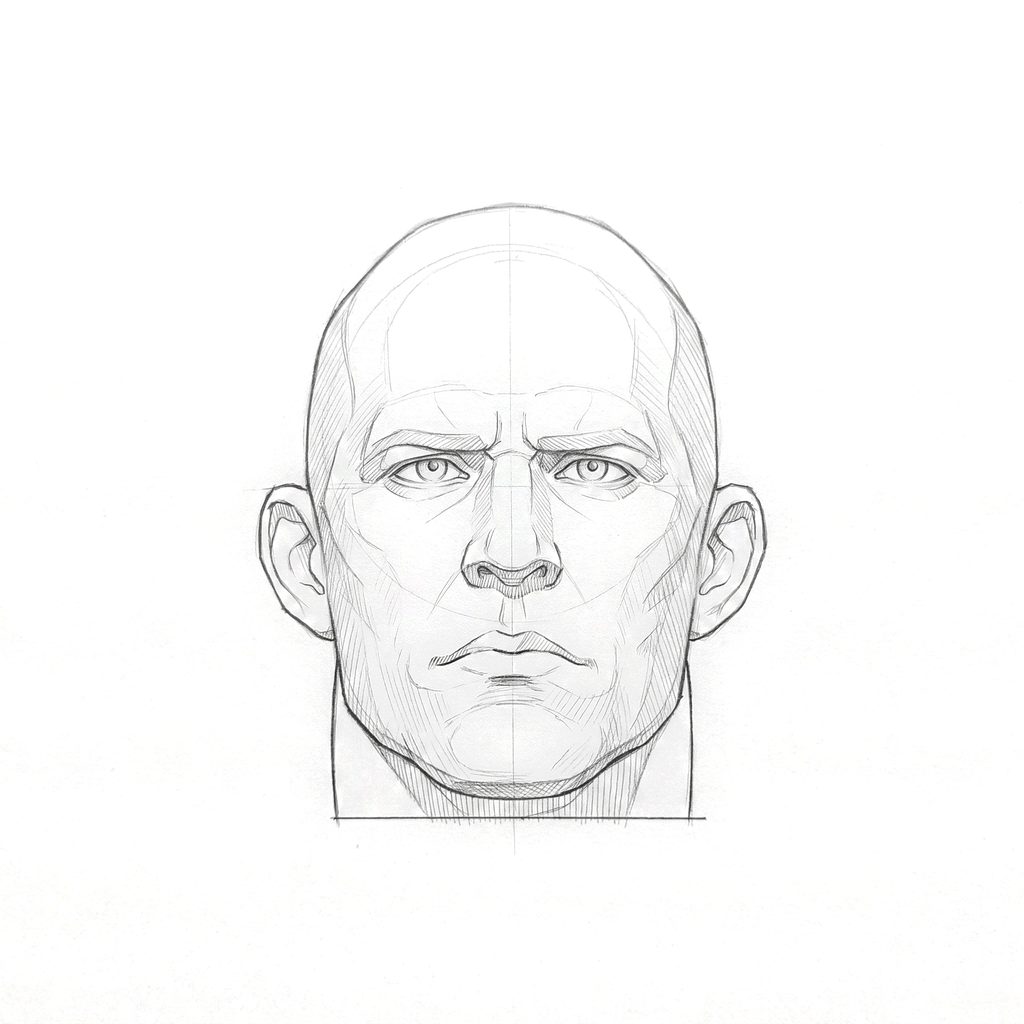
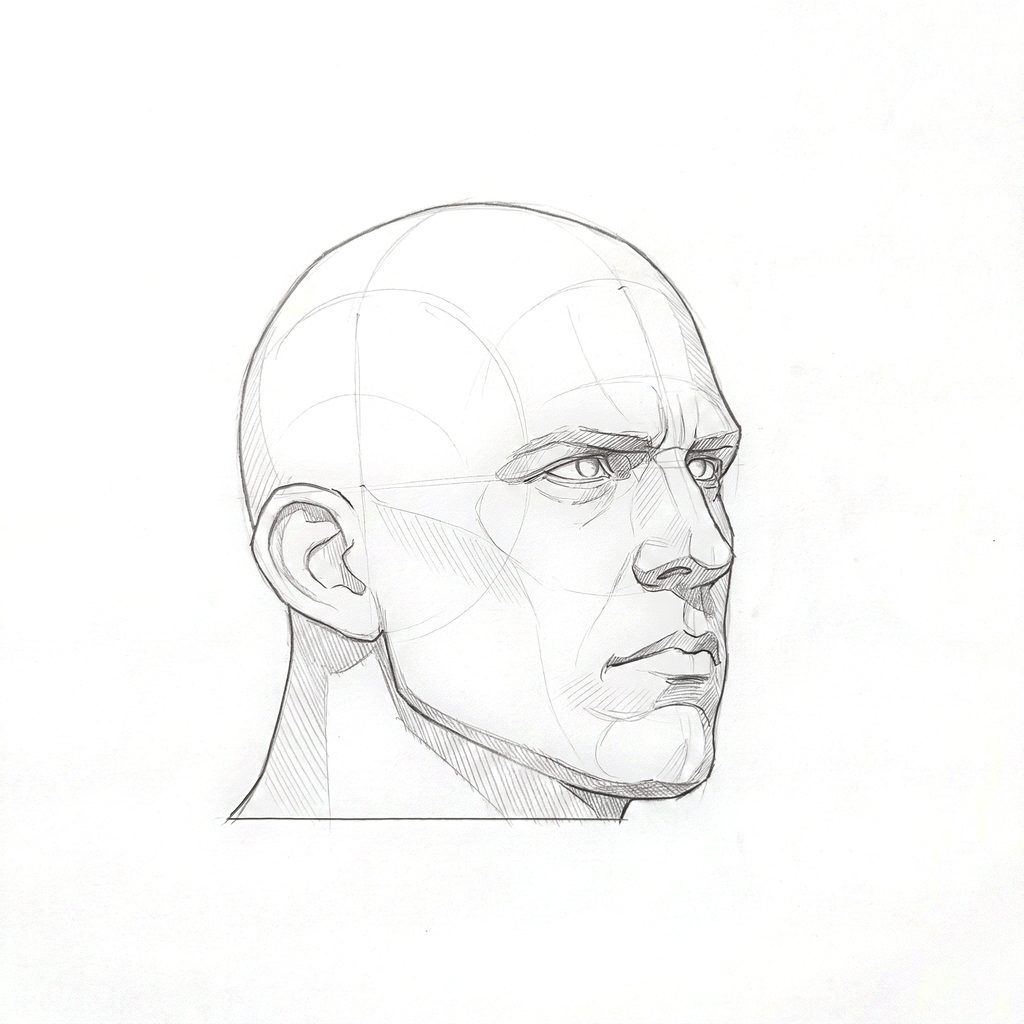
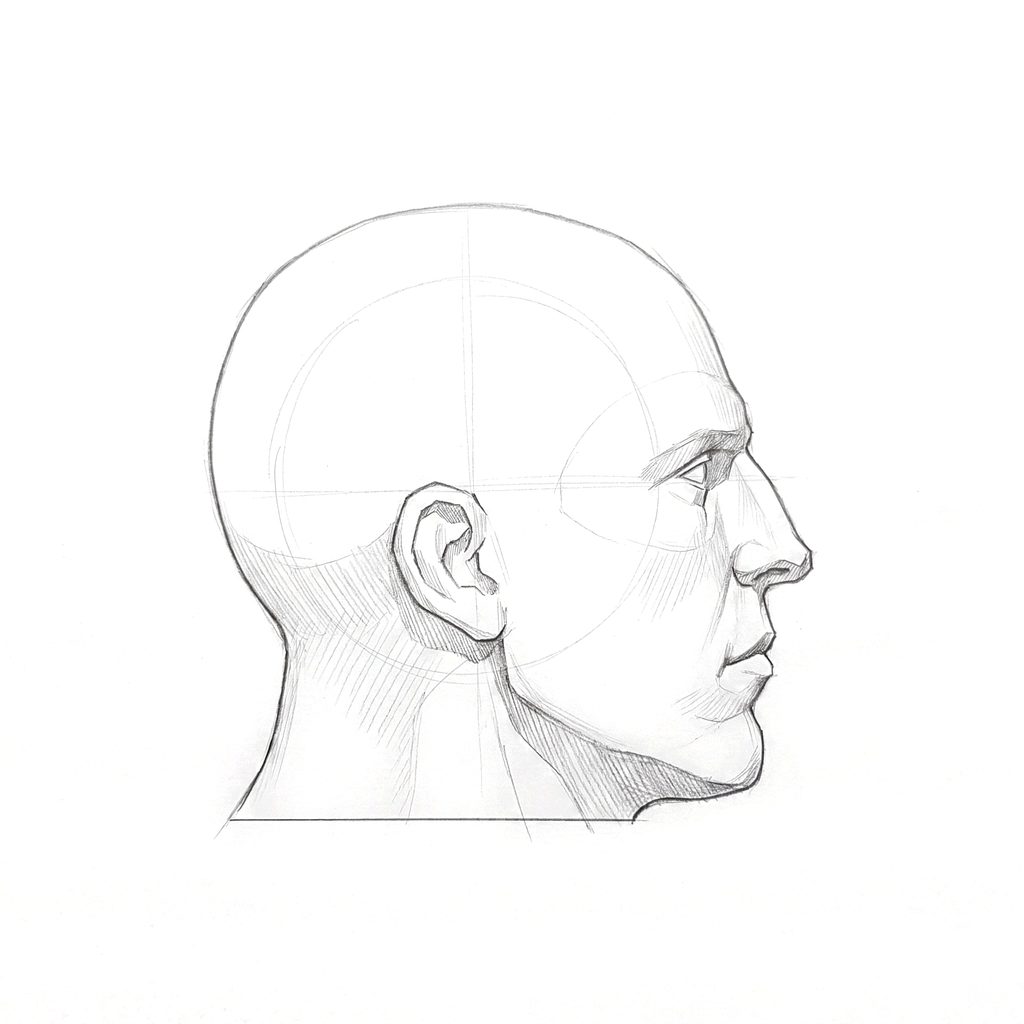
The same head from below and above
This head is also drawn from 20 degrees below and from 20 degrees above, around the turn: head from below reference and head from above reference.
Guides that draw this head
- Drawing different face shapes from one construction
- How to draw the head from the front
- How to draw a jawline: front, three-quarter and profile
- How to draw the head from below
- How to draw the head from above
- Face proportions for drawing, checked on four measured heads
- How to draw a chin: front, three-quarter and profile
- How to draw a forehead: the slope, the brow step and where it turns
- How to draw a heart-shaped face: a narrow jaw under a full skull
- How to draw a square face: hold the width, then turn the corner
- How to draw a face looking down: what moves and by how much
- How to draw a nose from the side: bridge, tip and wing
- How to draw an eye from the side: the wedge, the lids and the iris
- How to draw different eye shapes
- How to draw ears from the side: width, lean and placement
- How to draw lips in three-quarter view: the two halves
- How to hatch a face: which way the strokes run
The head guides in order use the same construction for every head.
Keep drawing
The heavy jaw head at all sixteen angles, full size, with its turnaround loops and a practice sheet, is in study pack 03 and in head rotation volume 1.